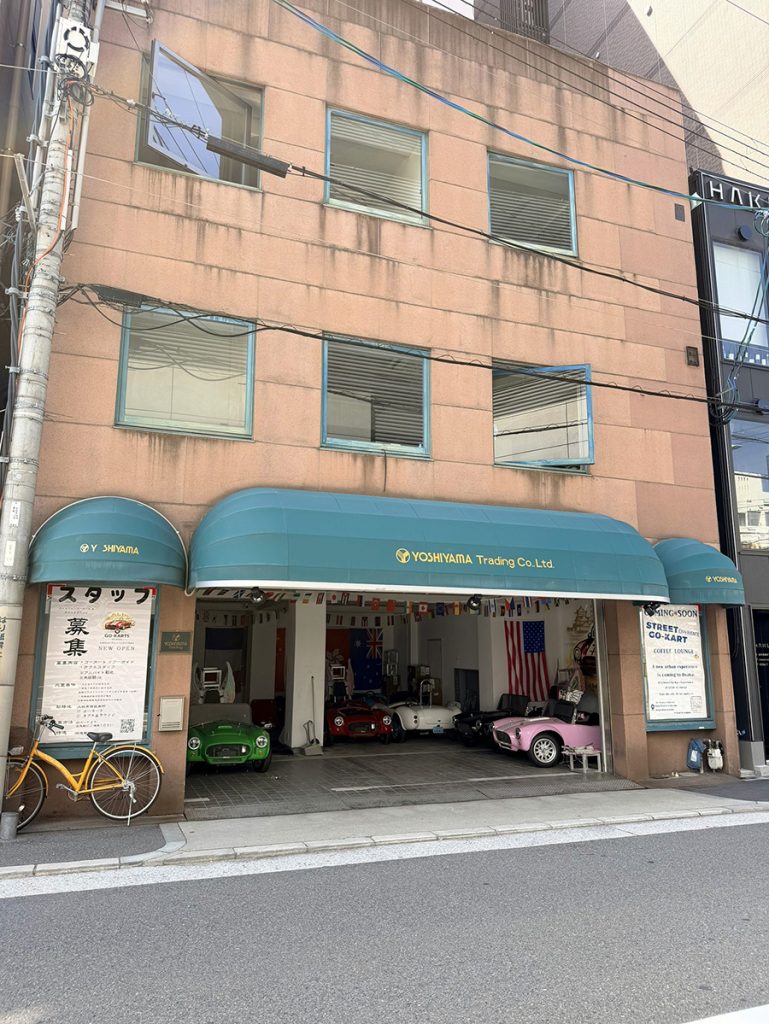
The place to go kart in Osaka with W Go-Kart Osaka is 3 Chome-5-2 Shinmachi, Nishi Ward, Osaka 550-0013. Every guided public-road tour checks in, departs and returns at this staffed base. The location suits visitors approaching from Nishiohashi, Nishi-Nagahori or Shinsaibashi, but it is not a pickup point in Namba, Dotonbori, Tsutenkaku or Osaka Castle. Confirm the station, original driving documents, early-arrival time and chosen loop before travelling.
W Go-Kart Osaka currently lists Nishiohashi at approximately a 3–5-minute walk, Nishi-Nagahori at 8–10 minutes and Shinsaibashi at about 10 minutes. These are operator estimates, not door-to-platform guarantees. Review the current address, hours and service choices, then use the live form to match a date, start, guest count and route.
The place to go kart in Osaka is Shinmachi, not Namba
Location language becomes confusing because the night-recommended route visits Osaka’s better-known southern districts. Namba, Dotonbori, Shinsaibashi and Tsutenkaku describe parts of the city loop, not separate branches of W Go-Kart Osaka. A visitor must reach Shinmachi before any kart moves.
The shop address controls both the beginning and the finish
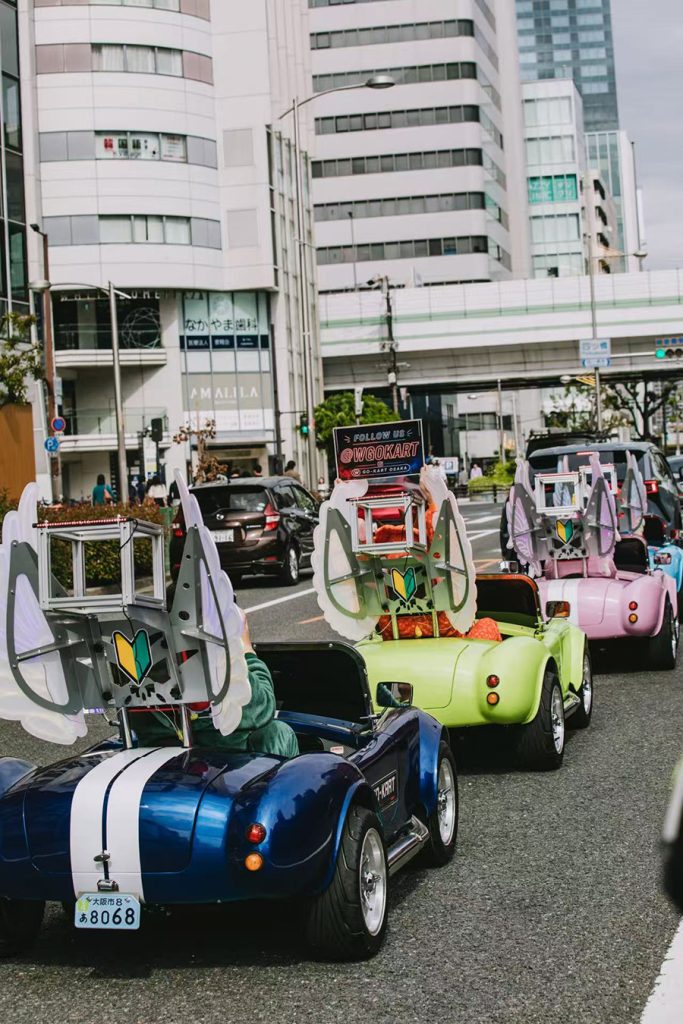
The route is a loop. At the base, staff match the confirmed booking, inspect documents and deliver the safety briefing. The guide then leads the public-road drive and returns the group to the same location. The customer does not collect a kart for an independent journey or leave it at a hotel.
Consider a traveller staying beside Namba Station. Searching for a “Namba kart” may suggest that the closest famous district is also the departure point. In this service, it is not. That traveller needs ordinary transport to Shinmachi, time to walk from the selected station and a second transport plan from Shinmachi after the tour returns.
Osaka Castle is a route landmark rather than a check-in counter
The daytime-recommended Castle loop heads towards the castle area and back. A customer cannot join beside the grounds, use a castle ticket office as a meeting point or finish the tour there. The location decision and the visual route decision must remain separate: arrive in Shinmachi, then follow the guide towards the chosen city view.
The 10-minute-early request begins at reception
Confirmed guests are asked to arrive 10 minutes before departure. That means being at the shop with the applicable originals accessible, not exiting a train at the target time. An unfamiliar street grid, weather, luggage and a group walking pace should be added before the published station-walk estimate.
The reception target matters because every driver has a legal check. A valid Japanese licence is accepted. The IDP pathway requires the original 1949 Geneva Convention permit, original domestic licence and passport. The accepted-translation pathway for Switzerland, Germany, France, Belgium, Monaco and Taiwan requires the translation, original licence and passport.
For a group arriving from different hotels, share the exact address and one agreed station rather than only a route name. “Meet for the Namba tour” can send one person towards Namba while another reaches Shinmachi. A single location message, the confirmed departure and an earlier private meeting time reduce that avoidable split.

Choose a station before you go kart in Osaka
The nearest station on a map is not always the simplest station for a particular traveller. Line access, transfers, luggage and mobility needs can make a slightly longer walk easier. W Go-Kart Osaka publishes the three walking estimates; Osaka Metro’s official station pages provide line, map and facility context for the journey.
| Station | Operator’s walking estimate | Official network context | When it may fit |
|---|---|---|---|
| Nishiohashi (N14) | About 3–5 minutes | Nagahori Tsurumi-ryokuchi Line | Shortest published walk to the base |
| Nishi-Nagahori (N13/S14) | About 8–10 minutes | Nagahori Tsurumi-ryokuchi and Sennichimae lines | Useful when arriving on either of its two lines |
| Shinsaibashi (M19/N15; Yotsubashi connection) | About 10 minutes | Midosuji and Nagahori Tsurumi-ryokuchi lines, with Yotsubashi transfer connection | Useful when the wider itinerary already centres on Shinsaibashi |
The table is a starting point, not turn-by-turn navigation. Osaka Metro can change station access, elevator availability or service conditions, while street construction can change the easiest surface path. Check the official station map on the travel date and enter the full shop address in the chosen navigation service. W Go-Kart Osaka’s walking figures remain the business’s published estimates; this article does not convert them into a guaranteed route from a particular platform, exit or hotel.
Nishiohashi offers the shortest published walk
The operator lists Nishiohashi at roughly 3–5 minutes. Osaka Metro identifies it as station N14 on the Nagahori Tsurumi-ryokuchi Line; the official Nishiohashi station page provides current maps and facility information. This is the natural first choice for a traveller prioritising the shortest stated surface walk.
Shortest does not mean zero planning. Choose an exit using current station information, allow for platform-to-street movement and keep the full shop address available. A person carrying luggage or needing an elevator may care more about the practical station path than the headline walking minutes.
Nishi-Nagahori connects two subway lines
The operator lists Nishi-Nagahori at approximately 8–10 minutes. Osaka Metro shows station N13 on the Nagahori Tsurumi-ryokuchi Line and S14 on the Sennichimae Line, with transfer facilities. The official Nishi-Nagahori guide includes station and accessibility information.
A visitor approaching on the Sennichimae Line may prefer this route over transferring simply to reduce the surface walk. The correct decision considers total journey complexity. W Go-Kart Osaka’s estimate begins after reaching the relevant street level, so internal station movement still belongs to the customer’s buffer.
Accessibility needs require the same whole-journey view. Osaka Metro publishes elevators and barrier-free routes for its stations, but a station facility does not automatically prove that every pavement, doorway or kart-service stage matches one traveller’s needs. Use the official station information for the rail portion and ask the operator about any service-specific requirement before booking. Do not arrive with an unverified assumption based only on an elevator icon.
Shinsaibashi fits an itinerary already using the Midosuji corridor
The shop lists Shinsaibashi at about 10 minutes. Osaka Metro identifies M19 on the Midosuji Line and N15 on the Nagahori Tsurumi-ryokuchi Line, with a Yotsubashi Line connection. The official Shinsaibashi station page shows the transfer and accessibility context.
This can suit a visitor travelling from a hotel or attraction on the Midosuji Line, especially when the day already includes Shinsaibashi. The larger station also makes the correct exit and internal walk important. “Ten minutes” should not be applied from the moment a train door opens.
The Shinmachi location supports two different Osaka routes
Choosing where to arrive does not automatically choose what the group will see. The booking form offers an Osaka Castle route and a Tsutenkaku city route. Both use the same base, guide-led public-road format and return point, while the district focus and recommended time of day differ.
The Castle loop uses Shinmachi as a western base for a daytime landmark
The operator’s Castle map depicts approximately 12.6 kilometres and about 48 minutes of driving towards the Osaka Castle area before returning. W Go-Kart Osaka recommends the route in daytime. Morning-and-afternoon starts run hourly from 10:00 through 16:00 at JPY 7,000.
A visitor who travels to Nishiohashi for a 14:00 departure can add the castle view without relocating the hotel or reaching the castle grounds first. After the guided loop, onward plans resume at Shinmachi. The route comparison explains what the mapped distance and time do—and do not—promise.
The Tsutenkaku city loop passes Namba but never moves the base there
The city map depicts approximately 8.9 kilometres and about 46 minutes through or near Amerikamura, Shinsaibashi, Dotonbori, Namba, Nipponbashi, Ebisucho and Shinsekai. Evening starts at 17:00–19:00 are JPY 10,000. The night package at 20:00–22:00 is JPY 13,000 and includes coffee, speaker and a 360 camera.
For a traveller already staying in Namba, the route can still feel locally relevant because the drive reaches familiar districts. The operational plan nevertheless remains Namba-to-Shinmachi before the start and Shinmachi-to-Namba after return. Treating a route point as a pickup creates a missed-booking risk.
Location planning includes what happens inside the shop
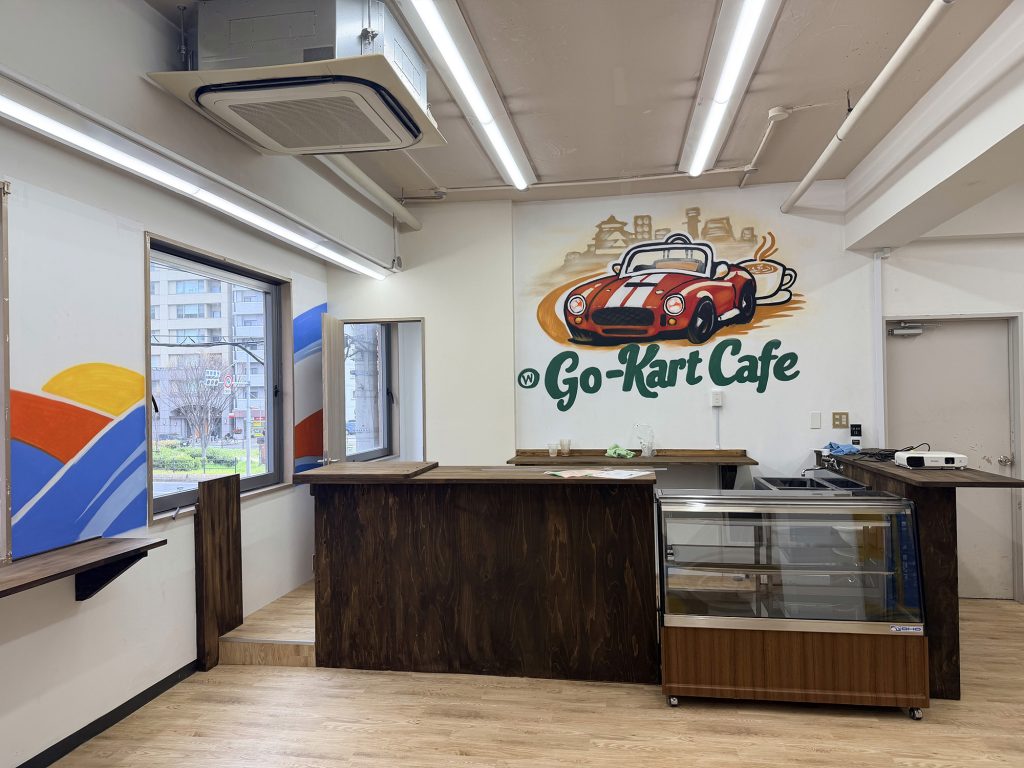
W Go-Kart Osaka is a service base rather than an unattended parking space. Guests meet staff, present documents, hear the briefing, prepare clothing and join the guide-led departure. The indoor reception and lounge also make the exact address meaningful when weather or group arrivals need coordination.
The staffed base is where route, weather and equipment are reconciled
Light rain may allow the service to operate with rain gear potentially provided, while unsafe conditions can cause cancellation or rescheduling. The final decision belongs to the operator examining the live public-road situation. A visitor can check forecasts before leaving a hotel but should wait for current staff instructions at the base.
Costume use, the speaker and the 360 camera are also handled as parts of a scheduled service. No item changes the location or allows phone photography while driving. The guide and briefing remain more important than setting up entertainment equipment.
Opening hours define the full service window, not walk-in availability
The site lists business hours from 10:00 to 22:00, and published starts run through those hours. This does not mean every guest count, route or package remains available for walk-in selection. Use the live booking system and retain the confirmation rather than travelling to Shinmachi on the assumption that an open shop guarantees a kart.
Large suitcases create another location question. The website shows a lounge and reception but does not publish a luggage-storage service, locker dimensions or responsibility for stored belongings. A traveller checking out of a hotel should use a confirmed storage arrangement rather than treating the cafe interior as a guaranteed baggage room. Arriving without bulky luggage also makes the station walk, document handling and transition into suitable clothing more predictable.
Plan the return before choosing the latest departure
The 22:00 start may look attractive to a night-focused visitor, but the surrounding trip must still work after an approximately one-hour experience and return to Shinmachi. Check current subway hours and service status directly with the transport operator on the travel date. W Go-Kart Osaka does not promise a train connection after the tour.
Cancellation is free up to 48 hours before the scheduled time. Inside 48 hours customer cancellation is non-refundable, and rescheduling depends on availability. If the operator cancels because conditions are unsafe, the current policy offers a refund or reschedule without an extra charge. The commercial disclosure is the right place to review these terms before choosing a late slot.
Service details checked on 24 August 2026: address, station-walk estimates, hours, early arrival, routes, prices, inclusions, document sets and cancellation terms were checked against W Go-Kart Osaka’s current material. Line and station context uses official Osaka Metro pages. No exact station exit, train connection or walk time beyond the operator’s estimates is promised.
The best location choice is the one that delivers the driver to the correct counter with time to spare. Nishiohashi minimises the published surface walk, Nishi-Nagahori may simplify a two-line approach, and Shinsaibashi can fit an itinerary already using the Midosuji corridor. All three end at the same conclusion: Shinmachi is where W Go-Kart Osaka turns a legal driver, a guide, an electric kart and a chosen city loop into one complete service.