
A go kart Osaka booking should be timed around the city view you want and the plans immediately before and after the drive. Choose 10:00–16:00 for daylight, the Osaka Castle route and the JPY 7,000 base tier. Choose 17:00–19:00 when the experience needs to sit between daytime sightseeing and dinner. Choose 20:00–22:00 for a clearly nocturnal city tour, the JPY 13,000 Night Experience and its included coffee, speaker and 360-degree camera rental. Whichever window looks best, confirm valid driving documents before organising the rest of the day around it.
W Go-Kart Osaka runs each option as a guided, approximately one-hour public-road experience from 3 Chome-5-2 Shinmachi. Insurance, a guide and a free costume are included in every published tier. The differences are departure time, price, the visual character of the route and whether three optional extras are paid separately or included. The current tour overview is the reference for those live service details; the booking form shows the date, time and guest fields needed to reserve.
See the three Osaka departure windows side by side
The useful comparison is not simply “day versus night.” W Go-Kart Osaka publishes one morning-and-afternoon band, one evening band and one Night Experience band. The one-hour core service remains consistent, while the timetable changes the route fit, surrounding light and package value.
| Departure window | Starts | Price | Published package | Trip-planning advantage |
|---|---|---|---|---|
| Morning and afternoon | 10:00–16:00 hourly | JPY 7,000 | Guide, insurance and costume; coffee, speaker and camera offered as paid add-ons | Daylight Castle views and room for another major activity |
| Evening | 17:00, 18:00, 19:00 | JPY 10,000 | Same core inclusions and published add-on prices | A transition between afternoon sightseeing and nightlife |
| Night Experience | 20:00, 21:00, 22:00 | JPY 13,000 | Guide, insurance, costume, coffee, speaker and 360-degree camera rental included | Dark streets, illuminated kart details and a late main event |
The table does not promise the same light at the same clock time all year. Sunset changes substantially between an Osaka summer and winter. The National Astronomical Observatory of Japan’s Osaka calendar publishes local sunset values by month, which is the right way to estimate whether 17:00 or 19:00 will feel like daylight, twilight or night on a specific travel date.
Go kart Osaka from 10:00 to 16:00 keeps the day flexible
The JPY 7,000 window is the most direct fit when the drive is one part of a larger sightseeing day. Starts run every hour from 10:00 through 16:00, and W Go-Kart Osaka recommends the Osaka Castle route for daytime. The company’s Castle route map depicts an approximately 12.6-kilometre loop with a mapped driving time of about 48 minutes, leaving and returning to Shinmachi.
A castle-focused morning avoids repeating the nightlife districts
A traveller who expects to walk through Dotonbori and Namba after dinner does not necessarily need to drive through those same districts earlier. An 11:00 Castle departure creates a different city view, with the historic landmark as the route’s main orientation point. After returning to the Shinmachi base, the afternoon and evening remain available for museums, shopping or food without another fixed late-night commitment.
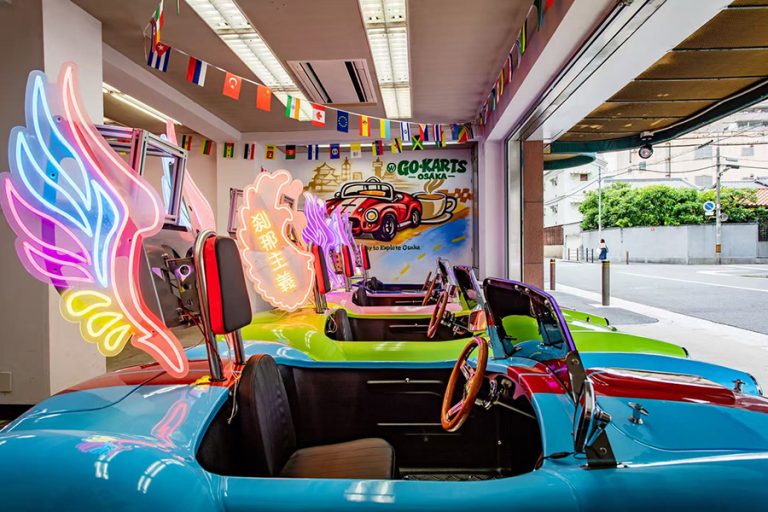
Do not compress the full appointment into a single hour on the itinerary. The booking confirmation asks guests to arrive 10 minutes before departure, and first-time visitors still need walking time from the station, document checking and the safety briefing. The tour also returns to the shop rather than finishing at Osaka Castle. A 10:00 reservation therefore begins before 10:00 from the traveller’s point of view and should not be followed by a reservation that assumes an instant transfer from the landmark.
Paid extras let a daytime visitor control the package
The early tier separates the optional items: coffee is JPY 500, a speaker is JPY 500 and a 360-degree camera rental is JPY 1,000 at the currently published rates. That arrangement works for someone who wants the guided drive and costume but does not need every extra. It also lets a photography-minded traveller add the camera without paying for the complete night package.
The decision should still be about the experience, not only arithmetic. Daylight makes route details easier to read and supports the Castle recommendation; full night strengthens the illuminated city atmosphere. Adding a camera to a daytime session does not turn it into the Night Experience, and removing extras from a late plan does not create a lower published night price.
The 17:00–19:00 band changes character with the season
W Go-Kart Osaka prices the three evening starts at JPY 10,000. This window is useful when neither a daytime departure nor a very late finish works. It can bridge an afternoon activity and dinner, or it can begin the transition into an evening out. What it cannot guarantee is darkness: 17:00 in summer and 17:00 in winter are visually different.
Use the date, not the word “evening,” to predict the light
The National Astronomical Observatory’s daily tables show why date-specific checking matters. In late July 2026, for example, Osaka sunset falls after 19:00, while December sunsets occur much earlier. A guest reserving 17:00 in July should expect substantial daylight; a 19:00 start is closer to the light transition. The same clock choices in December produce a much darker tour. These are astronomical times, not promises about cloud cover, street brightness or the exact moment a route reaches a landmark.
This middle tier suits a couple who wants a fixed activity before dinner but does not want to leave the central city at midday. It is less suitable for a traveller whose only objective is deep-night neon and illuminated kart photographs. In that case, the 20:00–22:00 window gives a clearer match between the expectation and the service name.
Dinner should be planned from Shinmachi, not from Tsutenkaku
The meeting and return point is W Go-Kart Osaka’s shop in Shinmachi. Published walking estimates are about 3–5 minutes from Nishiohashi Station, 8–10 minutes from Nishi-Nagahori Station and 10 minutes from Shinsaibashi Station. A dinner reservation near Namba may look close to the city route on a map, but participants are not dropped there. Build the transfer from the shop after the drive and allow for the briefing and return rather than treating a 19:00 start as a guaranteed 20:00 arrival at a restaurant.
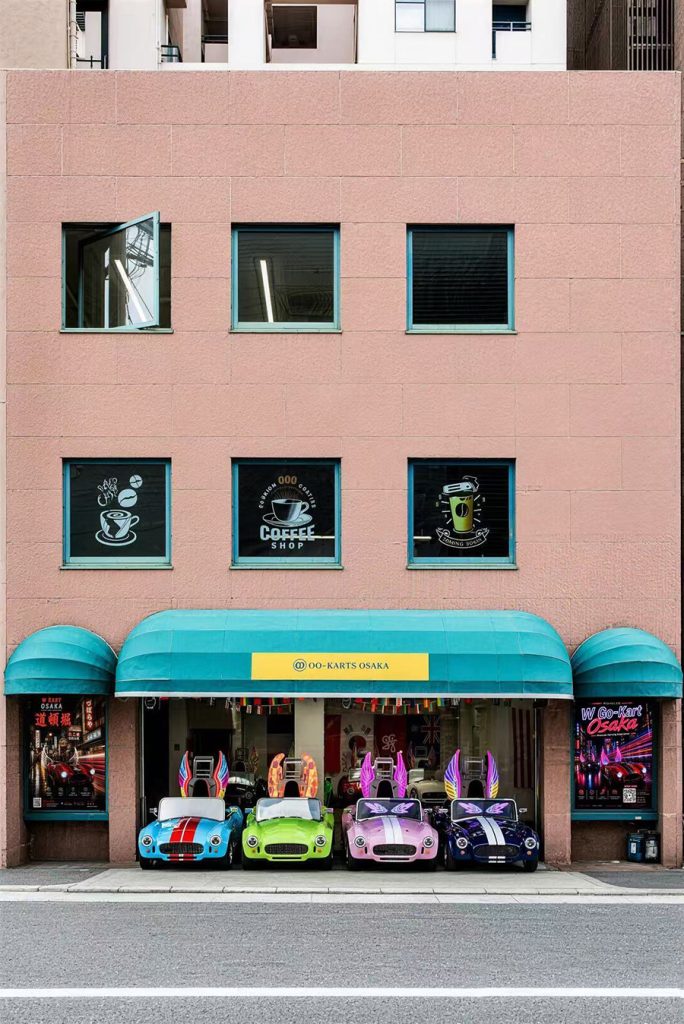
Go kart Osaka at 20:00, 21:00 or 22:00 is a full night choice
The JPY 13,000 Night Experience is the strongest fit when the drive itself is the night’s main event. It aligns with the site’s recommendation for the Tsutenkaku city route and includes the published coffee, speaker and 360-degree camera rental alongside the guide, insurance and costume. That combination is different from an evening ticket with each optional extra considered separately.
The city loop is organised around southern Osaka after dark
W Go-Kart Osaka describes the night route as Tsutenkaku–Namba–Shinsaibashi. The official city map adds context, depicting an approximately 8.9-kilometre, 46-minute loop through or near Amerikamura, Shinsaibashi, Dotonbori, Namba, Nipponbashi, Ebisucho and Shinsekai. Bright commercial streets and the illuminated kart details provide the visual emphasis. The guide still leads a public-road group; darkness does not convert the streets into a racing course or a private photo set.
Included equipment has value only when it suits the traveller
A 360-degree camera can matter to a visitor who wants a record of the night without trying to handle a phone while driving. W Go-Kart Osaka explicitly says not to take photos during the drive, while guide assistance and suitable stops may support pictures. A speaker and coffee may add to the pre- or post-drive atmosphere, but neither should distract from instructions or road awareness.
A late traveller who does not care about the extra items can still prefer this tier because darkness is the primary feature. Conversely, someone who wants the included items but has an early flight should not ignore the 20:00–22:00 finish window. The best value is the package that fits the real schedule, not the one with the longest inclusion list.
Three itineraries show where each time band fits
A family group building the day around an 11:00 drive
Suppose several licensed adults are staying near Shinsaibashi and want a relaxed afternoon. They can walk to Shinmachi, arrive by 10:50 with the required originals and use the Castle route as the day’s first major activity. The group then returns to the same base with enough time for lunch and a separate evening plan. Before relying on a group booking, they should check the live guest selector and availability; the form currently displays choices from one to seven, but that is not a guarantee that every slot has seven open places.
A short-stay couple placing the tour between shopping and dinner
A 18:00 start may solve the schedule for visitors who do not want to sacrifice either afternoon shopping or a late meal. They should check the travel date’s sunset rather than assume full darkness and choose their restaurant from the return point in Shinmachi. If changing weather affects the light or safety, the Japan Meteorological Agency Osaka forecast is the authoritative forecast to review, while the operator decides whether conditions allow the tour to proceed.
A night-view traveller making 21:00 the main event
A visitor with no early departure the next day can reserve 21:00, plan an unhurried arrival and treat the city loop as the centre of the night. The included camera rental is useful only after the guest understands when and how it can be used. Following the guide and keeping hands and attention on driving remain more important than recording every street. Osaka Prefectural Police provides a short traffic-rules video for foreign visitors covering basics such as keeping left and understanding signals.
Documents and weather can overrule the perfect timetable
Every time band depends on legal eligibility. The site accepts a valid Japanese driving licence; an original 1949 Geneva Convention International Driving Permit with the original domestic licence and passport; or, for licences from Switzerland, Germany, France, Belgium, Monaco and Taiwan, an accepted Japanese translation with the original licence and passport. Screenshots and incomplete sets should not be treated as substitutes. The companion first Osaka go-kart route guide compares those document paths alongside the Castle and city loops.
Weather can change the plan as well. Light rain may be handled with rain gear, while unsafe or severe conditions may require cancellation or rescheduling. The current booking terms allow free cancellation up to 48 hours before the scheduled tour; cancellations within 48 hours are non-refundable. When the operator cancels because conditions are unsafe, the published options are a full refund or rescheduling without an extra charge. Those terms should be checked again when reserving because policies can change.
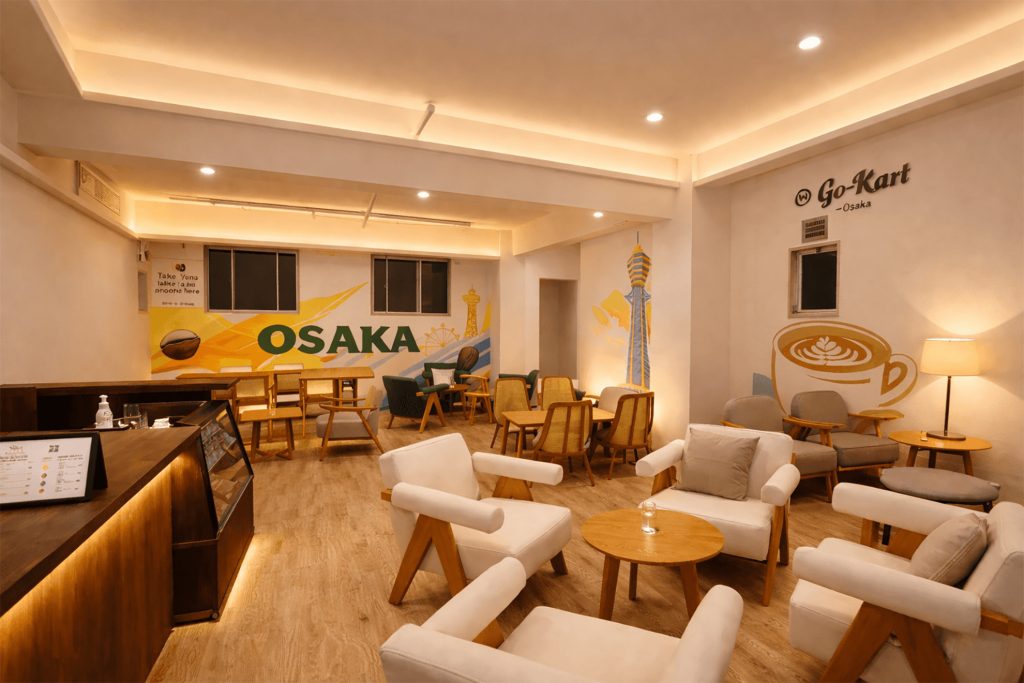
Service details checked on 24 August 2026: time bands, prices, inclusions, access estimates and booking terms were checked against W Go-Kart Osaka’s current service pages. Route figures were read from the company’s published maps. Seasonal light guidance was checked against the National Astronomical Observatory of Japan, and weather and road-safety references use the linked public authorities.
Use 10:00–16:00 when daylight, the Castle loop and room for another major activity solve the day’s priorities. Use 17:00–19:00 when the tour must connect afternoon plans with dinner, after checking what sunset means on that date. Use 20:00–22:00 when the illuminated city route is worth making the night’s main event. Then protect the choice with a realistic Shinmachi transfer, a 10-minute-early arrival and the complete original document set.