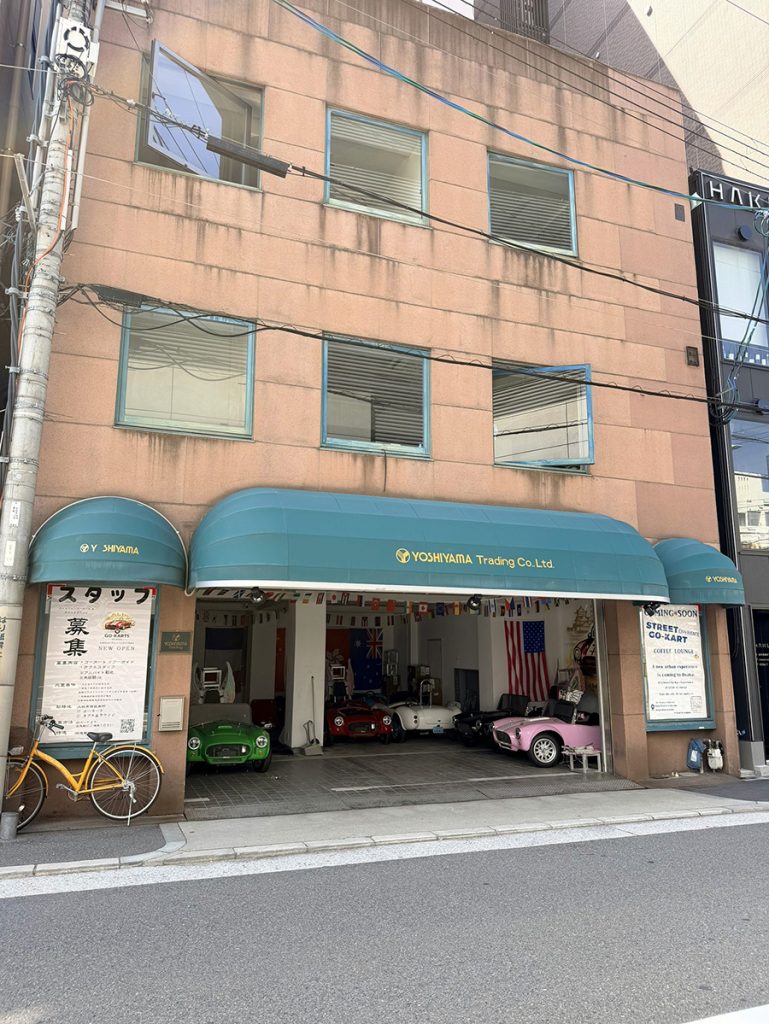
Osaka go kart free cancellation at W Go-Kart Osaka is available until 48 hours before the scheduled departure. Inside that boundary, customer cancellation is non-refundable. A customer-requested reschedule depends on availability. If the operator cancels because road conditions are unsafe, the published remedy is a refund or a no-cost reschedule.
These are three different outcomes, not one flexible-cancellation promise. The exact booked start anchors the customer’s 48-hour calculation. A driver’s document problem, flight delay, changed dinner, or personal weather preference remains customer-side uncertainty unless the operator makes its own unsafe-road decision.
Osaka go kart free cancellation runs on the customer clock
The customer clock counts backward from the scheduled date and time. For a Saturday 20:00 departure, 48 hours before is Thursday 20:00 in the service’s local Osaka time. A cancellation completed before that boundary falls within the published free period; one after it falls inside the non-refundable period. The website does not publish a rounding rule or grace period.
The booked time matters as much as the booked date
“Two days before” can be dangerously vague. Thursday morning is more than 48 hours before Saturday 20:00, while Thursday 21:00 is less. Keep the actual start in the calendar and calculate from it. Do not wait for a daily midnight assumption that the commercial disclosure does not state.
Japan time controls the practical calculation
The service operates in Osaka, so an overseas traveller should view the departure and boundary in Japan Standard Time. A phone still displaying another time zone can make a seemingly early decision late. Save both the local departure and the corresponding home-zone time if a distant family member or payer will manage the cancellation.
Free describes the customer cancellation charge, not every trip loss
A service cancellation within the free period does not promise reimbursement for hotel, rail, attraction, currency-conversion, or other travel arrangements. The operator pages do not publish coverage of those external costs. Keep the go-kart transaction separate from the rest of the Osaka itinerary.

The operator safety clock begins from live road conditions
W Go-Kart Osaka uses public roads, so unsafe-weather cancellation is an operational decision. The operator’s published remedy is a refund or no-cost reschedule. This clock cannot be calculated by a customer from a forecast percentage alone. It depends on the operator’s current judgment about delivering the service safely.
An official forecast informs the visitor without cancelling the service
The Japan Meteorological Agency publishes official forecasts and warnings for Osaka. Those sources help a traveller pack and monitor conditions. They do not submit a cancellation to W Go-Kart Osaka and do not announce whether a particular go-kart departure will run.
A customer preference about rain remains customer-side
A guest may prefer a perfectly dry night for photographs. If the operator has not cancelled for unsafe conditions, the visitor should not automatically apply the operator-weather remedy to a personal preference. Decide within the free customer window if a narrow visual condition is essential.
The road decision is different from an attraction closure
Osaka Castle Museum, Tsutenkaku, restaurants, or trains may publish their own operating changes. Those external events do not automatically define W Go-Kart Osaka’s status. The kart starts and returns in Shinmachi, and its operator controls its own public-road service decision.
Four timelines show how the policy changes outcomes
Wednesday decision for Saturday 20:00 stays outside 48 hours
A cancellation made Wednesday for Saturday at 20:00 is more than 48 hours ahead. Under the current wording, it belongs to the free customer-cancellation period. Preserve whatever dated evidence the actual process provides. The website does not publish an exact refund-processing time or payment-channel method.
Friday decision for Saturday 20:00 falls inside 48 hours
A cancellation on Friday is less than 48 hours before that departure and is non-refundable under the customer rule. Calling it a reschedule does not guarantee a different result; requested rescheduling remains subject to availability. Do not promise an exception that the public terms do not state.
Friday discovery of an invalid permit remains a document problem
If a driver discovers the international permit is not under the 1949 Geneva Convention, that does not become an operator weather cancellation. The correct time to validate issuer, convention, validity, domestic licence, and passport is before the free window closes. Payment does not legalize an incomplete path.
Saturday operator cancellation for unsafe conditions follows its own remedy
If W Go-Kart Osaka cancels because conditions are unsafe, the current terms state refund or no-cost reschedule. The customer should follow the actual communication and preserve its record. This article cannot select the remedy on the operator’s behalf or promise processing speed.
Document uncertainty belongs before the free boundary
Every driver needs accepted originals. A Japanese licence is the direct domestic path. The international path uses an original 1949 Geneva Convention permit, original domestic licence, and passport. The listed translation path uses an accepted Japanese translation, original domestic licence, and passport for Switzerland, Germany, France, Belgium, Monaco, or Taiwan.
A scan can support private checking but cannot replace the original
A group coordinator may compare the type and dates before travel without circulating sensitive numbers. Reception still requires the physical originals. Do not wait until arrival to learn that the permit booklet is wrong or the passport stayed in a hotel safe.
One uncertain participant changes the group’s risk
The form accepts a requested guest count from one to seven, but the site publishes no passenger fallback. The party can resolve the document path, reduce the genuine driving roster through the current booking process, or reconsider before the boundary. It should not assume the ineligible person can ride with a friend.
Validity should be checked against the service date
A document valid when the form is submitted may be invalid by the chosen departure. Check the actual date and accepted path. A requested reschedule can also move the service to a different validity window, so repeat the comparison after any confirmed change.
Travel uncertainty should be priced before it becomes urgent
A first-day booking carries arrival disruption risk
An incoming flight, immigration, luggage, airport rail, hotel check-in, and navigation to Shinmachi create several dependencies. The operator asks guests to arrive ten minutes early; that is not a flight-delay buffer. A visitor with uncertain arrival may choose a later trip day or cancel while still outside 48 hours.
A final-night booking carries onward-connection risk
The 22:00 start can fit a full sightseeing day but leaves little room for distant accommodation or luggage collection after the Shinmachi return. The approximately one-hour service and route map times are not exact release promises. If the onward connection is fragile, use the free window to move or cancel through the available process.
A fixed attraction reservation can conflict with the kart clock
The Castle and city route names do not include attraction entry. A museum ticket, tower slot, restaurant table, or performance must have its own travel margin. If two fixed reservations cannot coexist, solve the conflict early rather than expecting public traffic to compress the go-kart service.
Rescheduling is a request for new availability
The terms state that rescheduling depends on availability. A new date or time therefore cannot be treated as saved inventory until the operator’s process confirms it. The one-to-seven guest selector also does not reveal fleet capacity for the replacement start.
A changed hour can change the price band
Moving from 19:00 to 20:00 crosses from JPY 10,000 to JPY 13,000 and changes coffee, speaker, and camera from optional to included. Moving from 17:00 to 16:00 crosses to JPY 7,000 and may change the route-time fit. A reschedule is not just a calendar edit.
A changed date can change documents and daylight context
Recheck validity, physical possession, forecast, natural light, hotel location, and transport. The route recommendation stays Castle/day and city/night, but seasons change how a specific hour feels. No rescheduled date comes with a light or weather warranty.
A changed guest count can change the real group total
Prices are per person. Reducing or increasing drivers changes simple arithmetic and may affect availability. The public terms do not describe every partial-change or refund calculation, so do not invent one. Follow the operator’s actual resolution for the specific booking.
A boundary record should contain facts, not a policy interpretation
A traveller does not need to write legal language. A compact record of the scheduled departure, the calculated 48-hour point, the party’s decision, and the evidence produced by the actual process is more useful. It keeps time zones and causes visible without claiming that an unprocessed request already has a specific result.
Write the scheduled departure in Osaka local time
For example, “Saturday 10:00 JST” makes the customer boundary “Thursday 10:00 JST,” while “Saturday 22:00 JST” makes it “Thursday 22:00 JST.” The date alone hides twelve hours of practical difference. Copy the booked start from the real record rather than relying on memory.
Write the reason without changing its category
“Driver permit is incomplete,” “flight schedule changed,” and “customer prefers different weather” are customer-side causes. “Operator states unsafe-road cancellation” is a different cause. Accurate wording prevents friends or payers from applying the refund/no-cost-reschedule remedy to a decision the operator did not make.
Write the action time from the evidence actually created
Keep the dated page, message, email, or reference produced by the real cancellation or reschedule process. The public pages reviewed do not define which timestamp controls every channel, so this article does not select one. Acting well before the boundary is safer than depending on seconds or disputed delivery.
Write the observed outcome without predicting processing
If the actual record states cancelled, rescheduled, refunded, or pending, preserve that exact meaning. Do not turn a card notification into a final operator record or promise when funds will appear. The website does not publish a refund-processing duration, and financial institutions can show transaction states differently.
Group coordinators need one decision owner before the clock narrows
A group can miss the free window while six people debate independently. Nominate one coordinator to hold the booked start, the calculated boundary, and the current driver roster. That person should not make legal or medical decisions for others; their role is to gather yes/no readiness and carry out the agreed commercial action in time.
Each driver reports physical readiness, not optimism
“My IDP is probably fine” is not a usable group status. A driver should confirm the convention path, original domestic licence, passport, accepted translation when relevant, and physical possession. Sensitive numbers need not be posted in the group chat. The coordinator needs the readiness result, not copies of identity documents.
The itinerary owner reports fixed external commitments
One person should list the non-movable flight, train, hotel, attraction, or dinner around Shinmachi. This exposes conflicts while cancellation remains free. The go-kart operator does not reimburse those external arrangements, so a coherent surrounding schedule is part of the party’s own risk control.
The group decides before the final hour of the window
Waiting until the exact boundary creates time-zone, connectivity, and process risk. The terms give a 48-hour condition, not a recommendation to act at 47 hours and 59 minutes. When uncertainty is material and cannot be resolved, an earlier decision preserves more control.

Use an Osaka go kart free cancellation decision before assumptions harden
The booking-timing guide helps identify unstable dependencies, while the booking record guide separates submission, payment, and ready-to-drive evidence. Compare late starts in the night timing guide before creating a fragile return plan.
Use the booking form for a resolved date, time, guest count, and route tier. Read the commercial disclosure directly and keep the actual dated records produced by the process. A forecast screenshot or personal message is not a cancellation record.
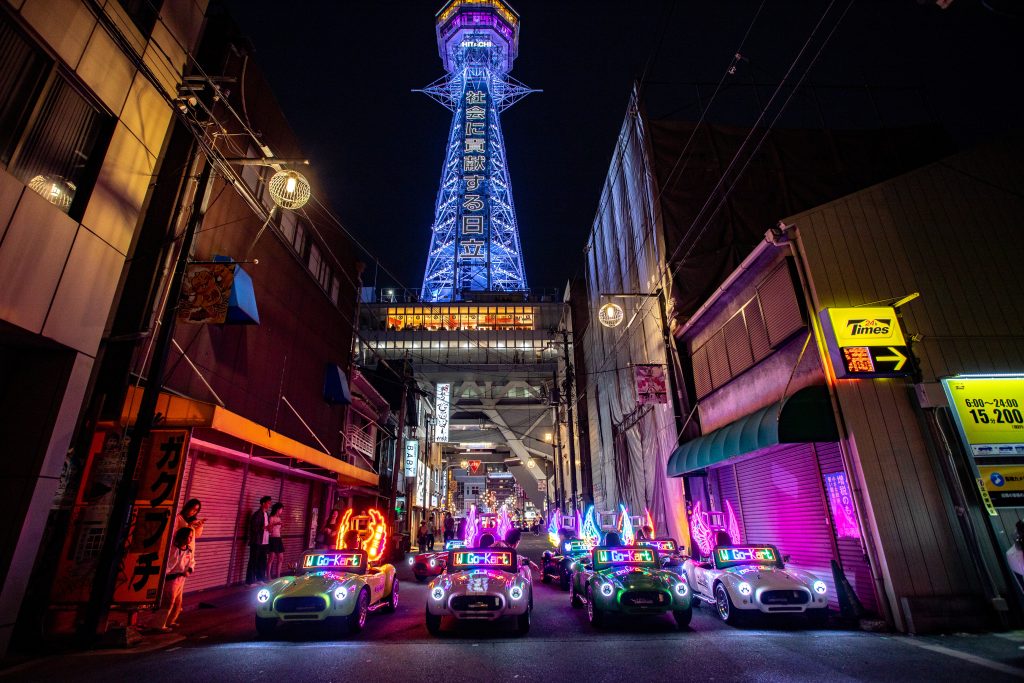
Policy information checked on 24 August 2026: the 48-hour free-cancellation boundary, late non-refundability, availability-dependent rescheduling, unsafe-weather remedies, routes, starts, prices, documents, address, and arrival were checked on W Go-Kart Osaka pages. JMA supports only general official weather context. No grace period, rounding rule, processing time, refund channel, external-trip reimbursement, partial-change formula, or operator decision is claimed.
The safest use of free cancellation is proactive. Resolve documents, flights, fixed reservations, and group readiness while the customer still controls the outcome. After that boundary, do not rename a personal change as unsafe weather. Let the operator make the road decision, and keep every commercial action tied to the actual scheduled Osaka departure.