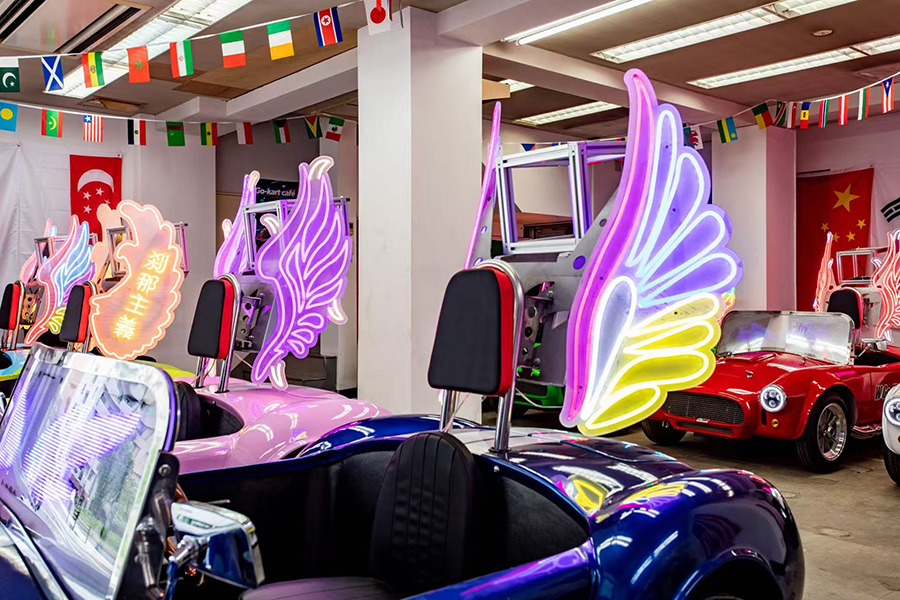
An Osaka landmark go kart tour should fill the landmark category missing from the rest of the trip. Choose W Go-Kart Osaka’s daytime Castle loop for one broad historic landmark anchor: its map shows approximately 12.6 kilometres and 48 minutes. Choose the night-recommended Tsutenkaku city loop for several southern icons and districts: approximately 8.9 kilometres and 46 minutes through or near Minami and Shinsekai.
Both are guide-led electric-kart loops of approximately one hour from the same Shinmachi base. Neither includes museum or tower admission, and neither guarantees a stationary photograph at every name on the map. The useful question is not “Which landmark is more famous?” It is “Which side of Osaka is still missing from my itinerary?”
An Osaka landmark go kart tour offers three levels of depth
A landmark can appear in a trip in three different ways: as moving road context, as an approved stopped photo opportunity or as a separate attraction visit. W Go-Kart Osaka guarantees the first through its route identities. Its homepage says there will be photo stops and guides may assist, but does not publish the exact place or count. Attraction entry belongs to another provider.
| Landmark relationship | What the kart service supports | What requires a separate plan |
|---|---|---|
| Moving context | Guide-led Castle or Tsutenkaku city loop | Guaranteed sightline or traffic-free view |
| Photograph | Stopped moments may be available; guide may assist | Exact landmark, pose, shot count or edited files |
| Historical depth | Broad Castle-oriented road perspective | Osaka Castle Museum, garden or park exploration |
| Night-icon depth | Tsutenkaku/Minami/Shinsekai route context | Tower entry, Dotonbori meal or Shinsekai walk |
Moving context is the core product
The customer controls an individual electric kart while following the guide on public roads. Landmarks organize the city story rather than create a hop-on itinerary. The product is strongest when the visitor wants to feel relationships between streets and areas from a distinct driving position.
A photo stop remains subordinate to the road
Taking photos while driving is prohibited. The site mentions suitable stops and possible guide assistance, but the live route, traffic and weather influence operation. A visitor should welcome an approved picture without building the purchase around one exact background. A dedicated photographer can return on foot after the tour.
Admission cannot be inferred from a map label
Official Osaka tourism treats Osaka Castle Museum and Tsutenkaku as separately operated attractions with their own visitor information. W Go-Kart Osaka does not bundle those tickets. A place name on the kart route confirms orientation, not access inside the landmark.
The Castle loop fills a historic-landmark gap
Official visitor information describes Osaka Castle Park as a large area containing the museum, gardens and other facilities. W Go-Kart Osaka recommends its Castle loop during daytime. This makes the route a logical choice when the rest of the trip already includes food, shopping and nightlife but lacks a historic visual anchor.
A first-time history visitor can separate overview from detail
An early kart start can create the moving city overview. After returning to Shinmachi, the visitor can travel independently to the Castle area for museum or park time. The daytime Castle guide explains this two-chapter structure without treating the kart as attraction transport.
A traveller who already walked Castle Park may value another route more
If the trip already includes several hours around the museum, moat and gardens, repeating the Castle category in the kart may add less variety. That visitor can choose the night city loop to introduce Minami and Shinsekai. The decision depends on portfolio balance, not on declaring the Castle route inferior.
The 12.6-kilometre map gives scale, not historical content
The approximately 48-minute map value and distance show a broader loop. They do not state how long the Castle is visible or what history the guide narrates. The site publishes no commentary script or historical-guide qualification. Choose the route for landmark orientation and use official attraction sources for detailed history.

The city loop fills a night-icon gap
Official tourism identifies Tsutenkaku as a landmark of Shinsekai and Dotonbori as a symbolic Minami district known for prominent signs and entertainment. W Go-Kart Osaka’s city map links that wider night identity through or near Amerikamura, Shinsaibashi, Dotonbori, Namba/Nipponbashi, Ebisucho and Shinsekai.
Tsutenkaku gives the route a recognizable southern anchor
The operator has an authentic photograph of karts with the illuminated Tsutenkaku area, which supports the route’s reality. It does not guarantee the same lane position, traffic gap, weather or photo angle. The tower’s observation deck and other attractions remain separately ticketed experiences.
Dotonbori and Namba add icons without becoming stops
The city loop gains variety from multiple well-known areas, but the group does not shop or dine while driving. A guest who wants a Glico-sign portrait or a specific restaurant should plan walking time later. The city-district guide explains how the areas form one route instead of six mini-tours.
The 8.9-kilometre route favours concentration over breadth
The map depicts approximately 46 minutes, only two minutes less than the Castle map but across a different district pattern. Shorter distance does not mean lower value. The city route concentrates the visual identity that night-focused visitors seek. Public-road traffic prevents either map from becoming a timed landmark checklist.
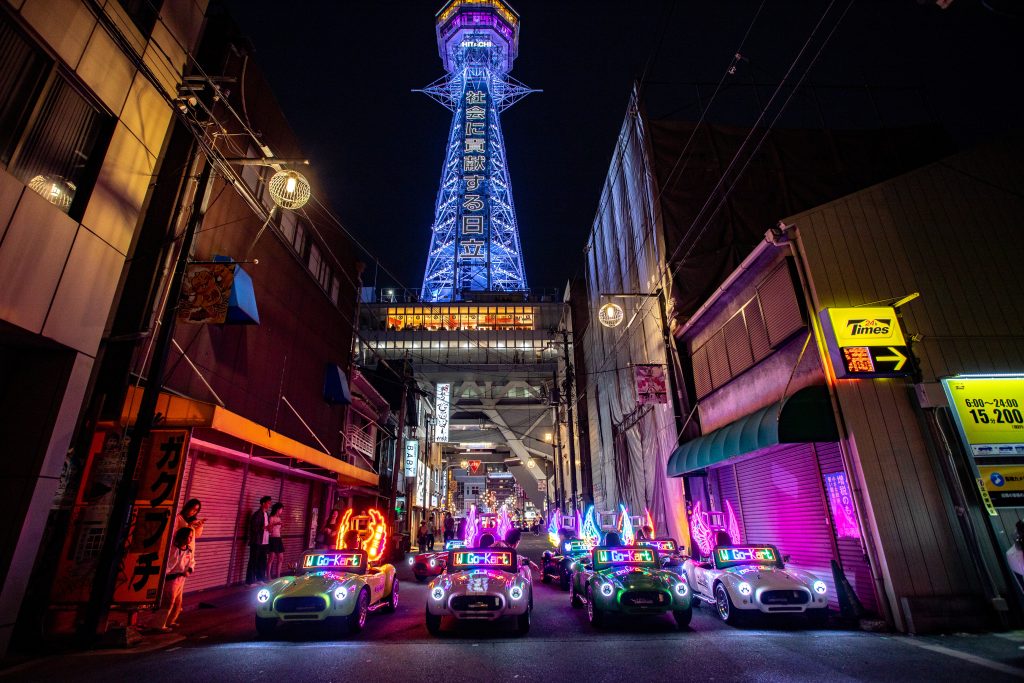
Revisiting a landmark can add perspective without adding depth
The portfolio-gap method usually favours contrast, but a repeated landmark category is not automatically wasteful. The relevant question is whether the second encounter changes the visitor’s role. Walking inside an area and later driving a guided loop around its city context are different forms of attention. Repetition makes sense when that difference—not extra admission or identical photographs—is the reason.
A prior Castle walk can make the daytime road context easier to appreciate
Someone who has already explored the park knows that the museum, gardens and public space require their own time. That knowledge can prevent unrealistic stop expectations on the kart. The traveller may then use the approximately 12.6-kilometre loop to place the landmark within a wider moving Osaka view. They should choose this repeat only if seeing city relationships matters more than adding a new night district.
A prior Shinsekai evening can make the city sequence more legible
A visitor who walked beneath Tsutenkaku may recognize the southern destination while discovering how it relates to Amerikamura, Shinsaibashi, Dotonbori, Namba/Nipponbashi and Ebisucho. The kart does not deepen one restaurant or tower visit; it adds connective geography. That can justify repeating the area when the guided transition itself is the missing experience.
A first visitor with neither landmark should let the surrounding day decide
If both categories are new, look at the itinerary on each side of the booking. A day already ending in Dotonbori or Shinsekai may gain more contrast from Castle. A day filled with museums and formal attractions may gain energy from the night city loop. Price and document readiness must still fit, but the surrounding plan can break the landmark tie without pretending one icon is universally more important.
Four landmark portfolios point to different choices
A food-and-shopping trip may need the Castle route
This itinerary already spends time in Shinsaibashi, Dotonbori and Namba. The daytime Castle loop adds contrast instead of repeating commercial districts. A separate Castle entry remains optional; the kart can supply the historical-landmark category at road level.
A museum-heavy trip may need the Tsutenkaku route
A traveller who has covered Osaka Castle and other cultural attractions may want southern streets to become the active chapter. The night city loop adds illuminated kart styling and several entertainment-area contexts without requiring the visitor to navigate the route.
A photographer needs two products, not one expanded promise
The kart provides motion and approved photo opportunities; walking provides control over composition and time. A serious image-maker can choose the route whose atmosphere matters, follow the no-phone rule, then revisit the chosen landmark with a camera. Asking the guide-led road group for studio conditions would misunderstand both products.
A couple with opposing priorities can choose the missing category
If one person wants Castle and the other wants Tsutenkaku, inspect the rest of the shared trip. A separate Castle Park visit can free the kart for the city loop; a planned Dotonbori/Shinsekai evening can free it for Castle. The two-view comparison makes that trade visible.
Time and price turn landmark preference into a package
The Castle/day choice aligns with hourly starts from 10:00 through 16:00 at JPY 7,000. The city/night choice aligns most clearly with the Night Experience at 20:00, 21:00 or 22:00 for JPY 13,000. Starts at 17:00–19:00 cost JPY 10,000 and sit between those identities without guaranteeing sunset or darkness.
Every band includes the guide, insurance and costume
The approximately one-hour experience, guide, insurance and costume form the core. Before 20:00, coffee is JPY 500, speaker JPY 500 and 360 camera JPY 1,000. At night, all three are included. These additions support hospitality and memories; they do not change the chosen landmark geography.
Natural light does not obey the price boundary
A 19:00 start is not guaranteed daylight or darkness, and a 20:00 package does not promise a particular crowd or weather. Date and conditions determine the real view. The night package should be selected for its intended setting and inclusions, not an exact sky appearance.
Documents decide whether any landmark route is available
Every driver needs accepted originals: a valid Japanese licence; an original 1949 Geneva Convention IDP, original domestic licence and passport; or an accepted foreign licence, authorized Japanese translation and passport for a listed jurisdiction. A landmark preference cannot override an incomplete set, and the site publishes no passenger option.
Arrive ten minutes early at Shinmachi, not at the landmark. The guide leads the group and both loops return to the shop. Use the booking form only after route, start, guest eligibility and package are aligned. The one-to-seven selector does not guarantee capacity.
Book an Osaka landmark go kart tour to fill one clear trip gap
Choose Castle/day when historic landmark context is absent. Choose Tsutenkaku city/night when the itinerary lacks Minami and Shinsekai after dark. Do not make the kart duplicate a category already covered unless the driving perspective itself is the reason. Customer cancellation is free until 48 hours before departure; inside that boundary it is non-refundable, and rescheduling depends on availability.
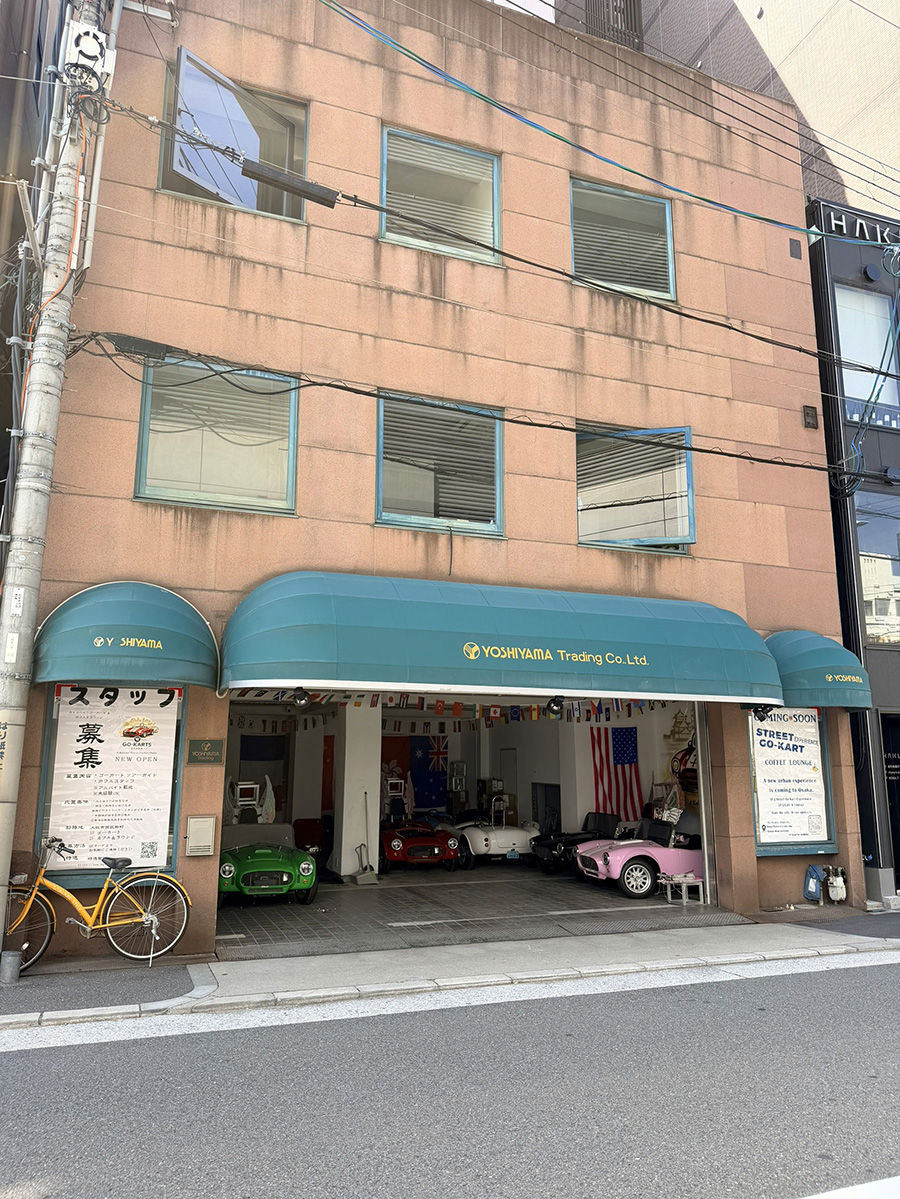
Both loops finish at 3 Chome-5-2 Shinmachi. Plan separate landmark visits and onward transport from there. The commercial terms should be read before adjacent tickets become fixed.
Landmark information checked on 24 August 2026: route names, maps, measures, recommendations, starts, prices, inclusions, photo guidance, documents, address and policies were checked on W Go-Kart Osaka pages. Official tourism supports only landmark and district identity. No view duration, commentary, stop, image, admission, sunset, pickup, drop-off or capacity is claimed.
A landmark tour is strongest when it adds the missing visual chapter instead of trying to replace every attraction visit. W Go-Kart Osaka gives that choice a clear shape: one historic daytime anchor or several southern night icons, each reached through a guide-led electric-kart loop. Select the missing category, keep deeper visits separate and let the moving perspective do the work it is genuinely good at.