An Osaka city go kart tour with W Go-Kart Osaka connects several southern-city identities in one guide-led drive. The night-recommended map begins and ends at the operator’s Shinmachi base and depicts approximately 8.9 kilometres and 46 minutes through or near Amerikamura, Shinsaibashi, Dotonbori, Namba/Nipponbashi, Ebisucho and Shinsekai/Tsutenkaku. The approximately one-hour product is about transitions between districts, not a visit inside every named place.
This route fits a traveller who wants to feel how fashion, entertainment, commerce and retro Osaka sit within one moving city chapter. It does not fit someone seeking Osaka Castle, attraction admission, a food crawl or transport to a Namba hotel. Choose the loop for the geographic story; revisit any favourite district independently after returning to Shinmachi.
An Osaka city go kart tour begins in a quieter service zone
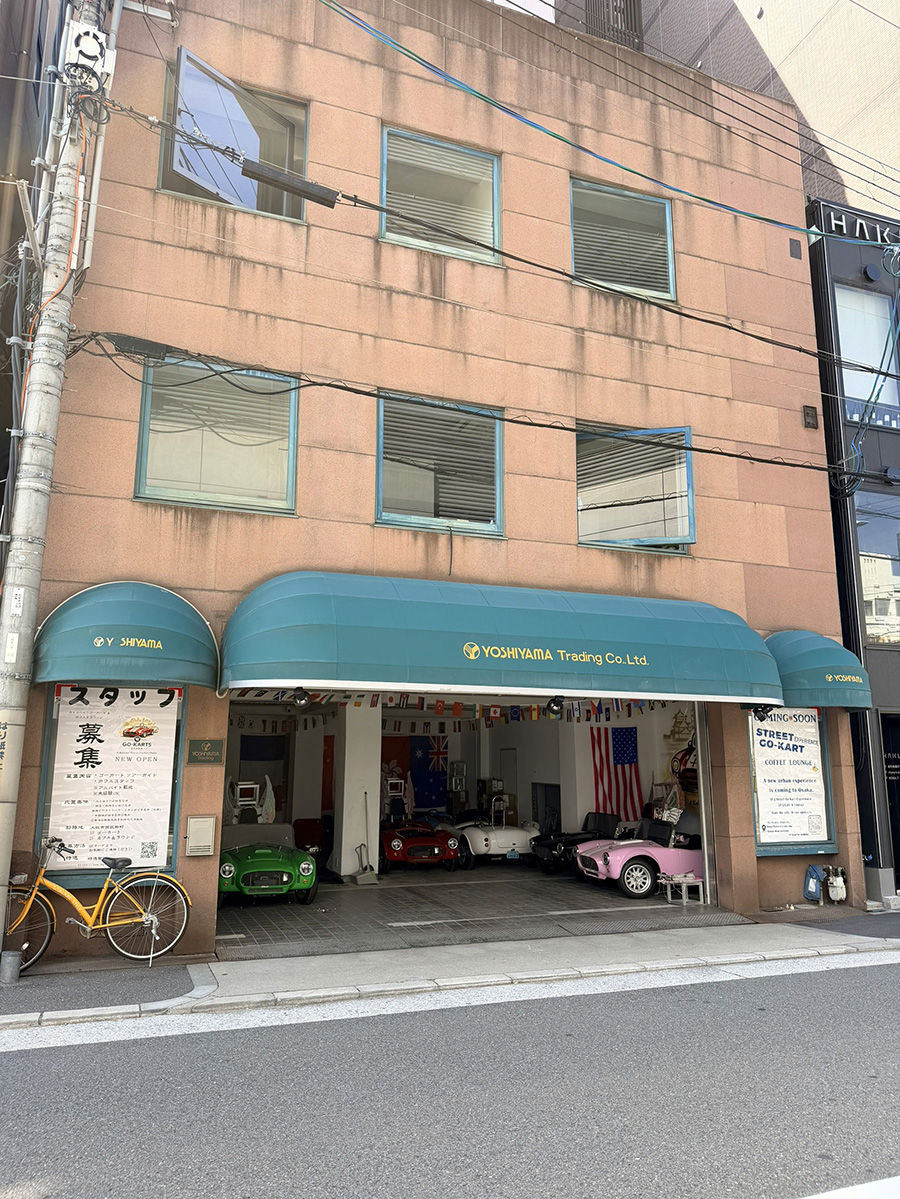
Before the famous district names appear, the experience is anchored at 3 Chome-5-2 Shinmachi, Nishi Ward. This staffed base creates the first geographic fact: the tour is not collected in Namba and does not begin beneath Tsutenkaku. Guests travel to Shinmachi, arrive ten minutes early, show originals and receive the guide’s briefing.
Shinmachi is the operational centre, not a route label to skip
The booking becomes real at reception, where driver eligibility and preparation meet the actual karts. A guest who starts reading the route at Dotonbori misses this essential stage. The shop is published as approximately 3–5 minutes on foot from Nishiohashi Station, 8–10 minutes from Nishi-Nagahori and about 10 minutes from Shinsaibashi.
The guide turns scattered district names into one journey
A visitor could reach these areas separately by train or walking, but the product offers a different connection: an individual electric kart following a guide on public roads. Personal navigation is not the point. The guide supplies the route relationship while each driver controls the kart and responds to live signals, pedestrians and traffic.
The common return prevents the route becoming a transfer
When the city sequence finishes, guests come back to the same base. A restaurant, hotel or late train begins after this return. The city-map reading guide explains why district labels do not create pickup and drop-off points.
Amerikamura and Shinsaibashi open the Minami transition
Official Osaka tourism describes Amerikamura as a youth-culture area on the western side of Shinsaibashi. Shinsaibashi is one of the recognizable commercial names in Minami. Their appearance on W Go-Kart Osaka’s map tells a visitor that the route moves from its service base toward a denser, more expressive urban setting.
Amerikamura contributes street culture without a shopping stop
Fashion, music and gathering places help explain the area’s identity. From a moving kart, this becomes environmental context rather than time to browse stores or enter Sankaku Park. A visitor who wants to shop should return on foot. The tour’s value is seeing the change in street character while remaining inside one guided public-road loop.
Shinsaibashi signals the shift into central commercial Osaka
Shinsaibashi also matters before departure because it is one of the stations with a published walk estimate to the shop. On the route, the name has a different function: it helps orient the urban sequence. A station used to reach check-in and an area observed while driving should not be treated as the same travel stage.
Night changes the surface of the area without changing driver duties
The operator recommends the city loop after dark, when signs and illuminated karts become more visually prominent. Traffic law remains ordinary: keep left, obey signals, protect pedestrians and do not hold a phone while driving. The guide creates continuity, not an exemption from the city around the group.
Dotonbori and Namba concentrate the entertainment-city identity
Official visitor material describes Dotonbori as a symbolic Minami shopping and entertainment district known for prominent signs, restaurants and the river. Namba functions as a transport and visitor hub for the wider area. Together, these names make the middle of the city loop instantly legible to international travellers.
Dotonbori is observed as a district, not consumed as dinner
The route does not include restaurant service, a riverwalk or time beneath a chosen sign. Drivers should keep alcohol after the kart portion and keep phones away in motion. A food-focused guest can use the drive to understand where the district sits, return to Shinmachi and then travel back for a separate meal.
A Namba hotel does not move the meeting point
The word “Namba” may be prominent in a traveller’s itinerary, but W Go-Kart Osaka publishes no hotel pickup. The Namba-to-Shinmachi planning guide treats the hotel journey and kart journey as two different movements. A guest should be inside the shop ten minutes before the selected start, not waiting at Namba Station.
Named entertainment does not guarantee a particular frame
Signals, road position, other vehicles and weather affect what each driver sees. The site’s route names establish authentic area context, but no exact sign, empty street or stop is promised. Photography belongs only to approved stopped moments; the homepage says guides may assist, without publishing a landmark or image count.
Nipponbashi and Ebisucho carry the route farther south
Official Osaka tourism traces Nipponbashi’s identity from historic transport and bookselling to its later electronics character. Ebisucho is widely used as an access name for the Tsutenkaku/Shinsekai area. On the kart map, they help explain the geographic bridge between central Minami and the southern landmark zone.
Nipponbashi adds another commercial layer beyond Namba
A traveller may associate the area with electronics or popular culture, but the kart tour does not become a shopping visit. Its role is transitional: the city does not jump directly from Dotonbori to Tsutenkaku. Reading this middle layer makes the approximately 8.9-kilometre loop feel like a coherent geography instead of a list of famous endpoints.
Ebisucho signals approach without promising station access
Official attraction information places Ebisucho near Tsutenkaku. Seeing it on the route does not mean a guest can leave the kart for the station or use the loop as a one-way ride. The service continues under guide leadership toward its southern identity and eventually returns to Shinmachi.
The 46-minute map value cannot divide neatly by district
No published allocation says how many minutes belong to Shinsaibashi, Dotonbori or Shinsekai. Public traffic changes the rhythm. The figure describes the route approximately; it cannot support a timed plan such as “ten minutes in Namba” or an exact handoff to an attraction.
Shinsekai and Tsutenkaku give the city loop its southern image
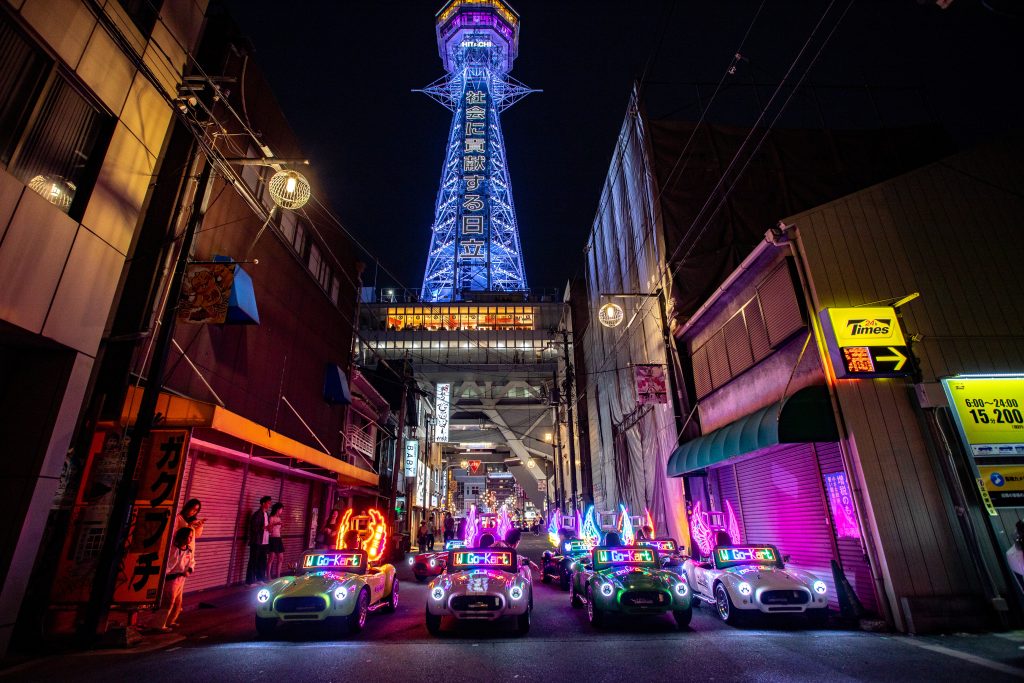
Official tourism identifies Shinsekai as the district known for Tsutenkaku and a retro downtown atmosphere. W Go-Kart Osaka’s authentic night photograph shows several karts with the illuminated tower area. This is the strongest first-party visual evidence for the city’s southern route identity.
Tsutenkaku is an anchor in the view, not included admission
The observation tower operates as a separate attraction with its own access and commercial terms. The kart package does not include entry, and the guide is not an observatory guide. A traveller who wants the interior should make an independent plan that respects the Shinmachi return and the attraction’s current information.
Shinsekai atmosphere suits a night-first traveller
A visitor whose main interest is Osaka after dark can make the city loop the centre of the evening. Restaurants and pedestrian exploration come afterward, with alcohol kept outside the driving stage. The 20:00–22:00 start guide helps choose how late that return can fit.
The route’s southern highlight still leads back north-west
The tower area may feel like a climax, but it is not the service finish. The guide continues the route back to the Shinmachi base. A traveller should preserve attention and follow instructions through the entire return rather than mentally ending the drive when the most recognizable image has passed.
The right traveller wants connections, not six mini-tours
A first-time visitor can gain a mental model of southern Osaka
This guest values the change from Shinmachi through Minami to Shinsekai and back. The loop can reveal which district deserves a longer later visit. It cannot replace the walking, eating or attraction time needed for detailed exploration, so the traveller chooses one favourite after the drive rather than demand depth everywhere.
A Castle-focused visitor should use the other route
Osaka Castle is not the subject of this southern city sequence. W Go-Kart Osaka publishes a separate approximately 12.6-kilometre, 48-minute Castle loop and recommends it during daytime. The two-route comparison helps avoid buying the city map while expecting the historical landmark chapter.
A district specialist should plan a later walk
If Nipponbashi electronics, Dotonbori food or Shinsekai history is the main purpose of the trip, the moving loop can supply context but not sufficient depth. A separate visit is not duplication. The kart answers how the districts relate from the road; the walk answers what is inside one place.
The city label does not mean every side of Osaka
The map is a specific southern-city loop, not a claim to cover the whole municipality in one hour. It does not publish Umeda, the bay area, distant neighbourhoods or attraction entry as part of this product. Even Osaka Castle belongs to a different W Go-Kart Osaka route. Recognizing these absences makes the service stronger, not smaller: the visitor can judge one coherent Minami-to-Shinsekai experience instead of expecting a citywide survey that no approximately one-hour public-road drive could honestly promise.
Missing districts belong in the wider trip, not an imagined detour
A traveller who also wants Kita, the waterfront or a detailed Castle visit should schedule those interests independently. The guide does not publish optional branches, and an experienced driver cannot add one by navigating away from the group. The city tour contributes a particular geographic layer to the itinerary. Other transport and walking plans can contribute the rest without forcing the kart service beyond its mapped purpose.
The named zones are anchors rather than a complete street inventory
Amerikamura, Shinsaibashi, Dotonbori, Namba/Nipponbashi, Ebisucho and Shinsekai help an overseas visitor recognize the route. They should not be read as every road, block or view that the guide will use. Live traffic and current operation still determine the street-level sequence. The article therefore explains area identity while deliberately withholding a turn list the operator has not published.
Book the Osaka city go kart tour after three final checks
First, confirm every driver has an accepted original set. Second, choose an evening or night start whose return fits the rest of the trip. Third, understand the package. Starts at 17:00–19:00 cost JPY 10,000 with coffee, speaker and 360 camera separately priced; 20:00–22:00 costs JPY 13,000 and includes all three alongside guide, insurance, costume and approximately one hour.
Use the booking form only after the party can name Shinmachi as both start and finish. The one-to-seven guest selector does not guarantee fleet capacity. Customer cancellation is free until 48 hours before the tour; inside that boundary it is non-refundable, and rescheduling depends on availability.
District and service information checked on 24 August 2026: city-map places, route measure, recommendation, start/return, guide, photo guidance, prices, documents and policies were checked on W Go-Kart Osaka pages. Official Osaka tourism supports only broad district identity. No exact road, view, stop, district duration, admission, pickup, drop-off or capacity is claimed.
Choose the city loop when the relationship between Osaka districts is more exciting than ticking off isolated attractions. W Go-Kart Osaka supplies a real electric kart, guide, measured route and clear Shinmachi base; the city supplies the changing visual character. After the return, go back on foot to the district that stayed in mind—the route has already done its best work by showing why that place belongs in the wider Osaka story.