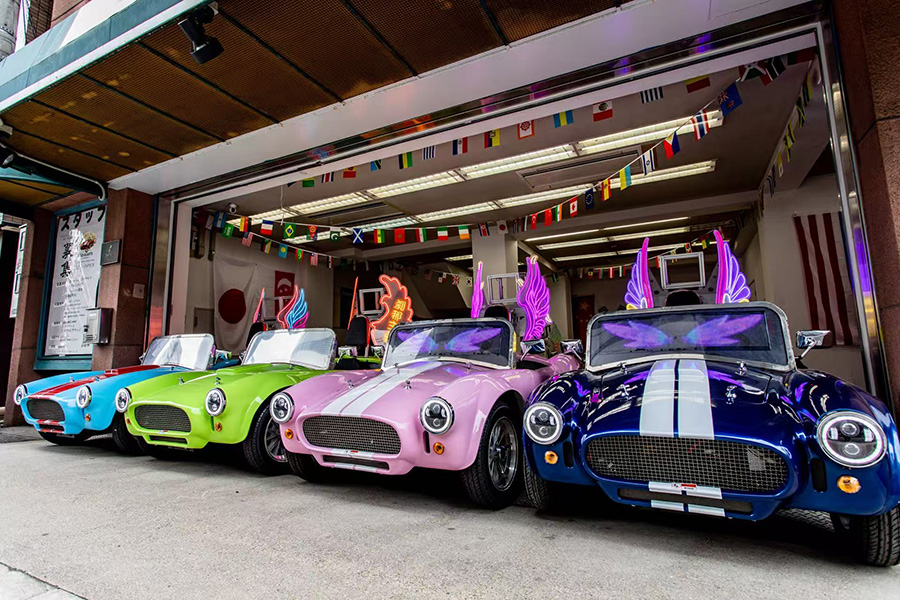
A Namba street kart search points to one part of W Go-Kart Osaka’s larger Tsutenkaku city loop. On the operator’s map, “Namba/Nipponbashi” appears as a combined orientation label beside Amerikamura, Shinsaibashi, Dotonbori, Ebisucho, and Shinsekai/Tsutenkaku. The whole route is approximately 8.9 kilometres and 46 mapped minutes and is recommended at night.
The combined label does not mean check-in at Namba Station, a guaranteed Nipponbashi shopping-street drive, or a stop in both places. Reception, departure, and return are at 3 Chome-5-2 Shinmachi. The map confirms broad city context while leaving exact roads, proximity, sightlines, stops, and district-by-district time undefined.
A Namba street kart map names a zone inside the complete loop
Buyers often read a map label as a destination. This service uses names to orient the visitor within a guided public-road loop. The distinction matters because Namba can refer to stations, shopping, entertainment, hotels, and a broad urban centre, while Nipponbashi can refer to a station, bridge area, and specialist shopping districts. The operator combines the two for route orientation rather than publishing a boundary survey.
The label names a visitor context
Official Osaka tourism describes Namba as a Minami sightseeing and transport base. It describes Nipponbashi’s DenDen Town as a specialist electronics and pop-culture shopping area. These external descriptions explain why the names mean different things to visitors. They do not tell us which exact part of either area W Go-Kart Osaka uses.
The slash groups two identities without measuring each one
“Namba/Nipponbashi” should not be expanded into two guaranteed stops or two equal route segments. The website gives no kilometre or minute allocation for the combined label. It also does not state where one district begins and the other ends from the driver’s perspective.
The wider map prevents Namba from swallowing the product
Amerikamura, Shinsaibashi, Dotonbori, Ebisucho, and Shinsekai/Tsutenkaku remain part of the same city-loop description. A buyer seeking only Namba depth should plan a walk. A buyer seeking changing Minami and southern Osaka identities from a kart has a better match.

Five verbs explain what the city map can safely say
The map names Namba/Nipponbashi
This is a positive fact: the operator intentionally includes the combined name in the published city route. A buyer may use it to distinguish the night-oriented southern loop from the Castle daytime option. Removing the label would understate the product; turning it into an exact road would overstate it.
The map groups neighbouring visitor interests
Namba often supports dining, entertainment, accommodation, and rail access, while Nipponbashi often attracts electronics, anime, games, figures, and hobby shopping. The combined label lets a visitor recognize the wider central-southern context. The kart service does not include shopping advice, store entry, purchases, or a guided pop-culture explanation.
The map orients a guide-led drive
Each participant drives behind the guide on public roads. The map helps the buyer choose before departure; it is not a self-navigation instruction during the experience. Guests should not watch a phone, branch toward a favourite shop, or attempt to reproduce a personal walking route.
The map omits operational precision
No exact streets, lane sequence, turn direction, stop list, view duration, commentary, or traffic schedule are published. This omission does not make the route meaningless. It keeps a buyer from treating a live guided service like a fixed rail timetable or controlled photo set.
The map returns every guest to Shinmachi
The loop’s end matters as much as its labels. Namba, Nipponbashi, Ebisucho, and Tsutenkaku are not published drop-off points. A restaurant, train, or hotel plan after the drive begins from Shinmachi and must include current travel time from the base.
Namba and Nipponbashi solve different visitor problems
A Namba-focused traveller usually wants access or entertainment
A hotel guest may want the route to fit around dinner and transport. Seeing Namba on the map confirms relevance to the wider itinerary, but the guest still travels independently to and from Shinmachi. The operator’s access estimates are three to five minutes from Nishiohashi, eight to ten from Nishi-Nagahori, and about ten from Shinsaibashi.
A Nipponbashi-focused traveller usually wants specialist depth
Someone comparing electronics, models, anime goods, or hobby stores needs opening hours and slow walking time. A 46-minute moving route cannot replace that task. Visit shops separately, then use the kart to connect that known interest with the broader evening city.
A Minami sampler wants contrast more than duration
A first-time visitor may not know which southern district deserves a return. The combined label is useful here: it sits inside a route that also includes creative, commercial, entertainment, and retro-landmark contexts. The drive can reveal preferences without pretending to complete every district.
A transport-seeking traveller has chosen the wrong product function
The loop does not carry luggage from Namba to Tsutenkaku or deliver guests to a hotel. The website publishes no pickup, passenger service, or one-way option. Select ordinary transport for movement between endpoints; select W Go-Kart Osaka when the guided drive itself is the desired experience.
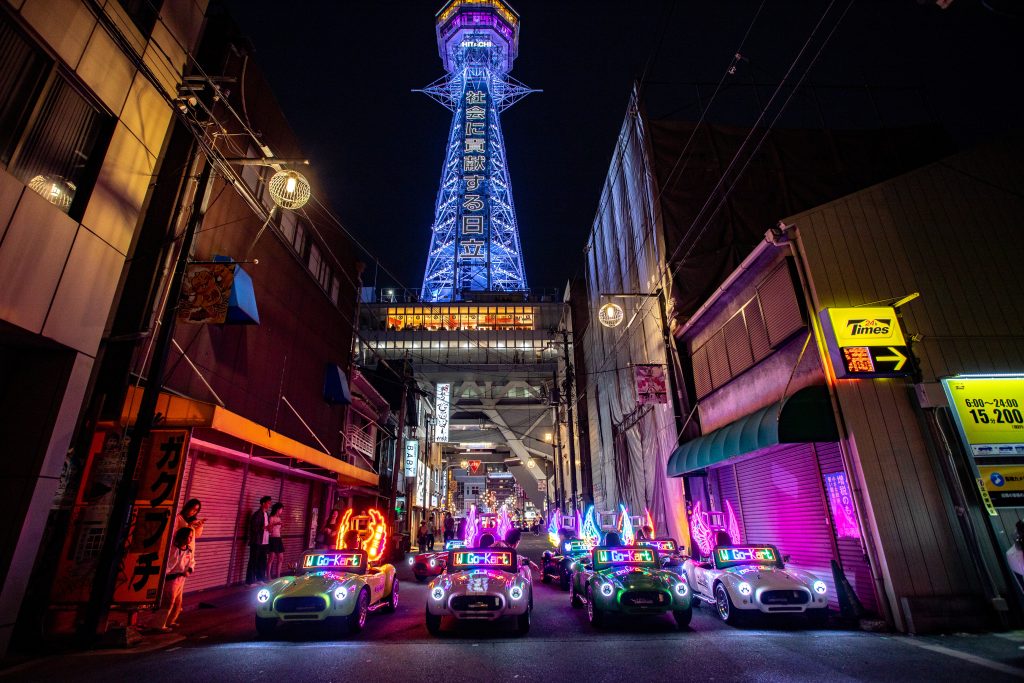
Four tempting map conclusions should remain unwritten
Do not calculate minutes in Namba
Dividing approximately 46 mapped minutes by six named areas would invent equal duration. Public traffic and geographic spacing make that result especially weak. The operator publishes no district clock, and the map time is not a promise of exact service release.
Do not promise a specific Namba landmark
The label does not name Namba Parks, a station facade, a theatre, or a particular sign. Dotonbori has its own separate map label. A buyer should not silently transfer a famous image from the broad Namba area into the route promise.
Do not convert proximity into shopping access
Even if the live road is near a desired store, the group follows the guide and does not pause for purchases. Store hours, entrances, queues, and inventory sit outside the service. Separate walking time preserves both the shopping goal and the road experience.
Do not use the route map to choose a hotel pickup point
The only published operational address is Shinmachi. A guest staying at a Namba property must navigate to that base and arrive ten minutes early. No hotel collection should be inferred from a district name or the booking form’s guest selector.
The public-road view changes how Namba is experienced
A walking visitor can stop, turn around, enter a shop, and inspect a sign. A kart driver cannot treat the city that way. They follow the guide, maintain attention, and accept that some details pass quickly. The value is movement through connected environments rather than total visual coverage.
Driver attention comes before district recognition
W Go-Kart Osaka tells guests not to take photographs while driving. Stopped photo moments are available and guides may help, but no number or location is published. A traveller should not hunt for a Namba image with a phone while moving.
The guide provides operational continuity, not a guaranteed lecture
The guide leads the group at all times and supports beginners. The website does not publish a commentary script, language list, radio specification, or exact signals. Learn the broad map beforehand, then follow the live briefing instead of expecting narrated boundaries between Namba and Nipponbashi.
Electric karts change the viewing position, not the road’s public nature
The service uses electric go-karts, but the site publishes no speed, battery, range, or performance figures. A low road-level perspective can feel different from walking or transit, yet surrounding traffic, pedestrians, signals, and weather remain real. This is not a closed racing course.
Price the full loop rather than one district label
Starts from 10:00 through 16:00 are JPY 7,000 per person, although the Castle loop is the operator’s daytime recommendation. Starts at 17:00–19:00 are JPY 10,000, while the 20:00–22:00 Night Experience is JPY 13,000. Every band includes approximately one hour, guide, insurance, and costume.
The night bundle changes inclusions, not Namba duration
Coffee, speaker, and 360 camera are separately priced before 20:00 and included at night. Selecting all three does not add a Namba stop or extend the map. They support hospitality, atmosphere, and memory within the same broad guided format.
Every driver must meet the same original-document threshold
Route interest does not replace eligibility. The accepted paths use a Japanese licence; or an original 1949 Geneva Convention international driving permit, original domestic licence, and passport; or, for listed jurisdictions, an accepted Japanese translation with the original licence and passport. The site publishes no passenger substitute.
The 48-hour policy belongs to the whole booking
Customer cancellation is free until 48 hours before departure. Inside that boundary it is non-refundable, and requested rescheduling depends on availability. If the operator cancels because conditions are unsafe, the current terms provide a refund or no-cost reschedule. These rules do not vary by district label.
Three accurate sentences keep the whole group aligned
A group chat often compresses a service until one misleading phrase remains. “Meet in Namba” or “we stop in Nipponbashi” can undo careful planning. Replace those shortcuts with complete sentences that preserve the operator’s real address, combined route label, and same-base return.
For arrival, write “Meet at the Shinmachi storefront”
Add the full 3 Chome-5-2 Shinmachi address, the booked time, and a personal target earlier than the ten-minute minimum. This wording prevents friends from choosing different Namba station gates. It also makes the reception photo useful as recognition evidence rather than the only navigation method.
For route expectation, write “The map passes through or near Namba/Nipponbashi”
Keep “through or near” and keep the slash. Those small language choices stop a broad orientation label from becoming two exact drive-through promises. Add that Dotonbori, Ebisucho, and Shinsekai/Tsutenkaku also belong to the loop so one person’s shopping interest does not redefine the entire group’s purchase.
For the next reservation, write “Plan travel from Shinmachi after return”
This sentence prevents a restaurant or train from being attached to a fictional Namba finish. The group can select the actual onward route before the day and update it for live conditions. If the connection is rigid, choose an earlier start rather than expecting the mapped 46 minutes to behave like a release time.
A narrow Namba goal may need a different evening structure
A buyer should be willing to say when the service is not the whole solution. If the party’s priority is a specific store, theatre, restaurant, or station transfer, complete that task on foot or by ordinary transport. The kart can then serve as a separate city experience rather than carrying an impossible stop obligation.
Shop first when inventory and opening hours control the day
A Nipponbashi collector may need enough time to compare specialist stores before they close. Put that search before the drive, store purchases safely outside the kart plan, and travel to Shinmachi. The public pages do not state a shopping-bag or luggage allowance, so do not assume large purchases can ride.
Drive first when dinner flexibility is greater than road flexibility
A Namba diner with several restaurant choices may prefer the kart first and a flexible meal afterward. The group returns to Shinmachi and can travel back into Minami. This works when the meal is adaptable; it is weaker when a fixed table leaves no recovery margin.
Skip the loop when one guaranteed landmark frame is essential
No exact Namba view or stop is published. A visitor who needs one controlled photograph should use a stationary location visit instead of asking live traffic to reproduce it. That honest choice protects the group from disappointment and lets the street-kart service be selected for its real strength: moving breadth.
Choose a Namba street kart experience for breadth, then add depth
Read the full Namba city-route guide for the broader sequence, and use the nightlife itinerary guide to place dinner and walking around the drive. The price guide separates route value from optional or bundled extras.
Once the party accepts Shinmachi as the start and return, enter the date, time, guest count, and route tier in the booking form. Review the commercial disclosure before payment. Keep a separate walking block for Namba or Nipponbashi if either is a primary trip objective.
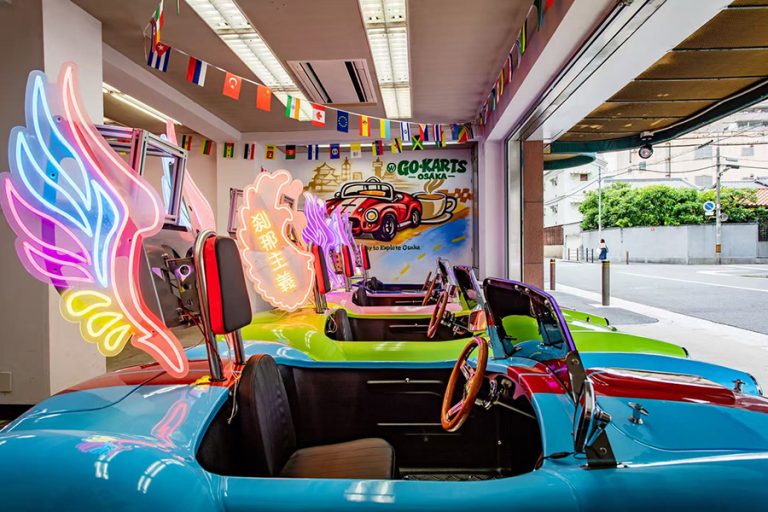
Map information checked on 24 August 2026: route labels, approximate distance/time, night recommendation, Shinmachi start/return, access, starts, prices, options, documents, and terms were checked on W Go-Kart Osaka pages. Official tourism supports only Namba and Nipponbashi visitor identities. No road, boundary, stop, sightline, district duration, pickup, drop-off, shopping, or commentary is claimed.
The slash between Namba and Nipponbashi is useful when it remains honest. It says the city loop reaches a broader zone with more than one visitor identity; it does not turn two names into two guaranteed experiences. Let the kart provide breadth across the night city, then give the chosen district the unhurried walking time it deserves.