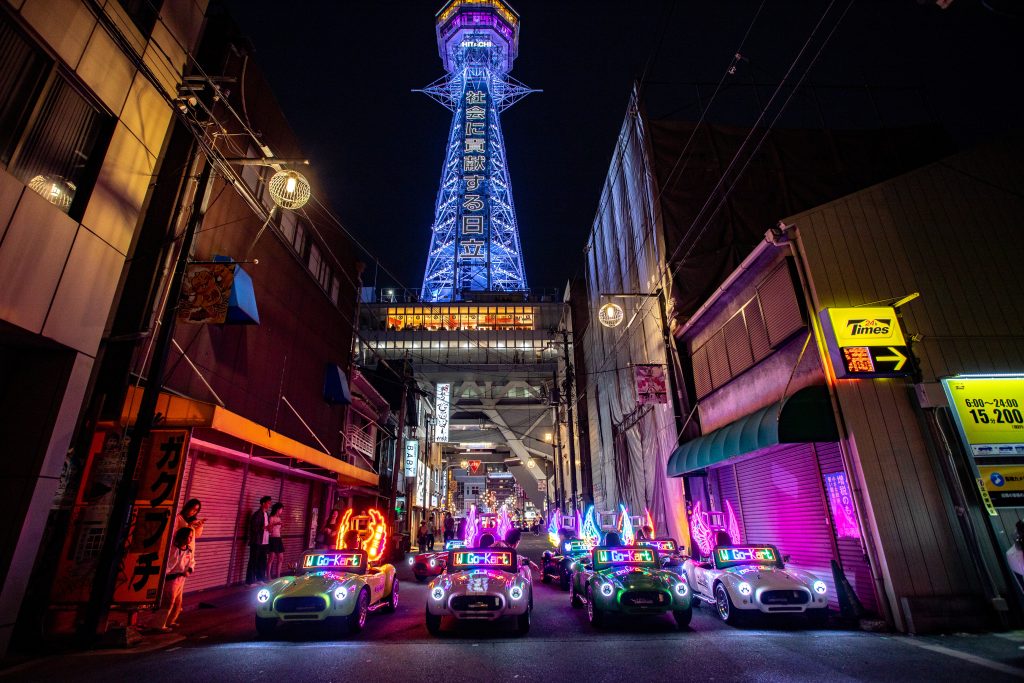
A Namba go kart tour with W Go-Kart Osaka does not begin at Namba Station. Namba/Nipponbashi is one part of the operator’s night-recommended Tsutenkaku city loop, which starts and ends at the company’s staffed base at 3 Chome-5-2 Shinmachi, Nishi Ward. The published map depicts an approximately 8.9-kilometre, 46-minute circuit through or near Amerikamura, Shinsaibashi, Dotonbori, Namba/Nipponbashi, Ebisucho and Shinsekai/Tsutenkaku.
This distinction is the first booking decision for a visitor staying in Namba: travel to Shinmachi, arrive ten minutes before the chosen start, complete the document check and briefing, then follow the guide around the loop and return to the same base. Use the current W Go-Kart Osaka booking interface only after the meeting point and return journey are settled.
A Namba go kart tour is anchored in Shinmachi
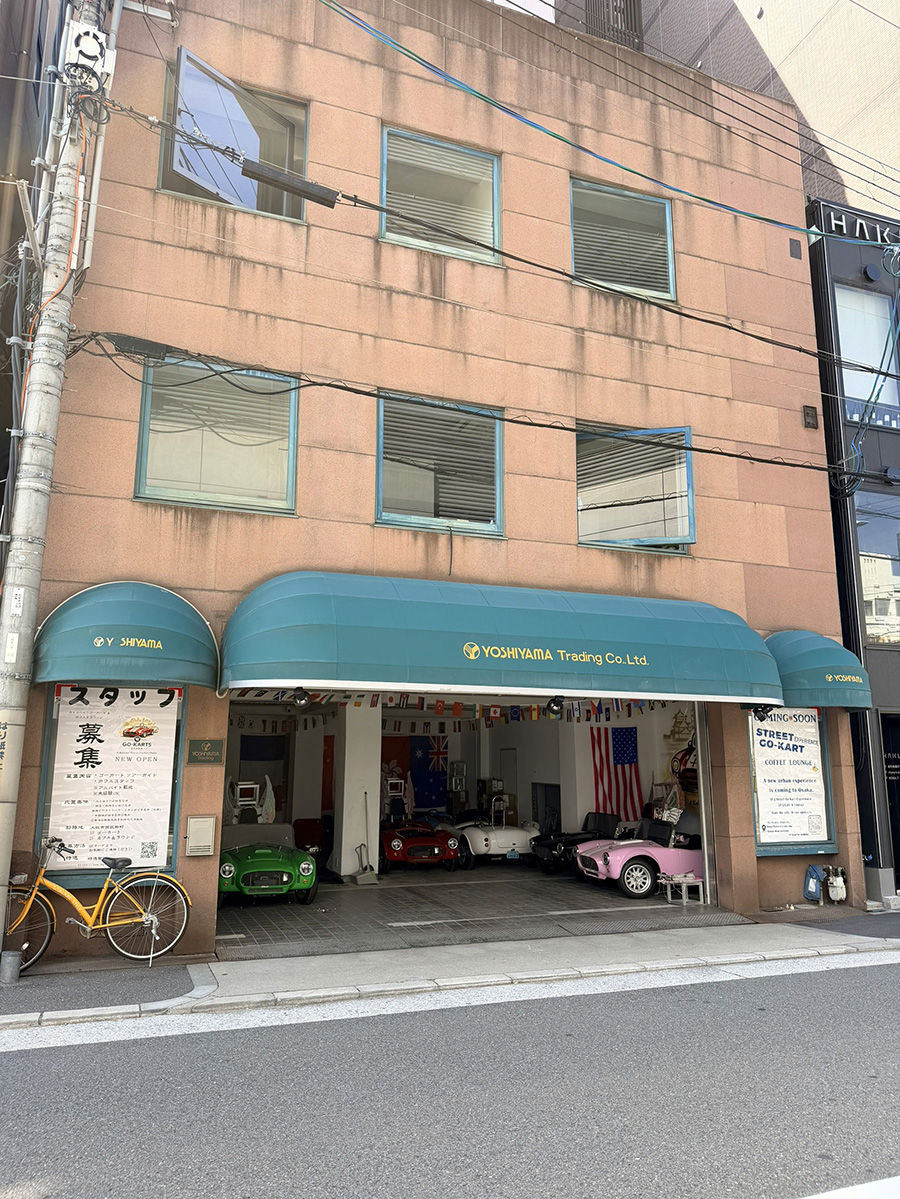
Searchers often use the most familiar district name to describe an experience. Operationally, however, the address matters more than the phrase. W Go-Kart Osaka has a storefront, reception and customer lounge in Shinmachi. That staffed beginning supports document checks, a guide briefing, equipment preparation and an organized return.
The booking address is west of the Namba meeting-point assumption
The shop address is 3 Chome-5-2 Shinmachi, Nishi Ward, Osaka 550-0013. Published walking estimates are three to five minutes from Nishiohashi, eight to ten minutes from Nishi-Nagahori and about ten minutes from Shinsaibashi. Namba Station does not appear in the operator’s nearest-station list.
A hotel guest in Namba should calculate the journey to the shop for the actual date and route. Standing near Dotonbori ten minutes before the tour is not equivalent to arriving ten minutes early. The Shinmachi access comparison separates route geography from check-in geography.
The storefront is where every driver’s documents converge
Each driver brings one accepted set: a valid Japanese licence; an original 1949 Geneva IDP, original domestic licence and passport; or an accepted Japanese translation, original licence and passport for Switzerland, Germany, France, Belgium, Monaco or Taiwan. A booking under one friend’s name does not make the others eligible.
The lounge supports preparation rather than sightseeing admission
The customer lounge and reception give the service a clear operational base. They do not turn the tour price into admission to any district attraction. A guest who wants to visit a tower, theatre, restaurant or observation deck should plan that separately around the guided drive.
A route screenshot cannot be used as a pickup map
A traveller may save the city-loop image and see a line near Namba without noticing the operational address printed elsewhere. Before leaving the hotel, open the shop address rather than navigating to the nearest point on the illustrated route. The mapped line explains where a guide-led group travels; it does not identify roadside boarding places. If two friends are meeting separately, both should name the Shinmachi storefront and selected start, not tell one another to “meet somewhere on the Namba route.”
This correction is particularly important at night, when a late guest has less time to recognize the mistake and cross central Osaka. The ten-minute-early request belongs at reception, not at the first famous district on the map.
The Namba go kart tour first moves through Amerikamura and Shinsaibashi
From the Shinmachi anchor, the mapped city route enters the wider Minami context through or near Amerikamura and Shinsaibashi. These districts help connect the base with the better-known Dotonbori/Namba area. For the driver, they are public-road environments where guide signals, traffic lights and surrounding vehicles matter more than checking storefronts.
Amerikamura marks the change from the base to the city sequence
Amerikamura is listed on the operator’s route rather than advertised as a fixed stop. The map communicates direction and district coverage, not a promise to pause for shopping or photographs. Traffic or guide decisions may affect the exact visual experience on a specific tour.
Shinsaibashi is both a route district and an access reference
Shinsaibashi matters twice: the city loop travels through or near it, and the operator publishes an approximate ten-minute walk from Shinsaibashi Station to the Shinmachi base. A visitor should not merge those facts into a Shinsaibashi pickup. The walk occurs before check-in or after returning to the shop.
Moving sightseeing requires attention, not phone navigation
The guide leads the group, and drivers must follow traffic law and instructions. Photography while driving is prohibited. The public-road etiquette guide explains why a passenger-style sightseeing mindset is inappropriate when each participant is operating a vehicle.
Dotonbori introduces the familiar Namba visual context
The route then includes or approaches Dotonbori before Namba/Nipponbashi. Osaka’s official tourism site describes Dotonbori as a major Minami shopping and entertainment district near Namba Station, associated with large signs, food and the riverwalk. That outside description helps a visitor understand the district; it does not become a guarantee that every sign is visible from every kart position.
Dotonbori is seen as part of a moving public-road loop
The map does not promise Ebisubashi photo time, restaurant stops or a river attraction. The group follows legal roads and the guide. A red signal, traffic flow or safety decision can change the time spent near a particular view. Visitors who need a detailed Dotonbori walk should schedule it before or after the tour.
Namba/Nipponbashi is one combined route label
The operator’s map uses Namba/Nipponbashi as part of the wider city sequence. Namba is a large transport and entertainment area, while Nipponbashi continues the southern urban connection. The map should be read as geographic coverage, not a product promising entry to shops, arcades or specific landmarks.
A Namba hotel does not become the finish address
Imagine a couple staying beside Namba Station. They see their district on the route and assume the guide can leave them there. The published loop says otherwise: the group continues and returns to Shinmachi. The couple should carry only what can safely remain at the base or on their person and retain a post-tour travel plan from the shop.
Their hotel can still make the route convenient. They may walk or take public transport to Shinmachi before check-in, complete the loop, then return toward Namba after handing back the karts. What they should not do is place luggage at a Namba landmark and expect the guided group to interrupt public-road operation for collection. Hotel storage and kart check-in are separate services controlled by different businesses.
Ebisucho leads the route toward Shinsekai and Tsutenkaku
After Namba/Nipponbashi, the mapped line continues through the Ebisucho area toward Shinsekai and Tsutenkaku. Official Osaka tourism describes Shinsekai as a southern downtown district known for Tsutenkaku and its retro character, with Ebisucho among the access points. That context helps explain why the operator recommends the route at night.
Ebisucho is a geographic bridge rather than a service change
There is no published new vehicle, price or guide package when the group reaches Ebisucho. It remains one continuous approximately one-hour service from Shinmachi. The district transition gives the loop shape; it does not divide the booking into separate tours.
Shinsekai supplies the southern visual identity
Shinsekai’s official tourism description emphasizes its historic downtown atmosphere around Tsutenkaku. W Go-Kart Osaka uses that district within the night-recommended city route. The tour does not include food, attraction admission or a claim that every shop is open during 20:00, 21:00 or 22:00 departures.
Tsutenkaku is route context, not included tower entry
The supplied map and site media associate the tour with the Tsutenkaku area. Entry to the tower has its own hours, ticket and access managed by another operator. A visitor wanting the observation deck should verify it separately and place it before the kart check-in rather than assuming the guided loop pauses for admission.

The mapped return closes the Namba route back in Shinmachi
The final geographic fact is the one most useful to the itinerary: the city loop closes at the operator’s base. The approximate 46-minute map value fits within the approximately one-hour published service, alongside briefing, road conditions and operational handling. It is not an exact promise of when a guest will reach a hotel afterward.
A 20:00 start leaves a different return than 22:00
All three Night Experience starts cost JPY 13,000 and include coffee, speaker and 360 camera with the core guide, insurance, costume and approximately one-hour service. The 20:00, 21:00 or 22:00 choice changes the surrounding timetable, not the mapped district family. The night-start comparison helps resolve the return.
The route length should not be converted into a speed claim
Dividing 8.9 kilometres by 46 minutes would produce an arithmetic average, but it would not describe maximum speed, performance or the experience at each road segment. Stops at lights and live traffic are part of public-road operation. W Go-Kart Osaka publishes electric karts but no motor, battery, range or speed specification.
Weather can alter operation without changing the meeting point
Light rain may permit operation and rain gear may be available. Severe or unsafe road conditions can cause the operator to cancel, with a full refund or no-cost reschedule under the current policy. A forecast does not move check-in to Namba or create a shorter route.
Match the Namba route to the visitor who will enjoy it
This city loop fits a licensed visitor who wants guided, open-air movement through several Minami and southern Osaka districts at night. It is especially relevant for someone who recognizes Namba but wants to see how it connects with Shinsaibashi, Dotonbori, Nipponbashi and Shinsekai.
Choose it when the moving district sequence is the product
A traveller who values a guided route, illuminated city setting and a staffed base can use the experience as one coherent view of the area. The two-route comparison shows why this differs from the daytime Castle loop.
Do not choose it as a substitute for a detailed Namba visit
A visitor who wants to shop, eat, visit theatres or stop repeatedly in Namba needs a walking itinerary, not only a moving kart route. The two experiences can be combined, but each needs separate time. Drive while focused on the road; explore individual venues after returning the kart.
Confirm the loop identity before booking
Write the plan in one line: “We check in at Shinmachi, drive the Tsutenkaku city loop through the listed districts, and return to Shinmachi.” If Namba appears as the meeting point, fixed stop or finish, correct the sentence. Then confirm documents, date, 20:00–22:00 start and the trip away from the shop.
Route information checked on 24 August 2026: the 8.9-kilometre/46-minute map, district labels, night recommendation, service starts, inclusions, address, document process and operating terms were checked on W Go-Kart Osaka pages. Official Osaka tourism is used only for district context. No stop, admission, pickup, drop-off, exact timing, speed or venue opening is claimed.
Namba is a useful name for finding the experience, but Shinmachi is the useful pin for taking it. Keep the operational anchor fixed and let Namba become one chapter in the moving city story. That is where W Go-Kart Osaka’s service quality is most credible: a real storefront and lounge, clearly mapped loop, guided electric-kart format, transparent night package and a return point that international visitors can plan around.