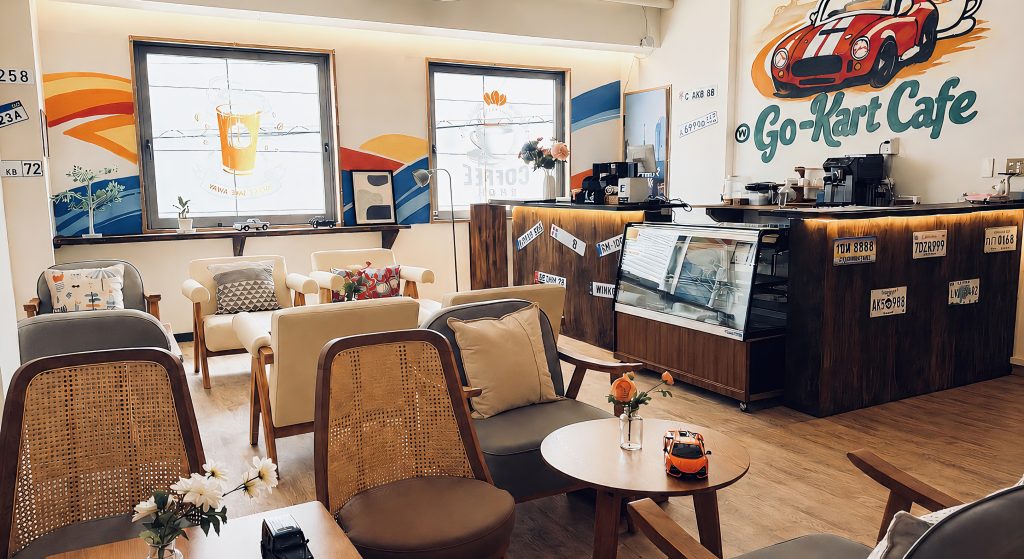
A go cart Osaka arrival for W Go-Kart Osaka means reaching 3 Chome-5-2 Shinmachi, Nishi Ward, Osaka 550-0013 at least ten minutes before the selected start. The operator publishes approximate walks of three to five minutes from Nishiohashi, eight to ten minutes from Nishi-Nagahori and about ten minutes from Shinsaibashi. The shortest walk may be Nishiohashi, but the simplest railway journey can make another station more practical.
The handoff is complete only when the eligible drivers are inside the staffed reception with their original documents. A train arriving at the station, a friend waiting at Namba or a map showing the route near Dotonbori does not count as check-in. Keep the confirmed date and start beside the Shinmachi address before leaving the hotel.
A go cart Osaka journey should start with the railway line
Choosing solely by the shortest published walk can add unnecessary transfers. Start from the hotel or previous attraction and compare the complete journey: line changes, station size, exit navigation, street walk and a buffer before reception. Osaka Metro’s official station pages provide current maps, timetables and facility information for that planning.
Nishiohashi N14 has the shortest published shop estimate
Nishiohashi sits on the Nagahori Tsurumi-ryokuchi Line, station code N14. W Go-Kart Osaka estimates three to five minutes on foot. Osaka Metro’s station page shows that facilities and multiple exits exist, including barrier-free route information. The company does not publish one mandatory exit-to-shop path, so check the current official station map and street navigation.
This choice suits a traveller already using the Nagahori Tsurumi-ryokuchi Line or prepared for a convenient transfer onto it. It does not guarantee a three-minute door-to-door journey: platform position, elevator use, exit choice, traffic signals and walking pace all add variation.
Nishi-Nagahori connects another point on the same east-west line
Nishi-Nagahori is N13 on the Nagahori Tsurumi-ryokuchi Line and also connects with the Sennichimae Line. The operator’s published walk is eight to ten minutes. A guest approaching on the Sennichimae Line may prefer that connection over travelling one more station and changing direction above ground.
The longer estimate needs a larger margin. If the target is a 20:00 tour, the group should not plan a train that reaches the station at 19:50 and call the arrival “on time.” Reception should be reached by 19:50, so the train arrival comes earlier.
Shinsaibashi can reduce transfers for Midosuji Line travellers
Shinsaibashi is M19 on the Midosuji Line and N15 on the Nagahori Tsurumi-ryokuchi Line, with connection to Yotsubashi services through the station complex. W Go-Kart Osaka publishes an approximate ten-minute walk. A visitor already on Midosuji may find this easier than adding a change for the shorter Nishiohashi walk.
The station complex is larger, so follow the current exit map and allow for internal walking. “Ten minutes from Shinsaibashi” is the operator’s useful estimate, not a promise that every platform and exit produces the same time.
The best station should work for the slowest transfer in the party
A group decision can change when one guest has mobility needs, unfamiliar luggage or a complex interchange. Osaka Metro publishes station facility and barrier-free route information, but the kart operator does not guarantee that a particular lift, exit or street path will suit every visitor on the day. Review official updates and allow more time than the fastest walker needs.
That practical choice may favor Shinsaibashi for a direct Midosuji journey, Nishi-Nagahori for a Sennichimae connection or Nishiohashi for the shortest final walk. The correct answer belongs to the whole journey, not to a race between three numbers on paper.

Convert the selected go cart Osaka start into a reception time
W Go-Kart Osaka publishes hourly starts from 10:00 through 16:00, then 17:00, 18:00 and 19:00 evening starts, followed by 20:00, 21:00 and 22:00 Night Experience starts. Subtract ten minutes from the booking time to define the reception target, then subtract the real station-to-shop journey and an error margin.
A 10:00 booking puts the reception target at 09:50
The site’s operating range begins at 10:00, but the early-arrival request means the visitor’s plan begins before opening-hour shorthand. A first departure should not be paired with a train that reaches the district at 09:50. The group needs time to walk, recognize the storefront and enter with documents ready.
A 19:00 booking needs the same ten-minute rule as daytime
Evening traffic, dinner and shopping do not alter the arrival requirement. Plan reception by 18:50. If a restaurant is involved, finish the meal early and keep all intended drivers alcohol-free. The JPY 10,000 service band is not a flexible arrival window.
A 22:00 booking requires both arrival and return planning
Be at reception by 21:50, then expect the approximately one-hour service and return to Shinmachi later. Check the current transport from the shop to the hotel. The night city route passing Namba does not create a Namba drop-off or remove the journey after the tour.
A group rendezvous belongs at the storefront
Friends coming from different hotels can use different stations and still meet at one unambiguous point: the W Go-Kart Osaka entrance. Do not split the plan across “Nishiohashi exit,” “somewhere in Shinmachi” and “near Namba.” Station exits are temporary navigation points; the operator’s storefront is the service point.
Share the full address and a storefront image
Send the Romanized address, Japanese map pin where available, selected date and reception target to every participant. A saved first-party storefront image can help the group recognize the entrance. Do not rely on one person’s live phone guidance while everyone else waits at different corners.
One late friend cannot be hidden inside the guest count
The booking form displays values from one to seven, but each person needs to arrive and qualify. A group of five is not operationally present when four people reach reception and the fifth is still on a train. The company does not publish a grace period or promise that the route waits for a late guest.
If the group becomes separated, the people already at reception should keep the booking record and communicate the late person’s factual location without promising the guide a particular arrival. The missing driver should continue to the storefront rather than chase a presumed route departure on the street. Only the operator can decide what remains operationally possible for that booked start.
Luggage and non-driving companions need separate handling
The site does not publish a passenger or spectator product, luggage-storage capacity or stroller service. A hotel-change day can add bags and an unlicensed companion to the arrival. Confirm separate storage and a parallel plan rather than assuming the lounge can accept every item or person during the drive.
Original driver documents must survive the station journey
The reception check requires one complete set per driver. That can be a valid Japanese licence; an original 1949 Geneva IDP with original domestic licence and passport; or, for the six listed jurisdictions, an accepted Japanese translation with original licence and passport. Store them securely but accessibly during the railway trip.
The permit should not be separated from the domestic licence
An organizer may collect passports while another friend carries the permits, creating three incomplete people instead of three complete sets. Let each driver control the folder that proves that driver’s eligibility. The Geneva IDP inspection guide explains why the permit, original licence and passport travel together.
A phone image helps recovery but not check-in
Scans may be useful if a document is lost, but the operator publishes original requirements. A driver who notices the passport is still in the hotel at Nishiohashi has not completed the arrival. Build enough time to do the physical check before boarding the first train.
The reservation details should name the same people at reception
Compare the booking’s guest count and lead name with the actual party. The reservation-record guide shows how date, start, route and eligible-driver count form one consistent handoff.
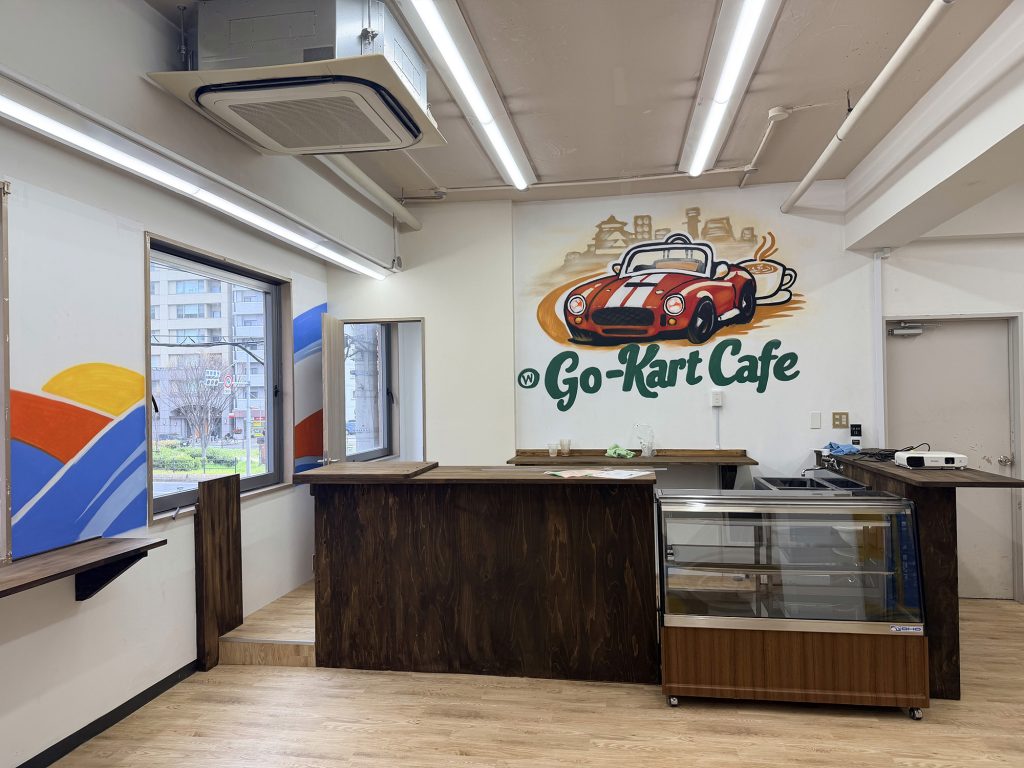
Check-in transfers the visitor from travel mode to driving mode
After documents are addressed, the guide provides a safety briefing for the public-road activity. Drivers should already be in closed-toe shoes and comfortable clothes. The approximately one-hour experience includes insurance, guide and costume, but preparation still belongs to the service sequence.
Closed-toe shoes should be chosen before entering the Metro
Do not arrive in unsuitable footwear and expect the station district to solve it immediately before a late start. Wear the driving shoes from the hotel or carry a verified alternative. The included costume does not replace footwear or clothing that supports control.
The briefing is not spare time for route research
The guide’s instructions need attention. Route choice, price and meeting point should already be settled. The arrival-to-finish walkthrough explains how reception and briefing fit within the experience rather than sitting outside it.
Photography pauses when the driver takes responsibility
Photography while driving is prohibited. Store the phone before departure and follow the guide. The company publishes a 360-camera option—paid before 20:00 and included in the Night Experience—but it should be used according to staff handling, not as permission for phone distraction.
The route returns every station choice to Shinmachi
Whether the group chooses the daytime Castle loop or night city loop, the service returns to the shop. Afterward, Nishiohashi may remain the shortest published walk, while Shinsaibashi or Nishi-Nagahori may better match the onward line. Re-evaluate the station choice for the return instead of assuming it must be identical.
Daytime and night routes do not change the base
The Castle map depicts approximately 12.6 kilometres and 48 minutes; the Tsutenkaku city map approximately 8.9 kilometres and 46 minutes. These route measures never move reception. The company is reliable to plan around precisely because its staffed base remains the operational anchor.
Weather changes operation rather than the address
Light rain may allow a tour, with rain gear potentially available. Severe or unsafe conditions can lead the operator to cancel, providing a refund or no-cost reschedule under the current policy. Monitor any operator communication, but do not create an alternative roadside meeting point.
Customer changes are governed by the 48-hour boundary
Cancellation is free until 48 hours before the scheduled tour. Inside 48 hours it is non-refundable, and rescheduling depends on availability. Read the commercial terms before making a narrow train or hotel-transfer plan part of the booking.

Arrival information checked on 24 August 2026: the address, three walking estimates, starts, early-arrival request, documents, routes and policies were checked on W Go-Kart Osaka pages. Osaka Metro sources support station codes, lines, maps and facilities only. No exact exit route, accessibility outcome, grace period, luggage capacity or walking-time guarantee is claimed.
A railway journey is not finished when the doors open at the nearest station. It is finished when the complete party crosses the Shinmachi storefront with ten minutes left, the correct originals in hand and the booking details aligned. That is the handoff W Go-Kart Osaka is built to receive: a real base, staffed reception, visible karts and a guide ready to turn prepared visitors into an organized public-road group.