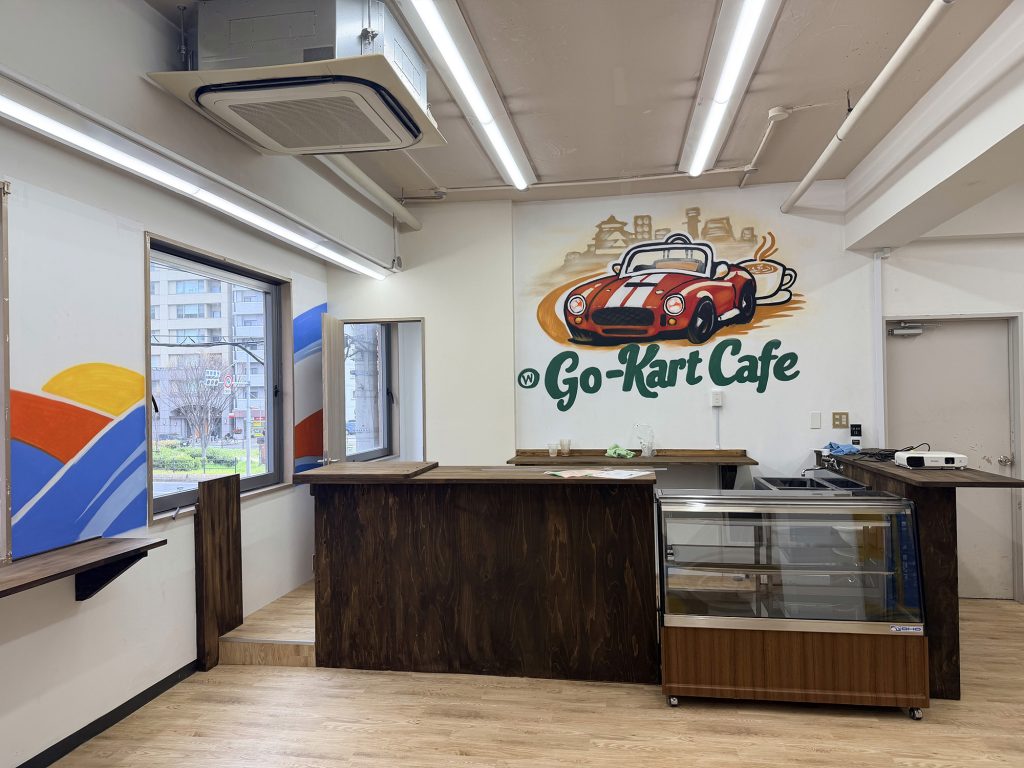
To go karting in Osaka with W Go-Kart Osaka, plan for more than the advertised one-hour experience. The operating sequence begins with arrival at the Shinmachi shop at least 10 minutes early, original-document inspection and a safety briefing. The guide then leads the group on the selected Castle or Tsutenkaku city loop and returns to the same base. This format suits licensed visitors who want a defined sightseeing service, not an exact sixty-minute door-to-door promise or an independent rental.
The site publishes the important handoff points without assigning an exact number of minutes to each. That is appropriate for public roads, where check-in, traffic, weather and group movement can vary. Review the current service sequence and inclusions, then use the live reservation form to align a date, start time, guest count and route.
Go karting in Osaka starts before the one-hour experience
A one-hour product description is easy to place incorrectly in a travel calendar. It does not include the trip from a hotel, time spent finding the correct station exit or a last-minute search for a passport. W Go-Kart Osaka asks guests to arrive 10 minutes before departure, so the traveller must work backwards from that check-in target.
The route meeting point is 3 Chome-5-2 Shinmachi
The shop is in Nishi Ward, not beside Osaka Castle, Namba Station or Tsutenkaku. W Go-Kart Osaka lists Nishiohashi Station as approximately a 3–5-minute walk, Nishi-Nagahori as 8–10 minutes and Shinsaibashi as about 10 minutes. These are useful access estimates, but unfamiliar exits, weather and a group walking pace deserve additional personal buffer.
Imagine two visitors staying near Dotonbori with a 20:00 booking. The city route may pass through or near their hotel district, yet their operational journey still begins west of Shinsaibashi at the Shinmachi base. They should reach the counter before 19:50, not appear on a street in Namba at 20:00 and expect to join a moving group.
Document inspection belongs before kart instruction
Every driver arrives with one accepted pathway. A valid Japanese driving licence can qualify directly. The International Driving Permit route requires an original 1949 Geneva Convention permit, original domestic licence and passport. The accepted-translation route is limited to licences from Switzerland, Germany, France, Belgium, Monaco and Taiwan and requires the translation, original licence and passport.
The National Police Agency’s permit questions and answers explains that a digital IDP is not accepted and that other convention formats do not authorise driving in Japan. A booking confirmation or payment receipt cannot replace the legal originals. If the documents fail, the later service stages cannot solve that problem.
The reception handoff matches the person to the scheduled service
Keep the confirmation email, booking identifier, date, time, route and guest count available at the counter. Online payment is processed through Stripe. The site indicates that cash or other electronic methods may be available onsite, but a traveller should not assume that an unconfirmed online selection has reserved capacity.
The 1–7 guest selector records the intended party size. It does not publish fleet capacity or guarantee seven places at every departure. When several drivers arrive, each one has a document set and personal responsibility even if a single organiser completed the transaction.
Confirmation should also settle the route and hour before the party reaches reception. Changing from a daytime Castle booking to a late city departure is not a small request: it changes the operating slot, surrounding itinerary, price band and potentially the available capacity. If a booking detail looks wrong, use the service channel before arrival rather than spending the check-in window renegotiating a different product. The counter handoff works best when staff can verify an existing confirmed choice and move the scheduled group towards its briefing.
The briefing turns general driving knowledge into route readiness
A licence confirms eligibility but does not explain an unfamiliar low electric kart or the way this guide-led group moves. The briefing connects the legal driver to the actual controls, signals and spacing expected on the departure. W Go-Kart Osaka says no previous kart experience is required, making careful listening more important than prior lap practice.
Controls, spacing and guide cues must be understood before traffic
The exact briefing content belongs to the staff and kart in front of the visitor. A responsible driver identifies how to accelerate, brake and steer, how the guide communicates, what distance to hold and what to do if traffic separates the group. The website does not publish top speed, motor power or a guide-to-driver ratio, so those specifications should not be invented.
The guide leads the route but does not operate each customer’s kart. Friends cannot delegate attention to the person in front or copy an unsafe decision. Osaka Prefectural Police provides road rules for international visitors because the city loop remains part of ordinary public traffic.
Closed-toe shoes and comfortable clothing are operating inputs
W Go-Kart Osaka requires closed-toe shoes and comfortable clothes; sandals and high heels are unsuitable. A costume is included in every current price band, but it must remain compatible with control access and staff instructions. The site does not guarantee a particular costume design or size, so safety-critical clothing should come from the traveller.
Light rain may permit the service to continue, with rain gear potentially provided. Severe or unsafe weather can cause cancellation or rescheduling. Clothing preparation supports a tour the operator approves; it does not give the customer authority to declare the public-road route safe.
Photo expectations are settled before the group moves
The site prohibits taking photos while driving and refers to suitable stops and guide assistance. A phone should therefore be stored before departure. The optional or included 360 camera supports memories within staff instructions, but it does not make handheld recording in traffic acceptable.
A group that wants shared photos can agree before the briefing who will handle files later and when devices remain put away. This prevents a social expectation from becoming an in-motion distraction. The guide-led service, not the guest’s camera plan, controls the route sequence.

The one-hour go karting in Osaka route is not a stopwatch
W Go-Kart Osaka describes the core experience as approximately one hour. The route maps add useful driving estimates, but neither source promises a fixed number of uninterrupted minutes. Traffic signals, road conditions, guide decisions and group movement can alter the sequence without turning it into a defective race session.
The Castle map shows a longer daytime loop
The official Castle route map depicts approximately 12.6 kilometres and about 48 minutes of driving from Shinmachi towards the castle area and back. The operator recommends it during the day. Starts run hourly from 10:00 through 16:00 at the current JPY 7,000 morning-and-afternoon band.
This loop fits a visitor who wants a historic landmark and daylight detail. It does not include castle admission, guarantee a photo stop or end near the grounds. The customer remains inside a scheduled loop and plans the next activity from Shinmachi after return.
The city map connects southern Osaka after dark
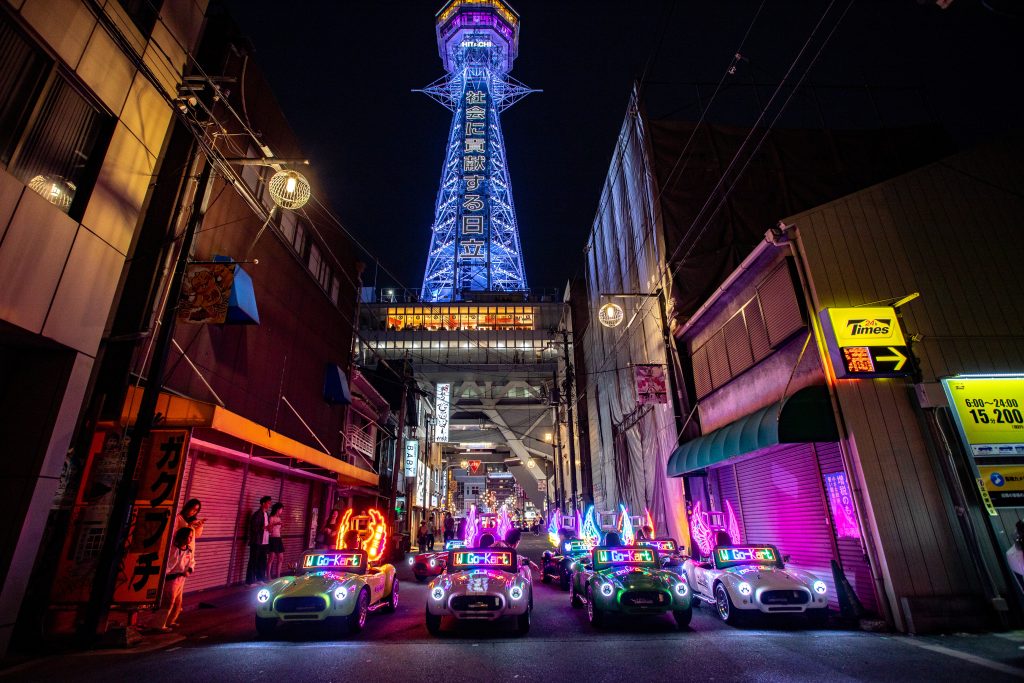
The Tsutenkaku city route map depicts approximately 8.9 kilometres and about 46 minutes through or near Amerikamura, Shinsaibashi, Dotonbori, Namba, Nipponbashi, Ebisucho and Shinsekai. W Go-Kart Osaka recommends this route at night. Evening starts at 17:00–19:00 cost JPY 10,000; 20:00–22:00 Night Experience starts cost JPY 13,000.
The night route is visually concentrated, not operationally independent. A traffic signal can divide karts, and a busy district can change the flow. Drivers follow the response from the briefing instead of accelerating to “make up” mapped time. The route comparison explains the geography behind the two loops.
Mapped distance also should not be converted into an expected average speed. The site does not publish a speed figure, and dividing kilometres by the illustrated time ignores signals, group decisions and variations in the source map. For travel planning, use “approximately one-hour guided experience” and a separate buffer. For the drive itself, use traffic law and guide instructions. This avoids turning a helpful route diagram into a performance commitment the service never makes.
All three price bands share the same core handoffs
The approximately one-hour experience, insurance, guide and free costume are included in morning/afternoon, evening and night packages. Coffee at JPY 500, a speaker at JPY 500 and a 360 camera at JPY 1,000 remain separate in the first two bands. The Night Experience includes all three.
Those extras do not add a route stage. Coffee belongs around the staffed base, the speaker remains secondary to instructions, and camera use follows the no-handheld-photo rule. The package guide separates the service core from atmosphere extras.
Returning to Shinmachi finishes the service handoff
The finish is not the last landmark seen from the kart. The group returns to the same shop where documents and briefing were handled. That fixed return gives a visitor a known place to regain personal belongings, transition to ordinary transport and begin the next itinerary segment.
The next reservation needs a margin beyond the route map
A 20:00 booking should not be followed by a 21:00 commitment in another district on the assumption that the experience, exit and transfer occupy exactly sixty minutes. Add time for the requested early arrival before the tour and an appropriate margin after return. Public-road movement and group processing are real service conditions, not hidden lap inefficiency.
A traveller using a last train, reserved dinner or timed admission should work from the complete sequence: station-to-shop walk, check-in, documents, briefing, approximately one-hour experience, return and onward trip. If that chain cannot tolerate uncertainty, select an earlier start.
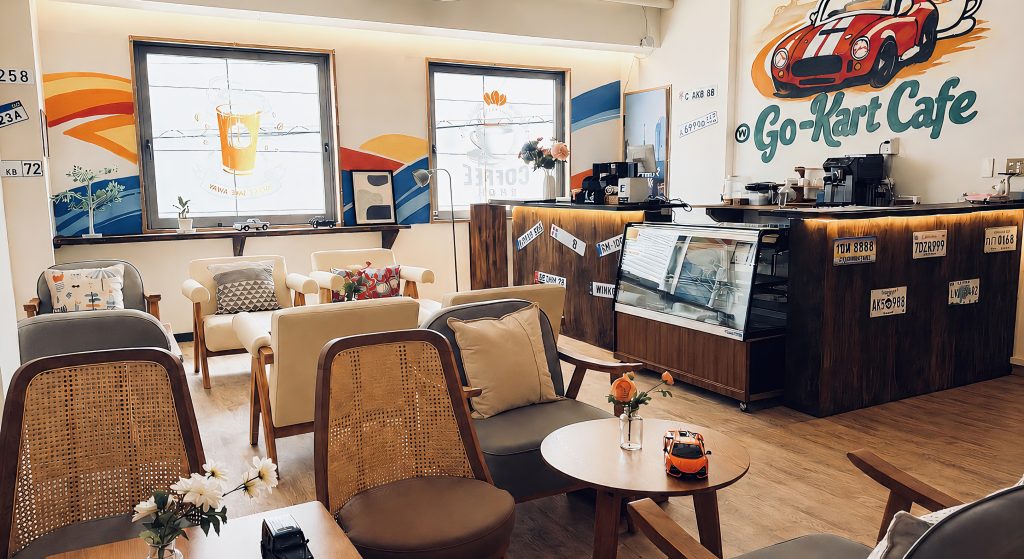
The indoor base also gives the finish a service purpose. Guests are no longer making traffic decisions, can organise onward directions and can confirm how any approved camera material is handled. The website does not promise a fixed file-delivery method or an extended post-tour event, so these are questions for staff rather than assumed stages. What is certain is the return location: the same Shinmachi base from which the guide-led loop departed.
Cancellation and unsafe-weather outcomes use different branches
Customer cancellation is free up to 48 hours before the scheduled departure. Within 48 hours it is non-refundable, and rescheduling depends on availability. If W Go-Kart Osaka cancels because weather is unsafe, the published policy offers a refund or rescheduling without an additional charge. Read the current payment and cancellation terms before committing the surrounding itinerary.
The weather decision guide explains why a guest forecast and an operator safety cancellation are not interchangeable. International visitors preparing the legal handoff can use the pre-trip document plan.
Service details checked on 24 August 2026: the approximate one-hour format, early-arrival request, document pathways, route maps, start times, prices, inclusions, access, briefing, clothing, photo, weather and cancellation information were checked against W Go-Kart Osaka’s current material and linked public authorities. No stage duration or vehicle specification is inferred.
The service is easy to understand when its handoffs stay in order. Reach the Shinmachi base early, prove eligibility with originals, learn the kart and guide cues, complete the selected public-road loop, and return before moving on. W Go-Kart Osaka’s one-hour description is a useful core measure; the professional value comes from everything the operator organises around it without pretending that city traffic runs on a stopwatch.