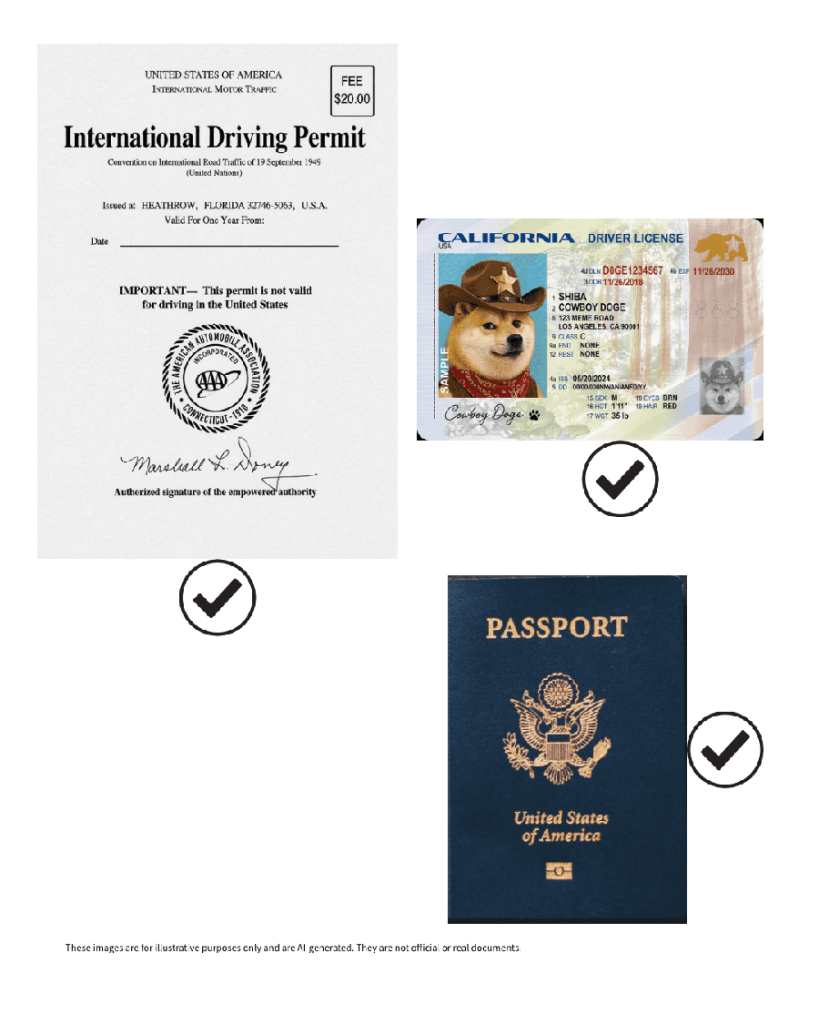
A go kart Osaka Japan experience is suitable for an overseas visitor who can legally drive on Japanese public roads and wants a guided electric sightseeing loop, not a race or an unaccompanied vehicle rental. The first decision is not Castle versus city or day versus night. It is which of W Go-Kart Osaka’s three accepted licence paths applies to each driver: a Japanese driving licence, a 1949 Geneva Convention International Driving Permit set, or the accepted Japanese-translation set for six named jurisdictions.
Bring the complete physical set for the applicable path. For the IDP route, that means the original permit, original domestic licence and passport. For Switzerland, Germany, France, Belgium, Monaco or Taiwan, it means the original domestic licence, an accepted Japanese translation and passport. A reservation cannot turn a scan, digital permit or incomplete combination into valid driving documents. Confirm the path through the operator’s current licence information before using the tour booking form.
Go kart Osaka Japan eligibility starts with the licence jurisdiction
The words printed on a travel document can be misleading when read without the issuing country and treaty format. An “international permit” is not automatically usable in Japan merely because it is in English or carries a familiar booklet shape. The National Police Agency distinguishes the forms that allow a visitor to drive, and W Go-Kart Osaka applies those public-road requirements before a kart leaves Shinmachi.
The 1949 Geneva permit path is a three-document set
The operator’s IDP path requires an original International Driving Permit issued under the 1949 Geneva Convention, the original domestic driving licence and the passport. None of the three replaces another. The IDP is not a standalone licence, while the domestic licence and passport do not substitute for the required permit when this is the visitor’s applicable path.
The National Police Agency’s International Driving Permit questions and answers states that digital permits are not valid in Japan and that permits based on other conventions are not accepted. Its foreign-licence driving overview explains the recognised document routes and driving period. Those official sources should settle a legal question; a seller’s advertisement or travel-forum photograph should not.
A traveller who already owns an IDP should identify the convention shown on the document, the issuing authority and the relevant validity dates before departure. Do not buy a second online document simply because a page calls it “instant” or “digital.” If the format remains uncertain, ask the legitimate issuing authority in the home jurisdiction or the appropriate Japanese licensing authority. W Go-Kart Osaka can check what is presented at arrival, but it does not issue an IDP or convert one treaty format into another.
Six jurisdictions use an accepted Japanese translation with the original licence
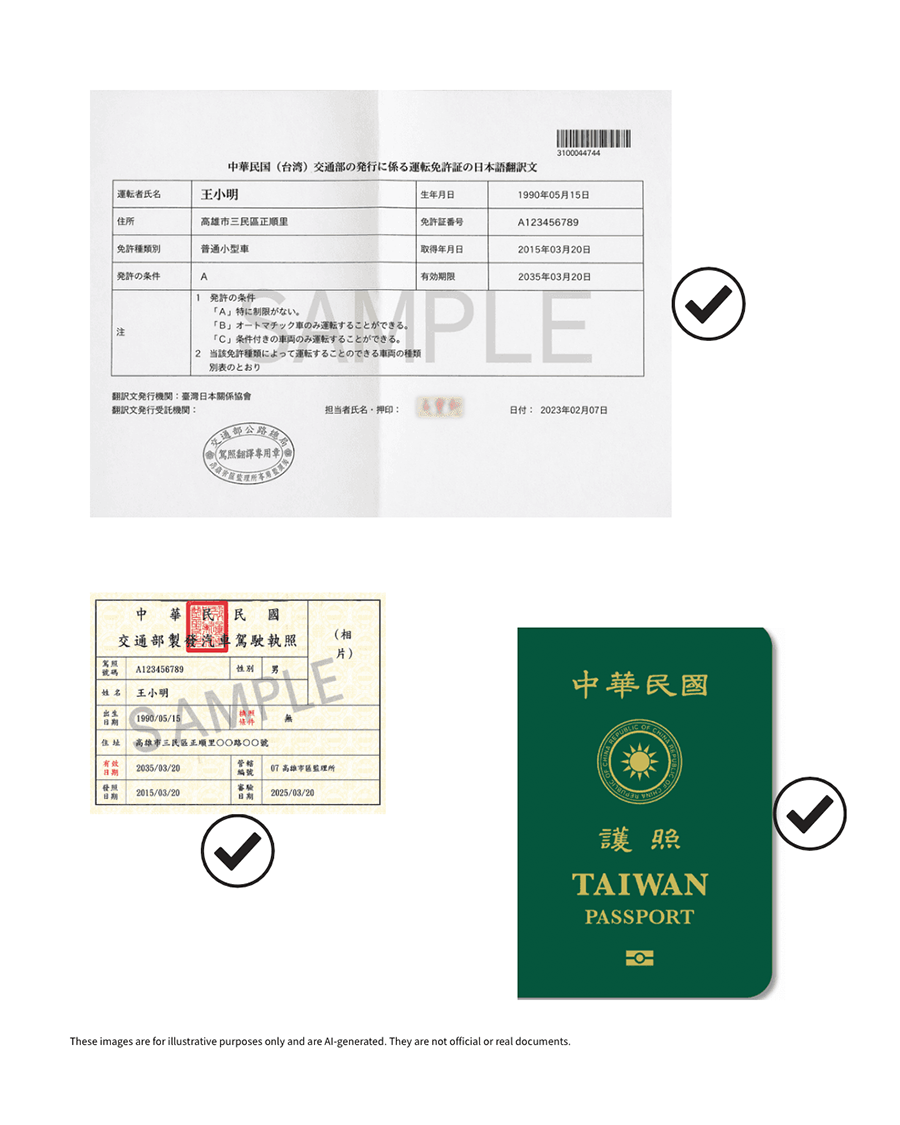
W Go-Kart Osaka publishes a separate route for licences from Switzerland, Germany, France, Belgium, Monaco and Taiwan. The visitor presents the original domestic licence, an accepted Japanese translation and passport. The list is specific. It does not mean that any licence becomes usable after a traveller or hotel produces a Japanese-language copy.
Japan Automobile Federation describes its digital application service for Japanese translations, including the licences for which it provides translations. The application process and current conditions belong to the issuing organisation, so allow preparation time without treating W Go-Kart Osaka as the translation provider. A German visitor, for example, should organise the accepted translation before building the tour into a fixed Osaka day.
The translation supports the original licence; it does not replace it. Keep both with the passport. If two family members hold licences from different places, one may use this route while another needs a 1949 Geneva IDP set. Similar travel dates and a shared reservation do not make their legal pathways identical.
A valid Japanese licence forms the direct domestic path
The third accepted route is a valid Japanese driving licence. This path is straightforward for the holder but does not extend to companions. A Japanese-licensed friend cannot sponsor another adult’s driving, and one complete document set cannot cover two karts. Every person intending to drive must qualify independently.
That distinction matters when a local resident books with overseas guests. The organiser should record who will drive and which route each person will use before choosing a guest count. If one person cannot establish an accepted path, do not assume that person can participate as a passenger: the website does not publish a passenger or spectator product.
Three document warnings to resolve before a go kart Osaka Japan booking
Most preventable failures are visible before the flight. They arise when a traveller focuses on the word “permit,” mistakes a copy for an original, or assumes a party shares one person’s eligibility. Treat the document set as a legal combination rather than a collection of travel images stored on a phone.
A phone screen cannot become the original IDP at the counter
A PDF, app, email attachment or photographed booklet may help a traveller remember what was issued, but it is not the original permit that the operator requires. The same boundary applies to a photograph of the domestic licence or passport. Carry the physical originals that make up the accepted set.
Imagine a visitor who orders a fast online “international licence” and receives only a downloadable file. The problem is not solved by printing it in the hotel lobby. The authoritative question is whether the recognised issuing authority produced a valid 1949 Geneva Convention permit. If not, a booking reference and a colour printout cannot repair it.
A valid domestic licence does not prove the permit uses the accepted convention
A driver’s home licence may be fully valid at home while the accompanying international document uses a convention Japan does not recognise for this purpose. Check both facts separately. The domestic licence establishes the underlying driving entitlement; the accepted permit or translation establishes the route for using it in Japan.
Do not infer eligibility from a previous rental or tour in another country. Treaty rules and recognised translations differ by destination. Likewise, completing an Osaka reservation on a card does not amount to legal approval. The payment and document checks answer different questions.
One complete driver cannot rescue an incomplete group
The booking form lets a customer select from one to seven guests, but that field records the requested party size and does not promise fleet availability or approve documents. A group of four needs four individually valid paths if all four intend to drive. Checking only the lead booker’s papers can leave the problem hidden until arrival.
A practical mixed-nationality group note can be very short: driver name, licence jurisdiction, chosen legal path and physical items packed. It should describe the real people on that reservation, not become a generic form. The organiser can remind everyone, while each traveller remains responsible for the originals belonging to that traveller.

Build the reservation around successful document checking
Once every intended driver has an accepted path, the booking becomes a service decision. W Go-Kart Osaka operates guided electric go-kart sightseeing tours on public roads. Its Castle loop is recommended in daylight and is mapped at about 12.6 kilometres and 48 minutes. Its Tsutenkaku city loop is recommended at night and is mapped at about 8.9 kilometres and 46 minutes. These are route references, not race distances or guaranteed minute-by-minute itineraries.
The booking name, party and departure should match the real drivers
The reservation form asks for name, email, date, time, guest count and tour route. Enter information for the intended service rather than reserving extra driver places “just in case” documents appear later. Current start bands run hourly from 10:00 through 16:00, then at 17:00, 18:00 and 19:00, followed by 20:00, 21:00 and 22:00 Night Experience departures.
Every current band includes the approximately one-hour experience, insurance, guide and costume. A driver still needs valid documents, closed-toe shoes and comfortable clothing. The arrival-to-finish public-road guide explains what the service feels like after eligibility is settled, while the route comparison helps the group choose the correct view.
Ten minutes early is preparation time, not document-repair time
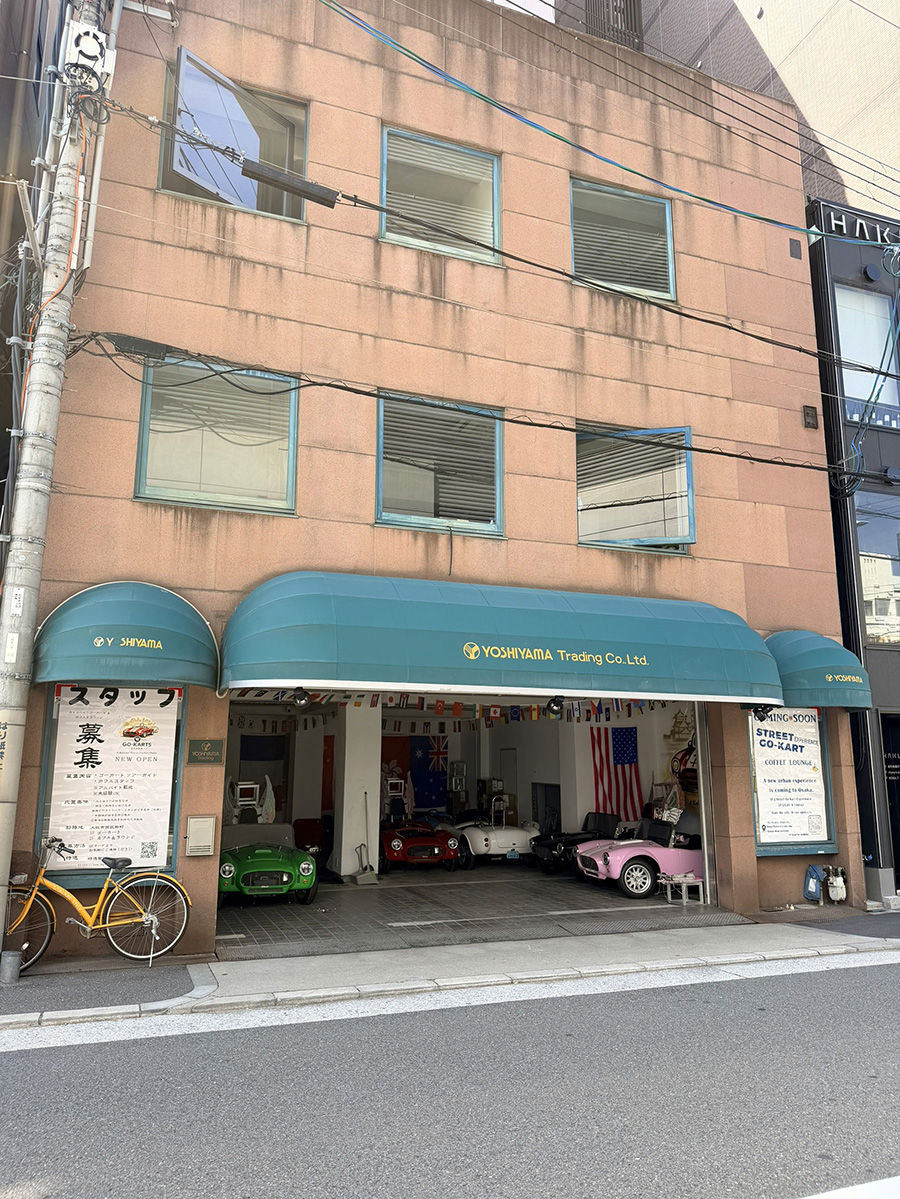
The operator asks guests to arrive ten minutes before departure with the valid licence materials. The base is at 3 Chome-5-2 Shinmachi, Nishi Ward, Osaka 550-0013. Published walking estimates place Nishiohashi about three to five minutes away, Nishi-Nagahori about eight to ten minutes away and Shinsaibashi about ten minutes away.
Use those estimates to plan a calm arrival, but do not allocate ten minutes to finding an issuing office, producing an accepted translation or retrieving an original licence from distant accommodation. A family staying near Namba should calculate travel to Shinmachi and keep each document set under its owner’s control. The tour returns to the same base, so the documents need to remain safely stored during the guided loop.
The cancellation window makes early eligibility checking financially relevant
W Go-Kart Osaka’s current terms allow free customer cancellation up to 48 hours before departure. Inside 48 hours, customer cancellation is non-refundable, and rescheduling depends on availability. An operator cancellation for unsafe weather leads to a refund or no-cost reschedule. Read the published commercial and cancellation terms before the deadline.
Document failure is not described as unsafe-weather cancellation. A traveller who waits until check-in to discover the wrong permit may therefore face a different outcome from a tour the operator cancels for conditions on the road. The safest purchasing sequence is eligibility first, then availability and payment, followed by a final physical check while free cancellation is still possible.
Only choose the route after every driver has one complete path
A couple using the same IDP route should still hold two permits, two domestic licences and their own passports. A family with a German licence holder and a visitor from a Geneva-permit jurisdiction should expect visibly different valid sets. A local resident with a Japanese licence follows the domestic path without extending that entitlement to a friend.
After that distinction is clear, the route and package can become the enjoyable part of the plan. Morning and afternoon starts currently cost JPY 7,000; evening starts JPY 10,000; and the 20:00–22:00 Night Experience JPY 13,000. The late package includes coffee, speaker and 360 camera, while these remain separately priced in the earlier bands. None of those inclusions changes the licence requirement.
The international visitor plan carries an eligible driver through route, weather, clothing and transport decisions. Use it after, rather than instead of, the document decision here.
Document facts checked on 24 August 2026: the three operator pathways, six translation jurisdictions, original-document combinations, service details, base, arrival request and cancellation terms were checked against W Go-Kart Osaka’s current pages. Legal context uses the National Police Agency and JAF. This guide does not decide an unusual licence case or promise acceptance of a document that the issuing authority has not verified.
Before reserving a go kart in Osaka, Japan, make one sentence true for every driver: “I have a valid Japanese licence,” “I have my original 1949 Geneva IDP, original domestic licence and passport,” or “My licence is from one of the six named jurisdictions, and I have the original licence, accepted Japanese translation and passport.” If no sentence fits, pause the booking and resolve the document route with an authoritative source. If one does, keep the originals together and let the Castle-versus-city choice shape the trip.