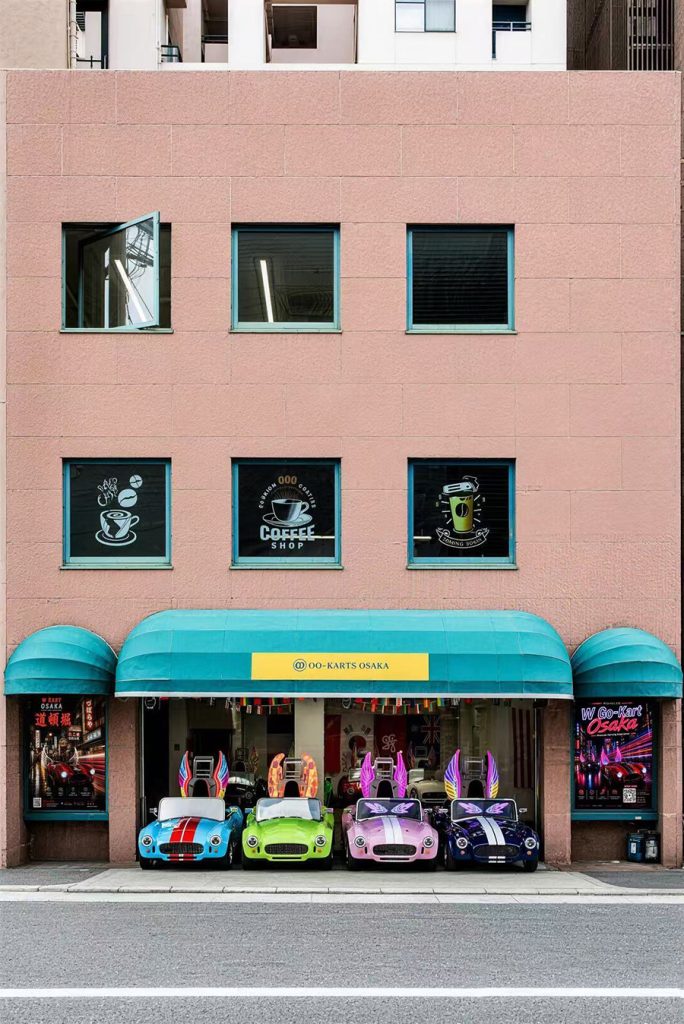
Osaka go karting at W Go-Kart Osaka may continue in light rain, with rain gear potentially provided, but severe or unsafe weather can cause the operator to reschedule or cancel. This service suits a flexible traveller who can wear comfortable clothes and closed-toe shoes, monitor official conditions and accept a live safety decision. Before booking, read the 48-hour cancellation terms, choose a route and time, and avoid placing an inflexible event immediately after the expected return.
The tour uses public roads, so a forecast is preparation information rather than permission to drive. W Go-Kart Osaka evaluates the actual route and operating conditions. Guests can review the current service and safety details, then check the live date, time, guest and route options only when the weather risk fits the wider trip.
Osaka go karting in light rain is an operator decision
The phrase “light rain may operate” describes a possibility, not a customer guarantee. Rain intensity, wind, visibility, road surface and changing local conditions can combine differently from one departure to the next. The operator has the current route context and must decide whether the guide-led public-road service can proceed safely.
A phone forecast cannot approve the Castle or city loop
A forecast icon compresses a large area and time window into one symbol. It may help a visitor pack or reconsider a day, but it cannot show every street condition the tour team will encounter. The Japan Meteorological Agency provides an official Osaka Prefecture forecast and separate warning information; use these as public weather sources without replacing instructions from the operator.
A guest seeing a small rain icon three days before the booking should not cancel automatically or declare the tour certain to run. Recheck closer to the date, keep the confirmation available and allow W Go-Kart Osaka to communicate an operational change. Forecast confidence, timing and local intensity can all change.
Rain gear may be available without becoming a dry-weather promise
The site indicates that rain gear may be provided when operating in light rain. It does not publish guaranteed sizes, quantities, materials or complete protection from spray. Wear comfortable clothing that can tolerate the conditions and keep valuables appropriately protected. Closed-toe shoes remain the stated footwear requirement; sandals and high heels do not become suitable because the weather is wet.
A traveller carrying original driving documents should protect them from water while keeping them accessible for check-in. The operator needs the physical Japanese licence, Geneva Convention IDP set or accepted translated-licence set as applicable. A wet-weather bag or sleeve is a personal precaution, not a document substitute or an item the site promises to supply.
Unsafe weather shifts the decision from clothing to cancellation
Heavy rain, severe wind, lightning or another hazardous condition cannot be solved by adding a jacket. Japan’s weather service explains that it issues advisories, warnings and emergency warnings when hazardous conditions may require action. The JMA Osaka warning and advisory page is the appropriate public source to consult when conditions escalate.
Do not travel towards the shop in defiance of official emergency instructions. If the operator cancels because conditions are unsafe, the published policy offers a refund or rescheduling without an additional charge. That is different from a guest choosing to cancel for personal preference while the service remains scheduled.
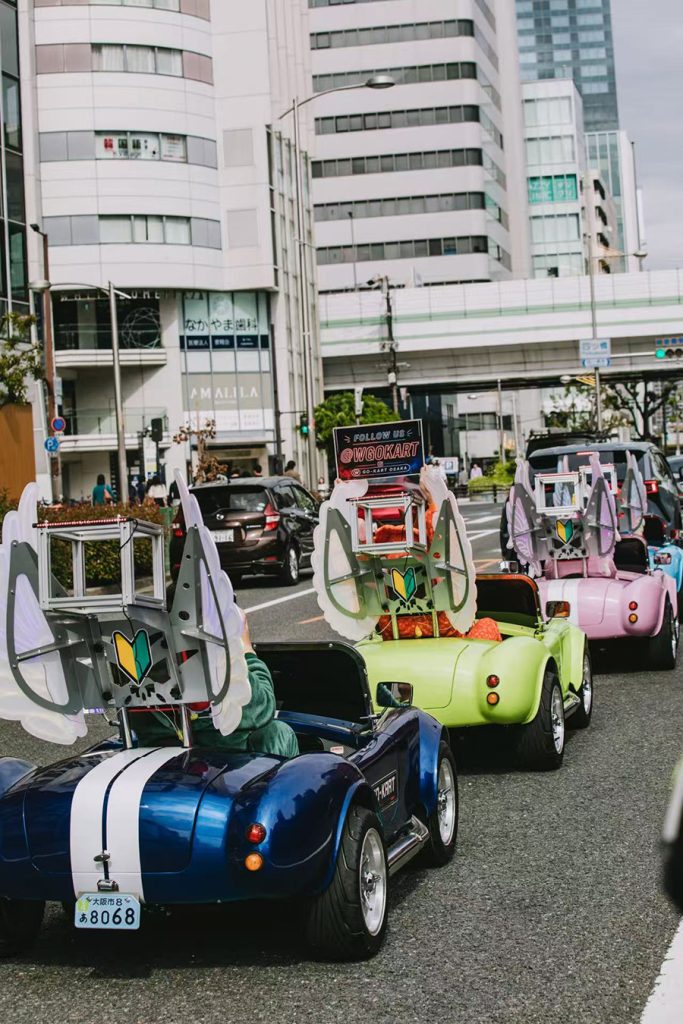
Weather checks for Osaka go karting should change across the day
A useful weather plan has three moments: before the free-cancellation boundary, on the day of the tour and immediately before travel to Shinmachi. Each moment answers a different question. Looking at the same forecast repeatedly without changing the decision is less useful than knowing what information matters at each stage.
| Decision moment | What to check | What the traveller can decide | What remains with the operator |
|---|---|---|---|
| Before 48 hours | Official forecast, trip flexibility, route and time | Keep or cancel within the free window | Future operating approval cannot yet be guaranteed |
| Inside 48 hours | Updated forecast, operator messages, transport options | Prepare clothing and keep confirmation available | Whether rescheduling is available |
| Day of departure | JMA warnings, rain intensity, train/walking conditions | Travel safely and protect documents | Whether the public-road tour can operate |
| At check-in | Staff instructions and current route condition | Follow the briefing or accepted change | Final route and safety decision |
The 48-hour boundary changes the customer’s financial choice
W Go-Kart Osaka publishes free cancellation up to 48 hours before the scheduled time. Customer cancellation inside 48 hours is non-refundable, and rescheduling is subject to availability. A traveller with an especially weather-sensitive itinerary should review the official forecast before crossing that boundary rather than assuming a personal concern will be treated as an operator cancellation.
Suppose a visitor has a 15:00 Castle booking and sees a worsening multi-day forecast just outside 48 hours. The traveller can assess personal tolerance, transport plans and official information while the free window remains open. If the same concern arises inside the boundary but the operator has not cancelled, the published customer terms apply. The current commercial and cancellation disclosure should control the decision.
Group weather decisions need one confirmed communication channel
A party of several drivers should name one person to watch the booking email and relay any operational message. That coordinator should not invent a cancellation from a weather app or promise that all guests can reschedule. Each driver still protects personal documents and reaches the agreed decision independently, while the live booking record remains the shared reference.
If the group decides to cancel voluntarily, the coordinator should understand whose booking and payment are affected before acting. If W Go-Kart Osaka changes the service for unsafe weather, share the exact operator message rather than paraphrasing it into a stronger promise. This keeps a practical difference between a guest choice and a safety cancellation.
A mixed hotel group should also separate “the tour is operating” from “every member can reach it on time.” Rain can affect walking pace, luggage handling and individual transport connections without creating an operator cancellation. Each driver remains responsible for reaching Shinmachi with the correct originals. If one person expects a serious delay, communicate through the booking channel rather than assuming the guide can hold a scheduled public-road departure for the rest of the party.
The Castle and night routes create different weather trade-offs
The two published loops use the same public-road safety principles, but their recommended settings change what a traveller values. The Castle route is recommended for daytime; the Tsutenkaku city route is recommended at night. Neither recommendation overrides unsafe conditions, and the route maps do not promise an identical drive time in rain.
Daylight can make the Castle loop easier to read visually
The Castle map depicts approximately 12.6 kilometres and about 48 minutes of driving from and back to Shinmachi. Daytime starts run hourly from 10:00 through 16:00 at JPY 7,000. A visitor concerned about visibility may prefer daylight, while accepting that rain can soften distant views and traffic can alter the rhythm.
This route does not include shelter at Osaka Castle or a drop-off beside the grounds. The group remains on a guided loop and returns to the shop. A museum ticket or train reservation after the tour should include enough buffer for changing road and walking conditions.
Night lighting adds atmosphere but not weather immunity
The city map depicts approximately 8.9 kilometres and about 46 minutes through or near Amerikamura, Shinsaibashi, Dotonbori, Namba, Nipponbashi, Ebisucho and Shinsekai. Evening starts at 17:00–19:00 cost JPY 10,000; 20:00–22:00 Night Experience starts cost JPY 13,000. The operator recommends this loop after dark.
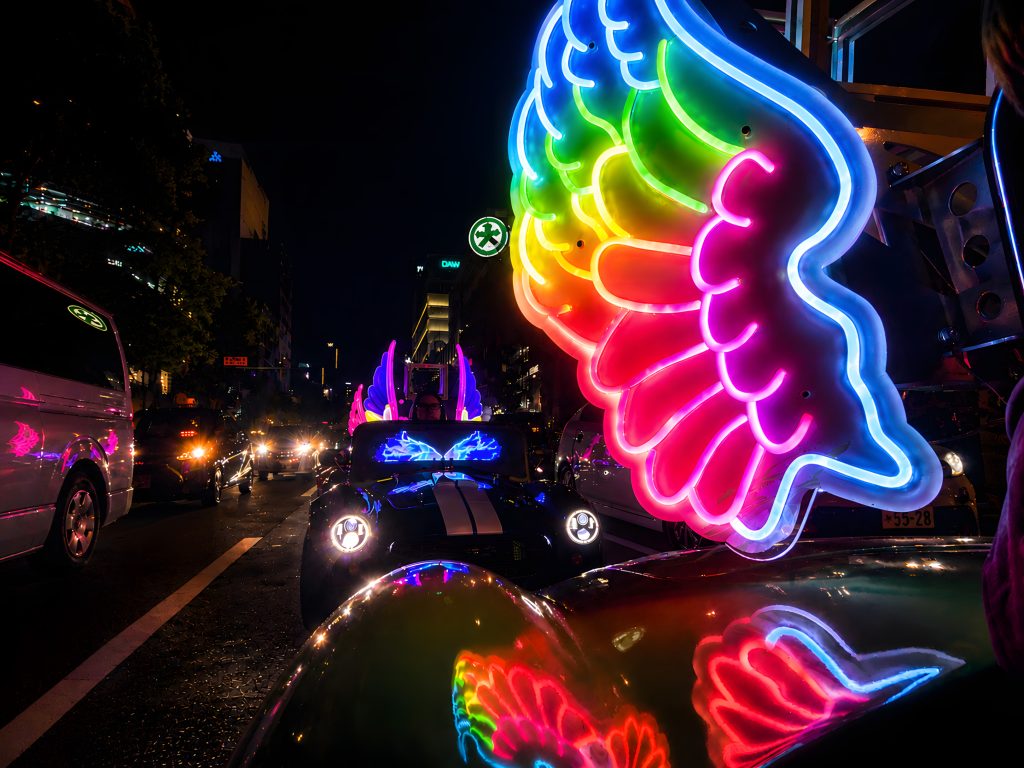
Reflections on wet streets may look dramatic, but they should never be used to sell rain as safer or preferable. The driver must prioritise visibility, guide signals, traffic and the surface ahead. The Night Experience includes a 360 camera, speaker and coffee, yet those extras do not change the operator’s authority to cancel.
The time-of-day guide helps compare light and inclusions, while the route guide shows why Castle and city choices serve different visual priorities.
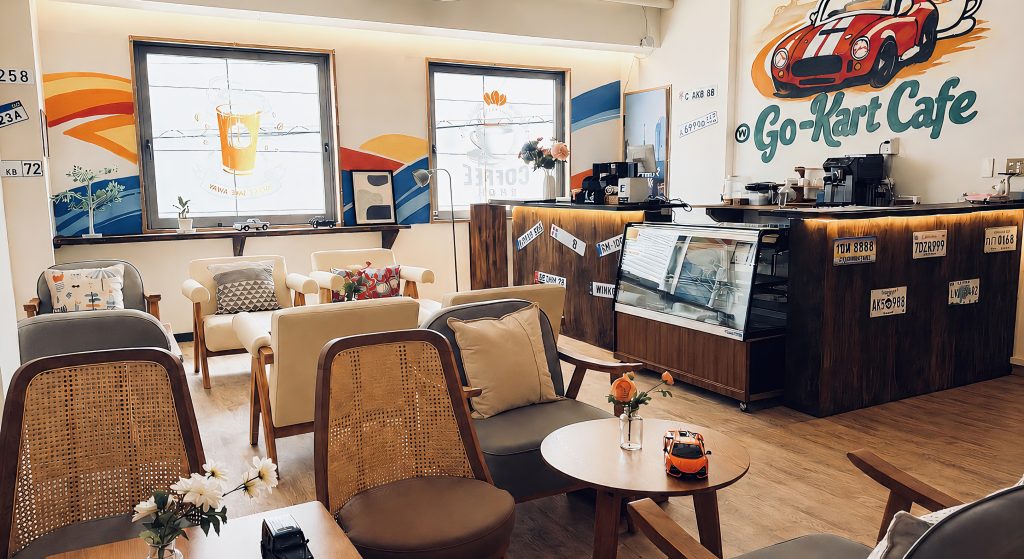
Clothing and electronics need a wet-weather role before departure
Preparation should reduce distractions rather than create more objects to manage in the kart. Wear the required shoes, secure loose clothing and follow staff instructions for any costume or rain gear. Keep phones and personal cameras stored while moving. W Go-Kart Osaka prohibits taking photos during driving and directs guests towards suitable stops and guide assistance.
A 360 camera does not make moving phone photography acceptable
The camera is JPY 1,000 in the morning-and-afternoon and evening bands and included in the Night Experience. It can support hands-free memories when operated according to staff instructions, but the site does not publish waterproof specifications or guarantee every weather condition. Confirm the equipment process at the base rather than exposing personal electronics or improvising a mount.
Arrive early enough to solve clothing questions indoors
Confirmed guests are asked to arrive 10 minutes early. Nishiohashi Station is listed at approximately a 3–5-minute walk, Nishi-Nagahori at 8–10 minutes and Shinsaibashi at about 10 minutes. Rain can slow the walk and make unfamiliar exits harder to read, so add personal buffer before that target.
The shop is at 3 Chome-5-2 Shinmachi. Do not travel to Namba, Tsutenkaku or Osaka Castle to meet the guide, even if that landmark appears in the route name. Check in at the staffed base, show the original documents and wait for the current weather instructions.
After the loop, onward plans also begin at Shinmachi. Wet streets, train access and the walk from the base can add time even when the driving service itself finishes normally. A customer with a reserved dinner, rail departure or admission slot should protect that next commitment with a realistic margin instead of expecting the mapped 46- or 48-minute route figure to control the entire door-to-door schedule.
Four weather outcomes call for four different responses
When conditions remain dry, arrive normally with the correct documents and clothing. When there is light rain and the operator confirms the tour, use the provided or instructed rain protection and drive with extra attention. When the operator declares conditions unsafe, choose the offered refund or no-cost reschedule. When a guest personally cancels, apply the published 48-hour terms rather than relabelling the choice as an operational closure.
The distinction protects both traveller and service provider. It lets W Go-Kart Osaka make route decisions based on current public roads, while customers retain a clear cancellation window for their own comfort and itinerary risk. No article can promise that a particular forecast, rain percentage or warning level will produce one exact outcome on a future departure.
Service details checked on 24 August 2026: light-rain operation, rain-gear wording, unsafe-weather options, routes, hours, prices, access, clothing, photo rules and cancellation terms were checked against W Go-Kart Osaka’s current material. Forecast and warning context uses official JMA sources. The media library contains no confirmed rain-tour photograph, so the selected images show the real base and night service without depicting unverified wet conditions.
A weather-ready booking is not one that predicts Osaka perfectly. It is one that preserves choices: official information before 48 hours, protected documents and suitable clothing on the day, enough travel buffer, and a willingness to follow the operator’s live decision. W Go-Kart Osaka supplies the staffed base, guide, insurance, electric kart and mapped route; safe flexibility is the part the traveller brings.