
The Osaka go kart age requirement is not published as a separate numeric minimum on the W Go-Kart Osaka pages reviewed. What the operator does state is more concrete: every participant drives independently on public roads and needs one accepted set of valid original driving documents. The service does not publish a child passenger, spectator ride, or unlicensed track alternative.
Do not convert a competitor’s rule, rental-car policy, Japanese licence exam age, or booking-form guest selector into this operator’s age promise. For a real participant, answer two questions separately: can the person legally use an accepted licence path on the service date, and are they personally ready to follow the guide on public roads?
The Osaka go kart age requirement page does not state a number
An absent number should remain absent
The reviewed homepage, booking, route, and commercial pages do not publish “16+,” “18+,” “20+,” or an upper age limit for this service. A responsible guide cannot fill that gap because another operator uses a number or because it sounds likely. Current W Go-Kart Osaka information controls the claim.
The booking form does not validate age
The visible fields ask for name, email, date, time, guests from one to seven, and route tier. No age field is published in that set. Selecting one or seven guests does not certify their age, licence, capacity, or availability.
Price bands do not create age bands
Prices are JPY 7,000 at 10:00–16:00, JPY 10,000 at 17:00–19:00, and JPY 13,000 at 20:00–22:00. The pages do not display youth, child, student, senior, or accompanying-adult pricing. Do not infer age eligibility from the absence of a discount.
A valid licence is the strongest published participation threshold
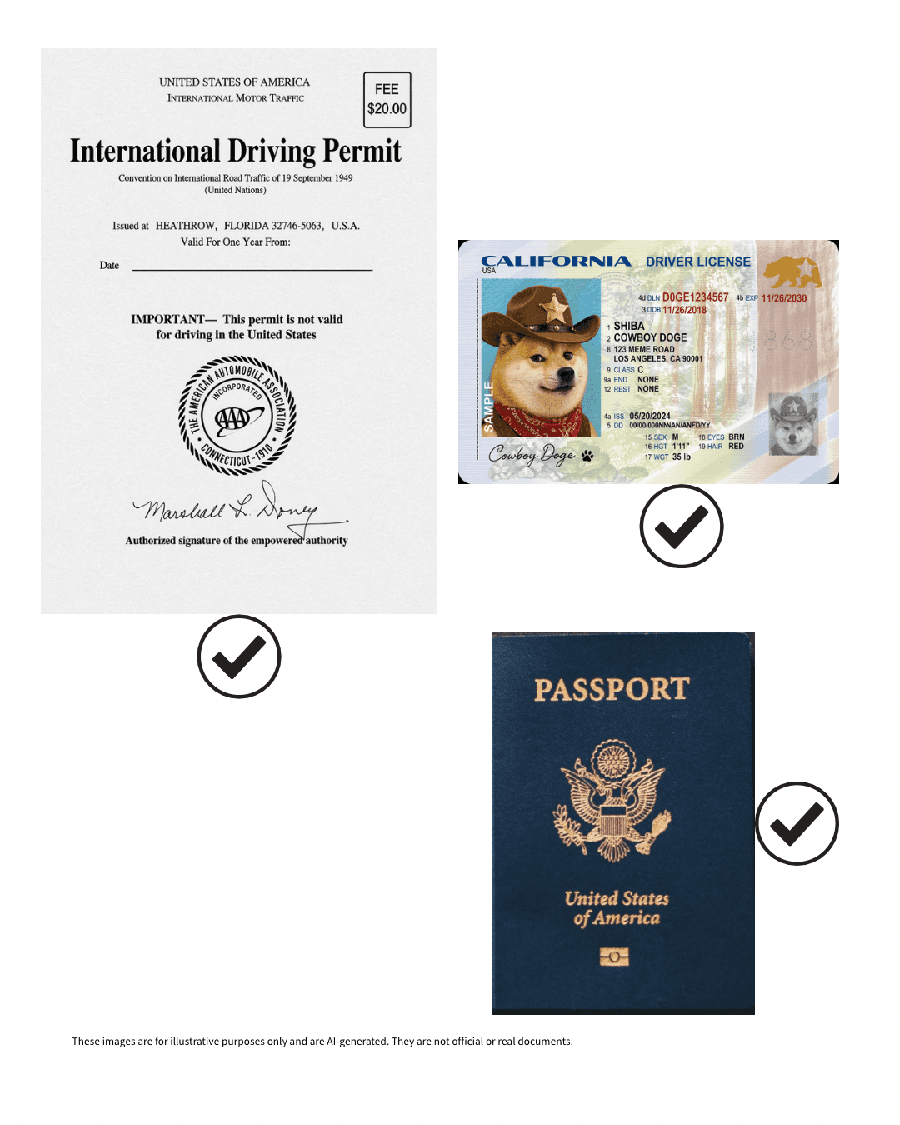
W Go-Kart Osaka offers three accepted document paths. The first is a valid Japanese driver’s licence. The second is an original 1949 Geneva Convention international driving permit with original domestic licence and passport. The third applies to listed jurisdictions and uses an accepted Japanese translation with original foreign licence and passport.
A learner or provisional document is not named as accepted
The operator pages do not publish a learner-permit, provisional, accompanied-driver, or supervised practice path. A 17-year-old holding something called a licence should not rely on the label alone. The document class, validity, and legal use in Japan must be confirmed through authoritative information.
A full home licence can still need Japan-side evidence
An 18-year-old or older visitor may possess a valid domestic licence but lack the qualifying Geneva permit or accepted translation route. Age does not repair the missing companion document. Passport, domestic licence, permit or translation, and permitted Japan driving period must agree.
An older driver’s valid licence does not answer personal fitness
The website does not publish an upper age limit, medical screening, strength requirement, or accessibility specification. A valid licence is necessary evidence, but a visitor should make an honest personal decision about following the briefing and driving individually. This article cannot provide medical clearance.

National licence ages and operator policy answer different questions
Japan’s ordinary-driver licensing system has its own national age rules, and foreign jurisdictions issue licences under their own systems. National Police Agency material provides legal context for Japanese and foreign licence use. That context does not automatically publish a separate W Go-Kart Osaka minimum or approve an individual foreign document.
A Japanese ordinary-licence age is not a website age statement
NPA material identifies 18 as the age for obtaining an ordinary Japanese licence. That explains one national route. It should not be rewritten as “W Go-Kart Osaka accepts everyone 18+” because the operator still requires a valid accepted licence and may have current operational information not represented by a general national age fact.
A foreign issuing age does not override Japan use rules
Some jurisdictions may issue documents at different ages or stages. A document valid at home is not automatically usable in Japan. Convention, vehicle entitlement, translation path, validity, landing period, and the operator’s accepted-original requirement remain part of the decision.
Older-driver national procedures do not create an operator maximum
NPA information discusses renewal and additional procedures for older Japanese licence holders. That is national licensing context, not evidence that W Go-Kart Osaka has a published maximum age. Do not invent a cut-off or promise universal physical suitability.
Four family scenarios show why a number is insufficient
A 17-year-old with a learner document needs a legal answer, not a birthday guess
The key issue is whether the document is a full accepted licence usable for the service in Japan. The operator does not list learner or supervised paths. If no valid route exists, the person should not be entered as a future driver or passenger.
An 18-year-old with only a home licence is still incomplete
Reaching a commonly discussed age does not supply the 1949 Geneva permit, passport, or accepted Japanese translation. Identify the licence issuer and build the correct physical set. Do not book from age alone.
A parent cannot carry a child on the kart
The site publishes individual driving and no passenger seat or child ride. A parent with a valid licence cannot extend that licence or physical seat to a child. The family should arrange a separate activity or supervision plan outside the service rather than expecting an unpublished accommodation.
A three-generation group must evaluate each proposed driver separately
One younger adult may have an incomplete permit, a middle-aged adult may have the correct set, and an older adult may be legally eligible but personally uncertain. Family relationship does not average those outcomes. The booking guest count should include only genuine ready drivers.
Personal readiness begins after legal eligibility
No prior go-kart experience is necessary
The operator supports beginners and provides a briefing. A first-time licensed driver can therefore be a suitable participant. The site does not publish training duration, practice track, control layout, guide ratio, or a pass/fail skills test, so no article should promise how easy one person will find it.
Comfortable clothes and closed-toe shoes still apply
These requirements do not vary by age on the pages reviewed. Costume is included, but it does not replace practical clothing. A family should solve footwear before travelling to Shinmachi rather than assuming smaller or loan sizes are available.
The no-photo-while-driving rule protects every age group
Guests must not use a phone for photographs while moving. Stopped photo opportunities are available and guides may assist, but exact stops and results are unpublished. A younger visitor’s familiarity with a phone does not make distracted driving appropriate, and an older visitor should not be pressured to create content.
Guide leadership does not eliminate individual decisions
The guide leads the group at all times. Each participant still operates their own kart and observes public traffic. Anyone unwilling to drive independently should not expect a passenger conversion, regardless of age or family relationship.
Arrival and route choices should fit the real participant
Every route begins and returns at 3 Chome-5-2 Shinmachi. Guests are asked to arrive ten minutes early. The operator estimates a three-to-five-minute walk from Nishiohashi, eight to ten from Nishi-Nagahori, and about ten from Shinsaibashi. These are not total hotel journey times or mobility guarantees.
Castle daytime may suit a different energy pattern from 22:00
The Castle loop is recommended in daytime and has a map of approximately 12.6 kilometres/48 minutes. The city loop is recommended at night and is approximately 8.9 kilometres/46 minutes. A participant’s energy, travel, and sleep plan may make one start more sensible, but the website publishes no age-specific route assignment.
Night inclusions do not change eligibility
The JPY 13,000 Night Experience includes coffee, speaker, and 360 camera. Earlier bands leave those items optional. Coffee suitability is a personal decision; inclusion does not create medical advice, an age exception, or a different document threshold.
The 48-hour boundary rewards early family decisions
Customer cancellation is free until 48 hours before departure. Inside the boundary it is non-refundable, and requested rescheduling depends on availability. Resolve documents, personal willingness, and family supervision before that clock narrows.
Ask the age question without asking the website to invent an answer
State the proposed driver’s actual legal path
Instead of asking only “Is this person old enough?” identify the licence issuer, licence class, Geneva permit or translation route, document validity, passport, and service date. That information exposes whether the question is really age, document type, or Japan use period.
Keep personal medical details out of a public article
The website does not publish medical criteria. A person with an individual health or accessibility concern should use appropriate professional and current operator guidance without expecting this content to decide. No diagnosis or fitness approval belongs in the booking guest field.
Do not promise an unpublished operator exception
A general answer from another service, online forum, or old page cannot modify current W Go-Kart Osaka terms. If a numeric threshold is essential to the decision, it remains a current pre-booking clarification rather than a fact this article can manufacture.
Current pages still let a family make three firm decisions
An unpublished number does not make all planning impossible. The family can determine who has an accepted driving path, who actually wants to operate independently, and who needs a separate activity or supervision arrangement. Those decisions use confirmed facts and remove most age-related ambiguity before booking.
First decide who can prove a full road-licence path
For each proposed driver, record only the route: Japanese licence, qualifying Geneva permit set, or eligible foreign licence with accepted translation. Mark unresolved rather than yes when convention, issuer, validity, or landing period is uncertain. Do not publish sensitive document numbers in the family plan.
Then decide who is willing to drive rather than ride
A legally eligible relative may dislike the low seating position, night timing, or public-road responsibility. The website publishes beginner support, not compulsory participation or passenger conversion. The person can decline before the group count is submitted without needing an invented age reason.
Finally decide what non-drivers will do during the service
Because no spectator ride or child passenger is published, accompanying relatives need an independent plan. The operator pages do not state childcare, waiting supervision, lounge access for nonparticipants, or a spectator package. Do not leave a child or dependent person with an assumption that the venue provides care.
An age-sensitive itinerary should avoid avoidable pressure
Do not make a first drive the last train of the night
A young adult or older relative may be legally ready yet feel more pressure when a 22:00 return controls the last connection. Choose a start with comfortable travel margin. Schedule fit is a group-design decision, not evidence of an operator age ban.
Do not use the group photo to pressure an uncertain driver
Costume and stopped photo moments can make participation feel socially compulsory. The service still requires individual driving. Let an uncertain person decide before payment, and do not promise that they can pose on the route without driving.
Do not confuse family supervision with guide responsibility
The guide leads participating drivers on public roads. The website does not publish childcare, medical monitoring, or responsibility for non-driving companions. Families must solve those roles independently and keep the operator’s guide function within its stated road service.
The Osaka go kart age requirement resolves through evidence, not inference
Review the Japan licence-route explainer, the operator document guide, and the IDP verification article. These pages show what legal evidence a proposed driver needs.
Use the booking form only after the driver roster is resolved, and read the commercial disclosure before payment. Do not enter children or unlicensed relatives on the assumption that the public-road product will become a passenger ride.

Age and licence information checked on 24 August 2026: individual driving, accepted originals, passenger non-offer, beginner support, form fields, clothing, arrival, routes, prices, and policies were checked on W Go-Kart Osaka pages. NPA supports national licence context only. No separate operator minimum or maximum age, learner path, child ride, medical clearance, age discount, accessibility specification, or individual approval is claimed.
The honest answer is less tidy than a number and more useful. W Go-Kart Osaka requires a real licensed driver, yet its reviewed pages do not publish a separate age threshold. Build the accepted evidence, assess personal willingness to drive behind the guide, and leave any remaining numeric operator question open until current information answers it.