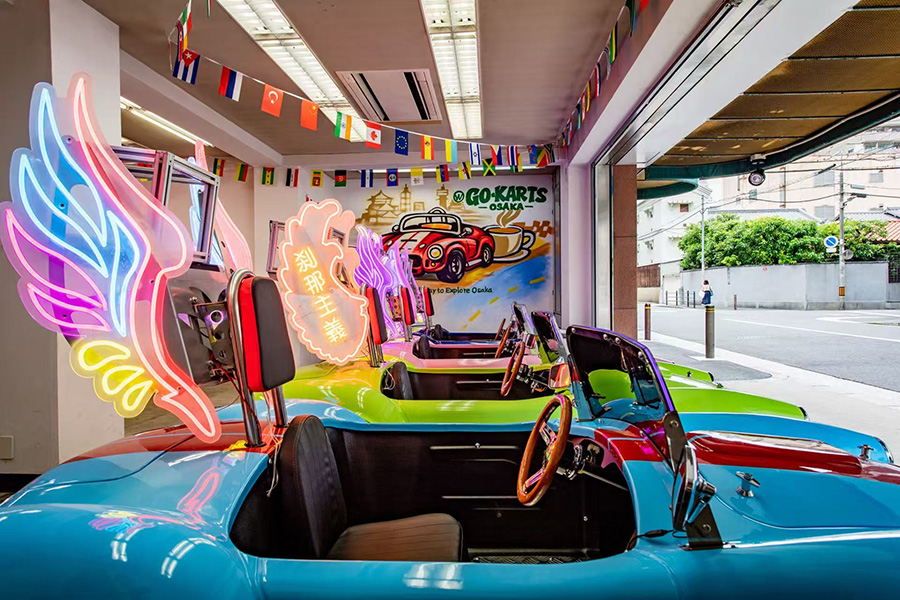
The confirmed Osaka go kart requirements at W Go-Kart Osaka have four parts. Every driver needs one accepted set of original driving documents, comfortable clothing with closed-toe shoes, arrival ten minutes early at 3 Chome-5-2 Shinmachi, and readiness to follow the operator briefing and guide on public roads.
Previous go-kart experience is not required, and the operator publishes beginner support. That does not remove legal eligibility or individual driving responsibility. A complete licence cannot compensate for sandals; early arrival cannot compensate for a missing passport; and a costume cannot compensate for ignoring guide instructions. All four readiness gates must pass.
Osaka go kart requirements begin with one legal path per driver
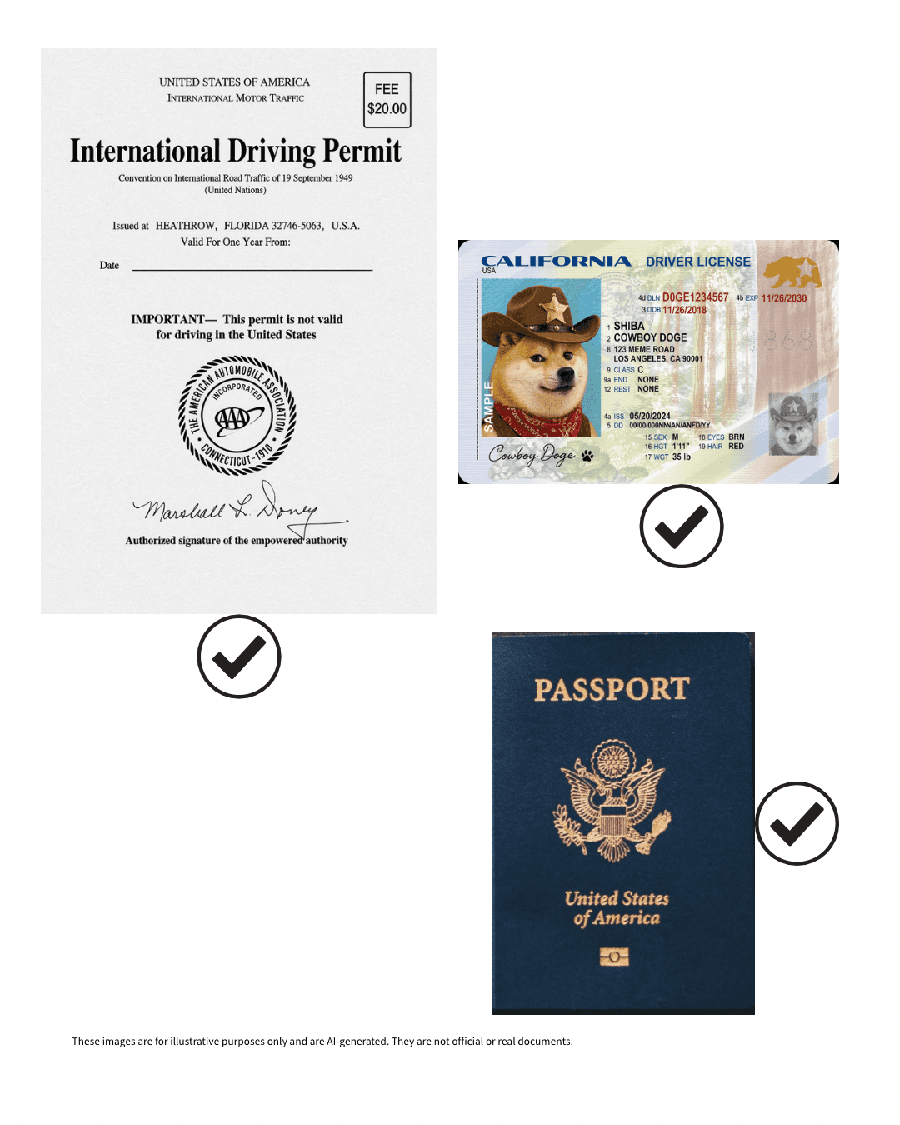
W Go-Kart Osaka lists three routes: a valid Japanese driver’s licence; an original 1949 Geneva Convention international driving permit with the original domestic licence and passport; or, for six listed jurisdictions, an accepted Japanese translation with the original foreign licence and passport. The National Police Agency likewise describes these broad legal routes for driving in Japan.
A Japanese licence is a complete path, not a group credential
The holder brings the valid original Japanese licence. It belongs only to that driver. A local friend cannot use one licence to make an overseas guest eligible, and the booking coordinator’s document does not cover everyone entered in the guest selector.
The Geneva path travels as three physical items
The first item is an original international permit issued under the 1949 Geneva Convention. The second is the driver’s original domestic licence. The third is the passport. A phone photograph, scan, photocopy, or permit booklet alone does not complete the operator’s published path.
The translation path is limited to the named jurisdictions
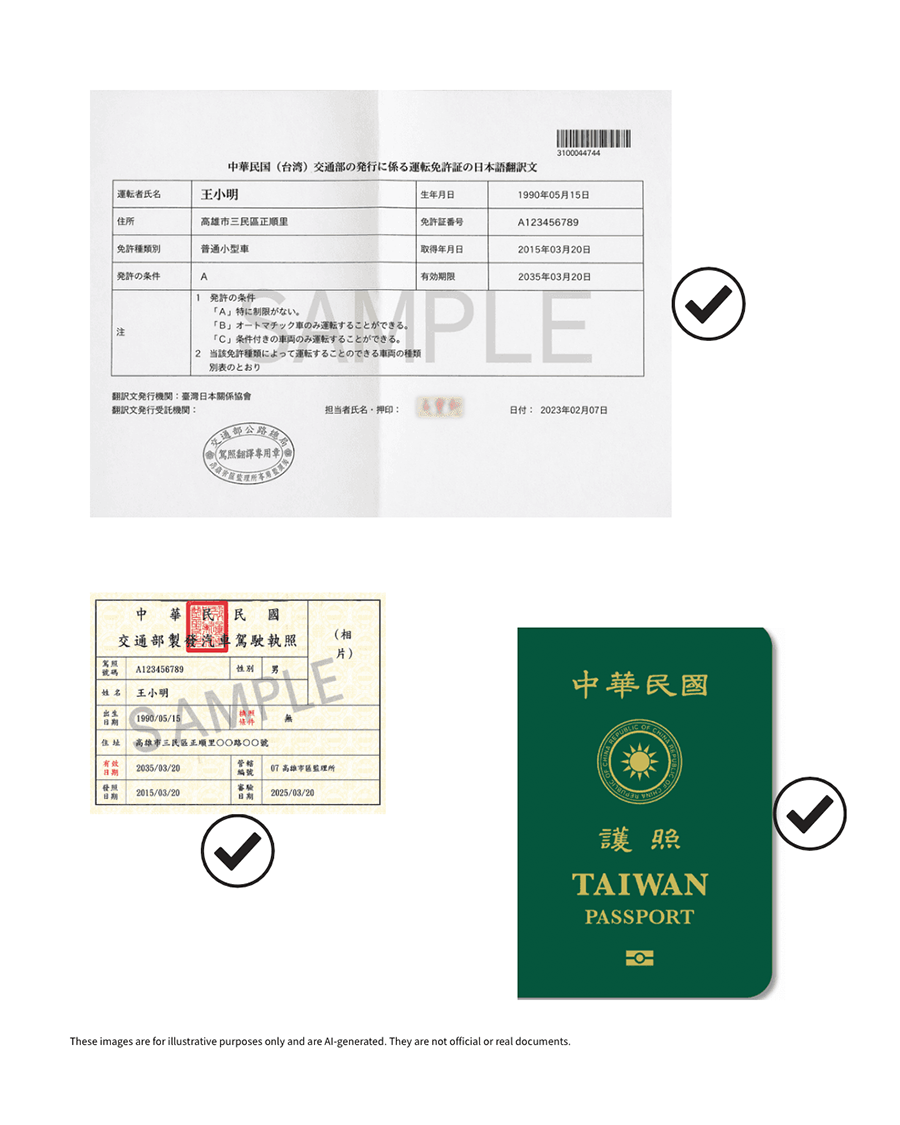
The listed route applies to Switzerland, Germany, France, Belgium, Monaco, and Taiwan and uses an accepted Japanese translation, original domestic licence, and passport. The NPA also identifies these jurisdictions in its current foreign-licence guidance. A translated licence from another jurisdiction should not be assumed to qualify.
The legal gate has issuer, date, and Japan-period questions
The words international driving permit do not identify the convention
A document can look official and still follow another convention or an unaccepted form. Check the issuing authority and the 1949 Geneva basis before booking. Do not borrow a generic permit image from another country or assume an online document seller issues the required legal form.
Printed validity and the permitted Japan driving period are separate
NPA guidance states that international permits or the accepted foreign-licence route can be used for no more than one year after landing in Japan or the document’s valid period, whichever is shorter, subject to the detailed rules. Long-term residents and re-entry situations can be more complex. Use official guidance for the individual case rather than a simple tourist assumption.
The selected service date is the date that must pass
A permit may be valid when issued or when the form is submitted but invalid by departure. A rescheduled date can change the answer. Compare every relevant date with the actual booked start and preserve the physical set through the trip.
The accepted translation source matters
NPA guidance limits Japanese translations to designated sources rather than any person who can translate accurately. W Go-Kart Osaka therefore asks for an accepted translation, not an informal bilingual note. If the source cannot be confirmed, resolve it before the 48-hour customer cancellation boundary.
Comfortable clothes and closed-toe shoes form the physical gate
The operator asks guests to wear comfortable clothing and closed-toe footwear. These are simple published requirements with practical value at road level. The site does not publish a detailed prohibited-garment list, footwear-loan service, size chart, or changing-room specification, so the safest plan is to arrive already dressed for the drive.
Sandals should be replaced before travel to Shinmachi
A visitor spending the day in warm-weather footwear should carry or wear a suitable closed-toe pair. Do not arrive at reception expecting rental shoes. Shopping for a replacement near the start can consume the ten-minute arrival margin and create a customer-side problem.
Costume is included but remains a visual layer
Every price band includes a costume. The website does not publish characters, sizes, matching sets, stock, or reservations. Wear practical clothes underneath and treat any available costume as optional presentation. It cannot turn unsuitable clothing into road readiness.
Weather preparation changes by date and start time
Check current official forecast and warnings for heat, rain, wind, or temperature changes and follow operator direction. The website does not promise identical conditions to its photographs. Bringing clothing appropriate for the actual hour matters more than copying the look of a marketing image.
The timing gate ends at Shinmachi reception
Arrival means reaching the base at 3 Chome-5-2 Shinmachi ten minutes before the booked start. It does not mean leaving Namba, entering a station, or standing on the correct street with two friends still missing. Reception needs the actual driving party and actual documents.
Station estimates start after the correct exit
W Go-Kart Osaka estimates three to five minutes from Nishiohashi, eight to ten minutes from Nishi-Nagahori, and about ten from Shinsaibashi. These figures do not include hotel elevators, trains, platform transfers, exit confusion, luggage, or weather. Build a separate travel margin before the requested ten minutes.
A large group should meet at the exact storefront
Namba, Osaka Castle, and Tsutenkaku are route or itinerary references, not check-in points. Share the full Shinmachi address and a picture of the real storefront. Friends arriving from different lines should target reception rather than attempting a vague station meeting.
Large luggage needs a confirmed plan outside the public requirements
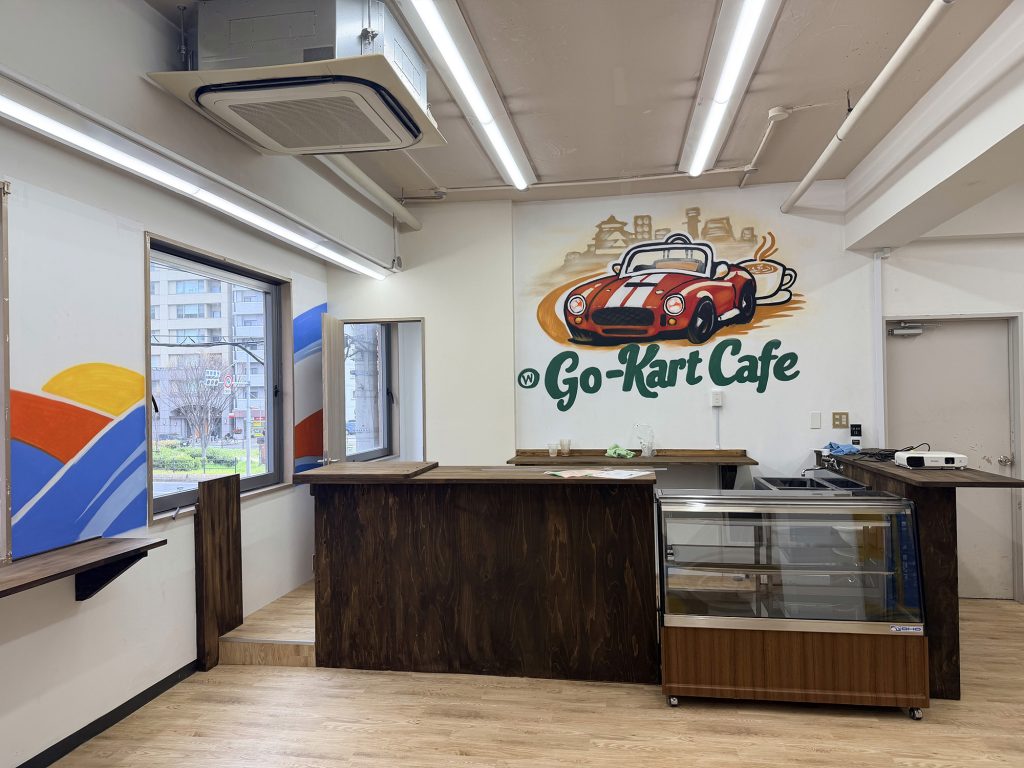
The pages reviewed do not state locker dimensions, luggage storage, baggage limits, or liability. A hotel-change traveller should use confirmed accommodation or station storage before arriving. Lounge photographs do not prove that a suitcase service exists.
The return uses the same address
Both the Castle and city loops return to Shinmachi. Dinner, a train, luggage collection, or a hotel transfer must begin from there after approximately one hour plus the surrounding service stages. Map minutes are not exact release times.
Guide-led public roads form the operational gate
Listen to the current briefing instead of importing another operator’s rules
The website confirms a briefing and guide leadership but does not publish control layout, training duration, practice course, exact signals, gap, speed, radio, or guide ratio. Equipment and procedure from an outside video may not match. Ask about the real uncertainty while stationary.
Follow the guide without surrendering wider attention
Japan traffic guidance emphasizes left-side driving, care for pedestrians, no alcohol, and no phone distraction. The guide reduces navigation work; the driver still observes signals, pedestrians, and surrounding vehicles under current instructions. This is not a closed track or supervised learner exception.
Keep photographs for stopped moments
W Go-Kart Osaka says not to take photographs while driving. It also says stopped photo opportunities are available and guides may help. No location, number, duration, or image result is published. The 360 camera option or night inclusion does not authorize screen interaction while moving.
Beginner support does not create a passenger fallback
No prior kart experience is necessary, but each participant drives. The site does not publish a passenger seat or spectator ride for someone who changes their mind. A genuinely unwilling or ineligible guest should be resolved before the booking reaches the non-refundable period.
A group cannot average four readiness gates
Requirements apply to each participant, even when one coordinator submits the form. A group with excellent navigation but one missing domestic licence is not mostly ready. Neither is a legally complete party wearing open footwear or arriving at different landmarks. Review the four gates person by person, then test the shared arrival.
Mixed licence paths can still form one driving party
One friend may hold a Japanese licence, another a qualifying Geneva permit set, and another an eligible foreign licence with accepted Japanese translation. Their documents do not need to look alike. Each path must be individually complete and valid on the same date; the coordinator should not force everyone into the first person’s route.
One pair of sandals can delay an otherwise complete roster
A party may spend weeks preparing permits and overlook footwear. Add the clothing decision to the group’s departure message, not merely to a private packing list. The guest in sandals should change before travelling to the base instead of assuming a costume or another driver’s shoes solve the physical gate.
Separate station arrivals need one earlier reunion target
If guests approach via Nishiohashi, Nishi-Nagahori, and Shinsaibashi, the ten-minute request is measured at reception for all of them. Set a shared target earlier than the minimum and ask each person to navigate directly to the full address. Waiting for one traveller inside a large station creates a new timing risk.
One phone-focused guest can distract the wider group
Agree before briefing that nobody will film by hand while moving or pressure another driver to pose. Use only stopped opportunities under current guide direction. This group norm supports the operational gate without inventing formation, stop, or camera rules beyond what the operator publishes.
Failure at each gate needs a different remedy
A legal-gate failure needs a valid path, not reassurance
Confirm the proper permit or translation source and required originals through authoritative information. A friendly message or payment receipt cannot repair an unaccepted document. If the path cannot be completed, change the genuine driving roster through the operator’s current process before the cancellation boundary.
A physical-gate failure needs preparation before arrival
Change shoes or clothes, check the actual forecast, and store unsuitable baggage through a confirmed service. Do not turn reception into an emergency shopping or storage plan. The operator’s published experience is road driving, not equipment rental for the rest of the visitor’s outfit.
A timing-gate failure needs a safer itinerary
Move the hotel departure earlier, choose a more practical station approach, or select a different service time through the available process. The mapped 46 or 48 minutes cannot repay time lost before check-in, and no late-arrival grace period is published.
An operational-gate failure needs honest self-selection
A guest who will not follow the guide, put away the phone, or accept individual driving should not rely on beginner support to transform the product. Resolve willingness before booking. The site does not publish a passenger alternative or a private track version.
Route and package selection follow the four gates
Once every driver passes the readiness model, choose the city subject. Castle is approximately 12.6 kilometres/48 mapped minutes and recommended in daytime. The Tsutenkaku city loop is approximately 8.9 kilometres/46 mapped minutes, recommended at night, and passes through or near several Minami and Shinsekai areas.
The service band changes price, not the requirements
Starts from 10:00–16:00 are JPY 7,000, 17:00–19:00 are JPY 10,000, and 20:00–22:00 are JPY 13,000. All include approximately one hour, guide, insurance, and costume. The same document, clothing, arrival, and operational gates apply across them.
Night inclusions do not reduce preparation
Coffee, speaker, and 360 camera are included at night and separately priced earlier. They support hospitality, atmosphere, and memory, not eligibility. A fully bundled guest still needs accepted originals and practical dress and must follow the no-phone rule.
Cancellation terms reward early readiness work
Customer cancellation is free until 48 hours before departure; later cancellation is non-refundable, and requested rescheduling depends on availability. Unsafe-weather operator cancellation follows the current refund or no-cost reschedule remedy. Check all customer-controlled gates before the free window closes.
Pass the Osaka go kart requirements before submitting the party
Use the licence-path guide and the Geneva permit guide for legal preparation. The Shinmachi arrival guide handles timing, while the booking record guide keeps digital and physical evidence separate.
Enter the resolved date, time, driver count, and route in the booking form. Do not use the form to test eligibility or infer capacity. A ready party is one in which every driver can pass all four gates on the same service date.
Requirement information checked on 24 August 2026: accepted document paths, originals, clothing, footwear, arrival, address, access, guide support, photo rule, routes, prices, and policies were checked on W Go-Kart Osaka pages. NPA/JAF support only national licence and road context. No footwear loan, storage, costume stock, control layout, training, speed, formation, camera output, passenger service, capacity, or exact finish is claimed.
Preparation is strongest when it is independent. Legal eligibility, physical dress, punctual arrival, and operational attention each solve a different problem. Pass all four before payment becomes difficult to change, then let W Go-Kart Osaka’s guide turn that quiet preparation into the actual public-road experience.