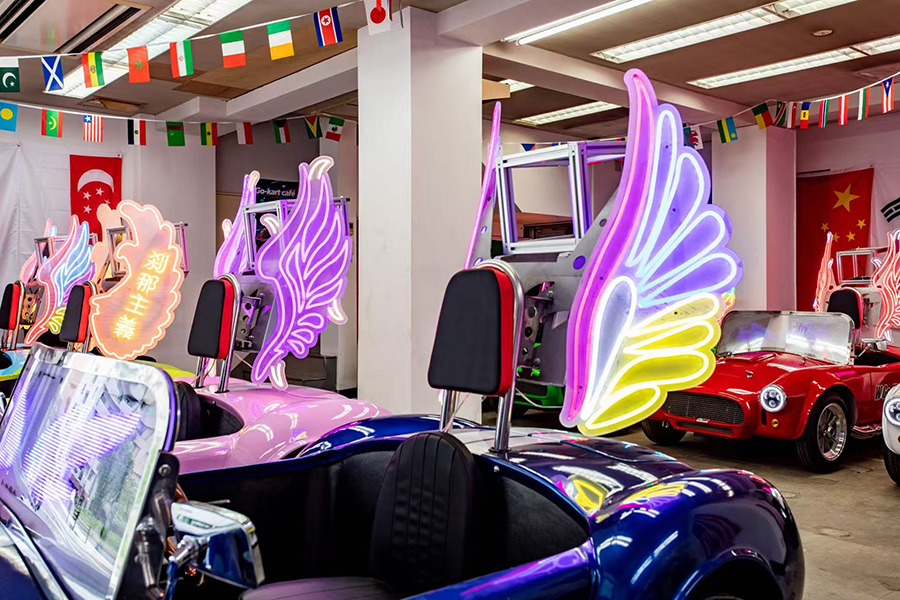
An Osaka go-kart booking at W Go-Kart Osaka is a guided sightseeing service on real public roads. It is suitable for licensed visitors who want to see the city from a low, open electric kart while following a guide on a defined loop. It is not an indoor circuit session, a timed race, an unguided vehicle rental or an activity for an unlicensed driver. The first things to confirm are therefore legal driving documents, the preferred Castle or Tsutenkaku city route, and a departure window from 10:00 to 22:00—not lap time or track specifications.
The service starts and finishes at 3 Chome-5-2 Shinmachi in Osaka’s Nishi Ward. W Go-Kart Osaka publishes two route choices, three price bands and an experience of about one hour. Insurance, a leading guide and a free costume are included across the current tiers. Visitors comparing this format should begin with the operator’s current service description, then use the live booking form to match a date, time, guest count and route.
An Osaka go-kart tour is a road service, not a circuit session
The word “go-kart” can describe very different products. At a closed circuit, customers normally think about laps, racing lines, timing and controlled track conditions. W Go-Kart Osaka instead presents an escorted urban drive. The group shares Osaka streets with ordinary road users, follows traffic controls and returns to the Shinmachi base after seeing a planned part of the city.
| What a visitor may expect | What W Go-Kart Osaka actually provides | Why the distinction matters |
|---|---|---|
| A kart-racing session | A guided public-road sightseeing drive | Traffic law and guide instructions govern the pace |
| A vehicle collected for solo use | A scheduled group service with a defined route | The driver does not choose an independent city itinerary |
| A landmark drop-off | A loop beginning and ending in Shinmachi | Onward transport must be planned from the shop |
| A licence-free attraction | A driving activity requiring documents accepted in Japan | Every driver must qualify individually |
Electric karts change the sound, not the legal setting
W Go-Kart Osaka describes its fleet as electric. That supports a different feel from a conventional petrol kart, but it does not make public roads behave like a private attraction. Signals, lane position, pedestrians, other vehicles and guide communication remain part of the drive. A traveller should choose this service for the moving street-level view and the group experience, not because an electric powertrain removes road responsibilities.
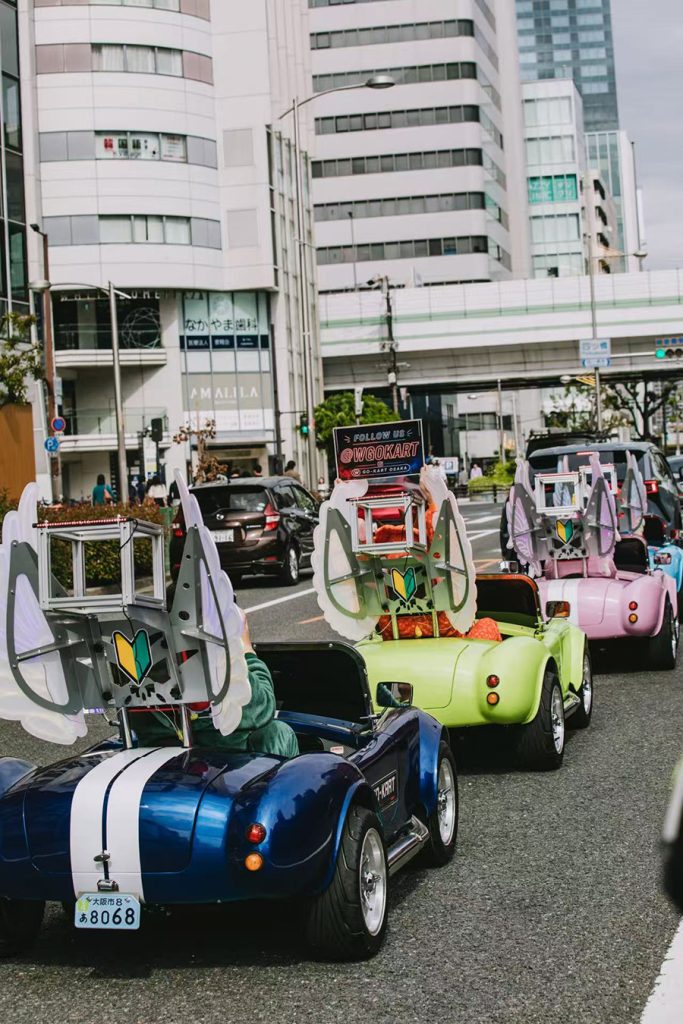
The lower seating position also changes how familiar streets look. Buildings, signs and road activity can feel closer than they do from a bus or train. That is an experiential advantage, not an invitation to look away from the road. Osaka Prefectural Police publishes traffic-rule videos for foreign visitors covering fundamentals such as keeping left and reading Japanese signals; the guide’s live briefing adds the operating instructions for the kart and group.
The leading guide defines the group, but each driver still drives
The homepage says a guide leads the group at all times. This helps visitors follow the planned loop, respond when traffic separates the karts and understand where a safe pause may occur. The guide does not replace the participant’s judgement, licence obligation or attention. Drivers must follow Japanese traffic law and staff directions throughout the route.
A tourist who is comfortable driving at home but has never used left-side roads should treat that difference seriously. The briefing is the place to confirm controls and signals; the road is not the place to experiment with a phone or improvise a new route. W Go-Kart Osaka prohibits taking photos while driving and refers instead to suitable stops and guide assistance for pictures.
How the Osaka go-kart experience moves from check-in to return
The published one-hour description refers to the core tour experience, not the total time from a hotel door to the next reservation. A confirmed guest is asked to arrive 10 minutes before departure with valid original documents. Check-in and the safety briefing take place before the group leaves, and the route returns to Shinmachi rather than ending beside a landmark.
Arrival begins at the shop, not at Osaka Castle or Namba
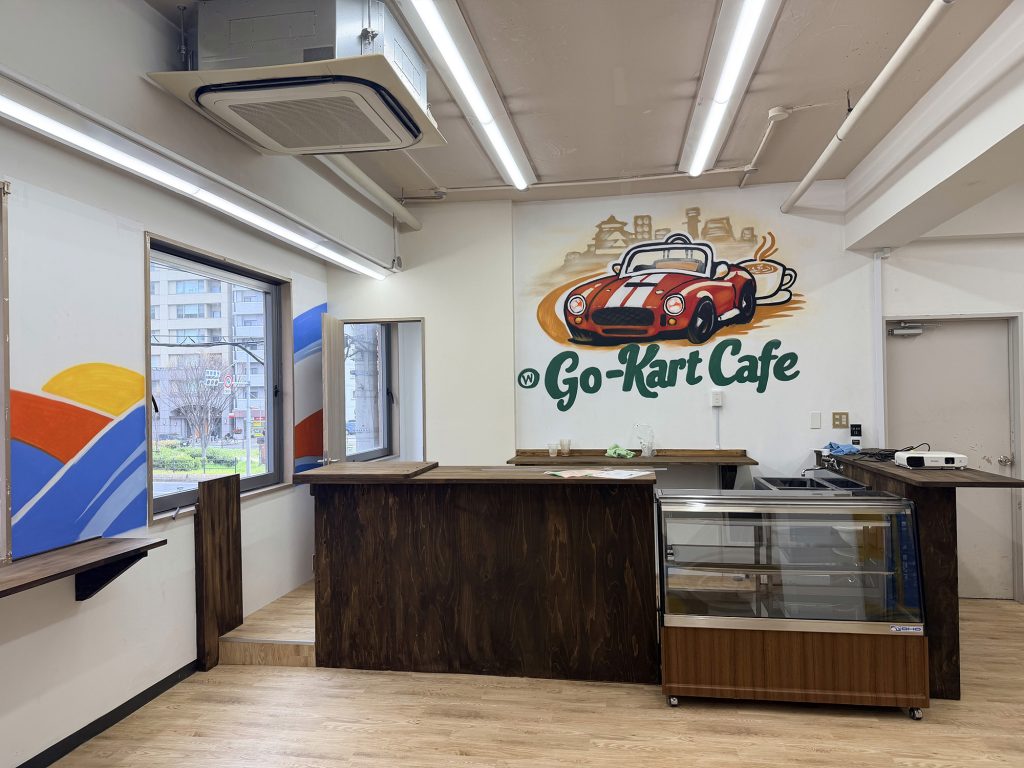
The location is about a 3–5-minute walk from Nishiohashi Station, 8–10 minutes from Nishi-Nagahori Station and 10 minutes from Shinsaibashi Station according to the site’s access section. A visitor unfamiliar with the exits should add personal buffer time beyond those estimates. Arriving at a landmark on the route will not substitute for checking in at the starting address.
Consider a couple staying near Dotonbori. The map may make a night route through Namba look like it begins nearby, but the service starts west of Shinsaibashi in Shinmachi. They need to reach the shop, present the complete documents, hear the briefing and depart with the guide. After the loop, dinner or hotel transport should also be calculated from Shinmachi.
The briefing connects road rules to the kart in front of you
General road knowledge does not explain every operating detail of an unfamiliar kart. The briefing gives staff a chance to cover controls, spacing, guide signals and the response to common group situations before moving into traffic. Comfortable clothing and closed-toe shoes are required; sandals, high heels and loose items are not suitable for the published safety conditions.
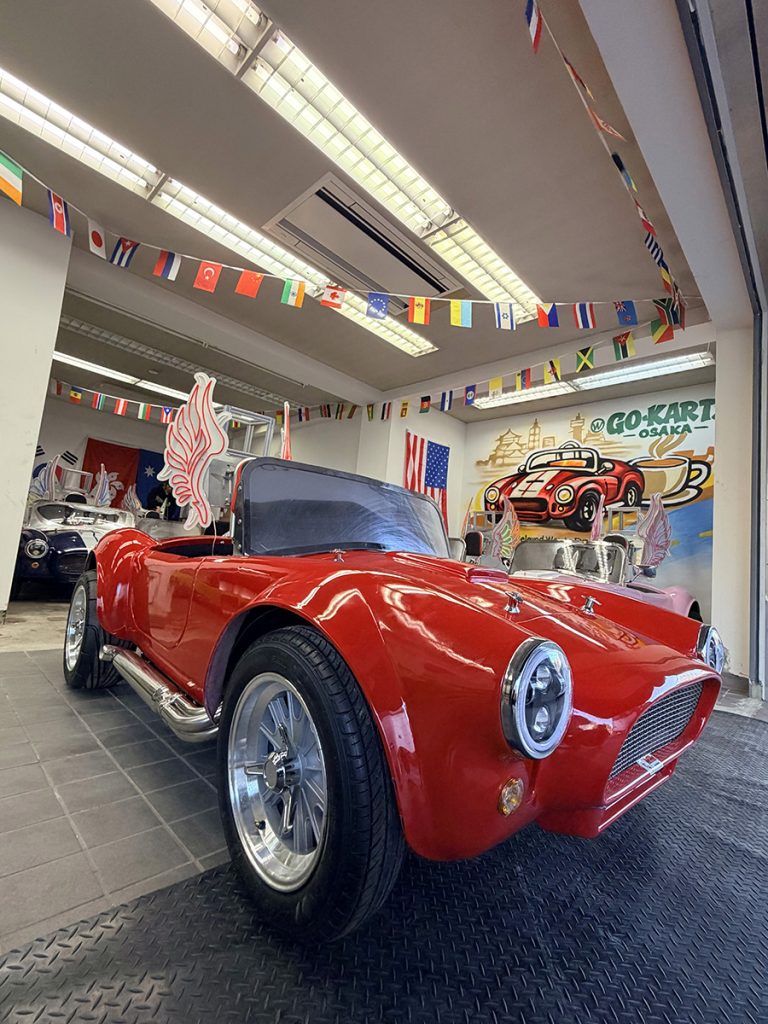
Light rain does not automatically cancel the service, and rain gear may be provided. Severe or unsafe weather can cause rescheduling or cancellation. The operator makes that live safety decision; a traveller can follow the official forecast but should not declare the route safe solely from a phone app.
Two routes give the same guided service a different emphasis
Both published loops use the same fundamental format: scheduled departure, Shinmachi start, guide-led public-road drive and return to the shop. The visual purpose differs. The Osaka Castle route is recommended during the day, while the Tsutenkaku city route is recommended at night and passes through or near southern entertainment districts.
The Castle loop prioritises a historic daytime landmark
The company’s route map depicts an approximately 12.6-kilometre loop with about 48 minutes of mapped driving. It heads towards the Osaka Castle area before returning. This suits a visitor who wants daylight detail and does not need the tour to repeat an evening already planned around Namba or Dotonbori.
The Tsutenkaku city loop is designed around Osaka after dark
The city map depicts approximately 8.9 kilometres and about 46 minutes through or near Amerikamura, Shinsaibashi, Dotonbori, Namba, Nipponbashi, Ebisucho and Shinsekai. Illuminated commercial streets and the kart lighting create a stronger night character. The route is still a real-road loop, so mapped time and district sequence should be treated as planning information rather than a promise of uninterrupted movement or a fixed photo at every landmark.
The first-time Osaka route comparison goes deeper into that Castle-versus-city choice. Visitors whose route is already decided can use the morning, evening and night timetable guide to compare seasonal light, package inclusions and onward travel.
What W Go-Kart Osaka supplies with each departure
Every current price band includes an approximately one-hour experience, insurance, the guide and a free costume. That shared package shows why the business should be evaluated as a service provider rather than a kart hire counter. The guide, route organisation, safety preparation and return to the base are part of what the customer buys.
Day and evening extras remain separate choices
For the JPY 7,000 morning-and-afternoon band and JPY 10,000 evening band, the homepage currently lists coffee at JPY 500, a speaker at JPY 500 and a 360-degree camera rental at JPY 1,000. A guest can keep the core package simple or add the item that fits the plan. The Night Experience at JPY 13,000 currently includes those three extras without an additional published charge.
None of the extras changes the road-service boundaries. A camera does not make photography while driving acceptable, a speaker should not compete with guide instructions, and a costume must not introduce loose items that interfere with safe operation. These options add atmosphere when used within the briefing and safety rules.
Insurance belongs to all three price bands
Insurance is listed in the morning/afternoon, evening and night tiers. Buyers should understand it as a stated service inclusion, not as permission to ignore rules or an explanation of every possible claim condition. The site’s commercial disclosure and booking information are the appropriate places to confirm current payment, cancellation and service terms before reserving.
An Osaka go-kart driver needs an accepted document pathway
The service is not suitable for someone who wants to drive without a valid licence. W Go-Kart Osaka publishes three pathways: a valid Japanese driving licence; an original International Driving Permit under the 1949 Geneva Convention with the original domestic licence and passport; or, for licences from Switzerland, Germany, France, Belgium, Monaco and Taiwan, an accepted Japanese translation with the original licence and passport.
An IDP is one document in a three-original set
The permit alone is incomplete. Japan’s National Police Agency IDP guidance says a valid permit must use the Geneva Convention format and that a digital version displayed on a phone is not accepted. The operator also requires the original domestic licence and passport. Every member of a group who intends to drive should verify the complete set individually.
Official translation eligibility is limited, not universal
The six named licence jurisdictions have a separate Japanese-translation route. That does not mean any traveller can translate any licence informally. The accepted translation, original licence and passport must travel together. For borderline eligibility, permit class or validity questions, the issuing authority or Japanese police licensing office remains more authoritative than a tour article.
Who will enjoy this street tour—and who should choose something else
This format fits a licensed visitor who values street-level sightseeing, can follow group instructions and is comfortable sharing public roads. It can work for beginners because the site says no previous kart experience is required and the guide supports the group. It is also well suited to friends who want a scheduled visual experience without designing their own driving route.
It is a poor fit for someone seeking lap competition, high-speed performance, solo route freedom or an activity that finishes at a chosen landmark. It is also unsuitable when the driver lacks the original document set, cannot wear appropriate footwear, or expects to handle a phone while moving. A traveller whose schedule cannot absorb weather changes or a return to Shinmachi should reconsider the time slot before paying.
Service details checked on 24 August 2026: service format, prices, inclusions, access, routes and safety statements were checked against W Go-Kart Osaka’s current pages and maps. Licence and foreign-driver context was checked against the linked National Police Agency and Osaka Prefectural Police resources. No speed, fleet size or performance specification is inferred.
The strongest reason to choose W Go-Kart Osaka is not that it imitates a racetrack in the city. It is that the company organises an electric kart, a guide, a safety briefing, insurance, a real Osaka route and a staffed Shinmachi base into one scheduled sightseeing service. Bring the correct originals, choose the loop for the view rather than speed, and leave enough time to complete the guided return before the next part of the day.