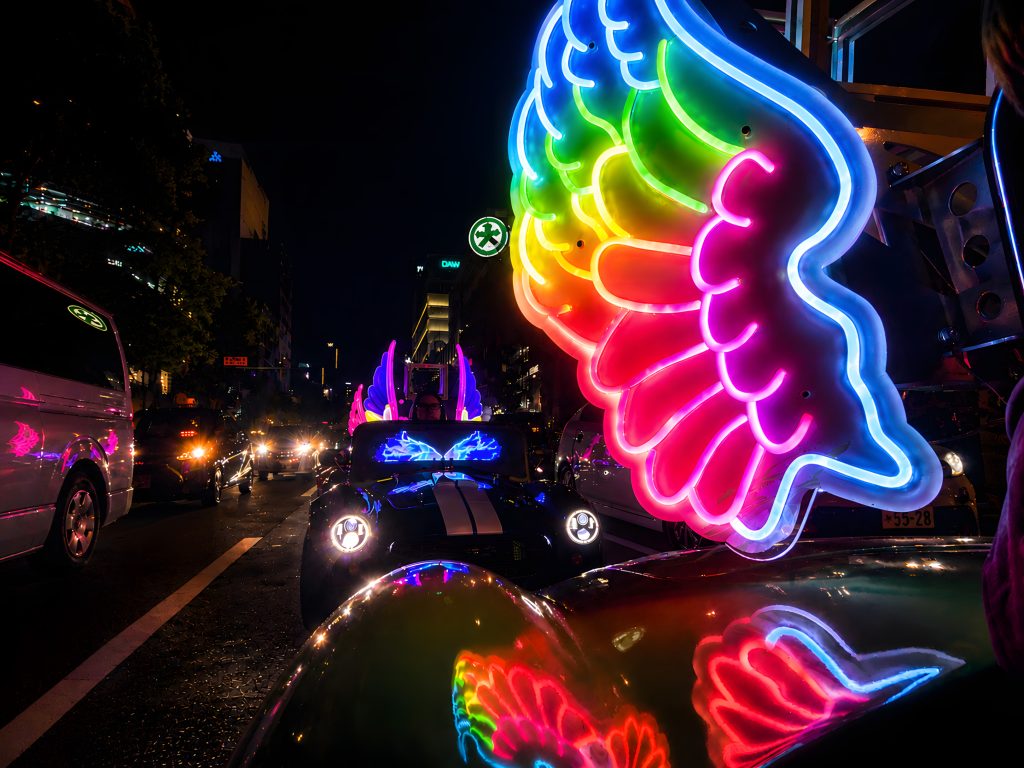
An Osaka street kart tour changes after sunset in three separate ways: the city becomes more visually dependent on signs and illuminated karts, the operator’s price band changes, and the package eventually includes extras that cost separately earlier. These shifts do not occur at one guaranteed moment. A 16:00, 17:00 or 19:00 departure can meet different light across seasons and weather, so choose the route, package and return timing before imagining a specific sunset scene.
W Go-Kart Osaka recommends its approximately 12.6-kilometre/48-minute Castle loop during the day and its approximately 8.9-kilometre/46-minute Tsutenkaku city loop at night. Every current band includes the approximately one-hour service, guide, insurance and costume. Compare the operator’s live bands, then use the booking form for the actual date, start and route.
The Osaka street kart tour changes at two published boundaries
The first commercial boundary sits between 16:00 and 17:00: price rises from JPY 7,000 to JPY 10,000, while coffee, speaker and 360 camera remain optional at the same listed prices. The second sits between 19:00 and 20:00: price rises from JPY 10,000 to JPY 13,000 and all three extras become included. Natural light follows date and weather instead of those boundaries.
16:00 to 17:00 changes price before it guarantees darkness
16:00 is the last morning-and-afternoon start and costs JPY 7,000. 17:00 is the first evening start and costs JPY 10,000. Both currently list coffee at JPY 500, a speaker at JPY 500 and a 360 camera at JPY 1,000. The published distinction is therefore a service band, not a promise that one departure is bright and the next is dark.
A summer visitor comparing those adjacent hours should ask whether the later start improves the surrounding itinerary enough to justify the price difference. If both are likely to retain substantial daylight, Castle may remain the more natural operator-recommended choice. If 17:00 protects a museum visit or hotel arrival without creating dinner pressure, the schedule benefit may matter more than the precise colour of the sky.
19:00 to 20:00 changes the equipment bundle and the night’s role
19:00 is the last evening start at JPY 10,000, with the three extras separately priced. 20:00 begins the Night Experience at JPY 13,000 and includes coffee, speaker and 360 camera. A customer expecting to use all three sees a package change; someone interested only in the guided route may value the difference less.
The hour also changes what follows. A 19:00 loop can leave more evening after returning to Shinmachi. A 20:00 departure is more likely to become the main night activity. The website does not promise a hotel transfer, final train or fixed finish minute, so the later package must fit the return plan as well as the desired light.
Sunset belongs to the calendar and weather, not the price label
The word “evening” covers a wide range of natural light across a year. Cloud, rain and the date can change visibility and colour even at the same clock time. Do not promise a sunset simply because a start sits between 17:00 and 19:00, and do not assume 20:00 produces identical lighting on every street.
The Japan Meteorological Agency provides the Osaka forecast and weather warnings. Those sources help a traveller understand conditions close to the date; W Go-Kart Osaka decides whether a route is safe to operate.
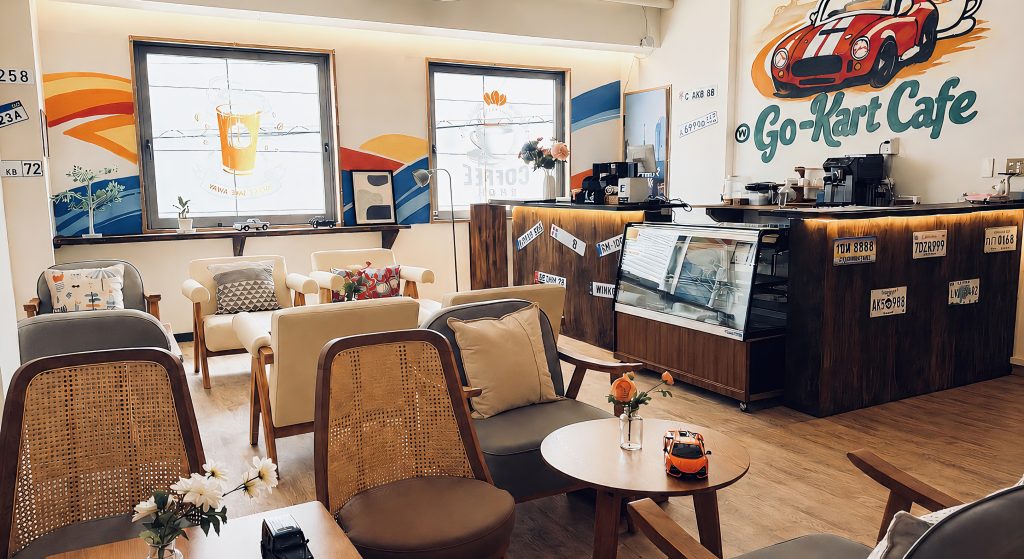
A 16:00 Osaka street kart tour can preserve a separate evening
A 16:00 customer receives the same core service as every other band: an approximately one-hour guided electric public-road experience, insurance and costume. The price is JPY 7,000, and extras remain elective. This start can suit a traveller who wants the kart route to finish before dinner or an independent night in Minami.
The Castle loop keeps the final daytime band aligned with operator guidance
The Castle route’s map depicts approximately 12.6 kilometres and 48 minutes, beginning and ending in Shinmachi. Its historical anchor benefits from visual context that the operator recommends seeing during the day. A 16:00 visitor should still avoid promising a particular sun angle or golden-hour image.
Osaka’s official visitor guide describes Osaka Castle Park as a large central park containing historic buildings and seasonal landscapes. The public-road tour does not include park or museum admission. It provides a moving perspective on the broader area rather than an interior visit.
Optional extras keep the afternoon purchase centred on actual use
A solo visitor who does not want coffee or a speaker can leave those items outside the JPY 7,000 core. A couple who values the 360 camera can add it for JPY 1,000. The camera does not permit handheld photography while driving, and the website does not publish a model, file count or delivery method.
This separation can make 16:00 attractive to a customer who wants the guide, route and insurance without paying for a complete night bundle. The package inclusions guide keeps equipment and core service roles distinct.
The evening plan should begin from Shinmachi after the return
The route does not finish at Osaka Castle, Dotonbori or Namba. It returns to 3 Chome-5-2 Shinmachi. A 16:00 customer planning dinner should calculate travel from that address and leave margin for live traffic, document handback and walking to the station.
Nishiohashi is roughly three to five minutes away on foot, Nishi-Nagahori about eight to ten minutes and Shinsaibashi about ten. Those are published walking estimates, not a door-to-table guarantee.
17:00–19:00 is a transition band, not one visual product
The three JPY 10,000 departures can look very different across seasons. 17:00 may retain strong daylight on one date, while 19:00 may be fully dark on another. A visitor should choose within the band by the day’s constraints and likely light, not assume the word “evening” produces one standard scene.
17:00 works when the day needs more room but the night should stay open
A traveller completing a daytime attraction may prefer 17:00 because it avoids rushing to 16:00. The additional JPY 3,000 does not include the three equipment extras, so the purchase decision is mainly about the departure band and itinerary fit. Castle may still make sense where daylight remains the desired visual context.
18:00 can bridge two sides of Osaka without promising sunset
An 18:00 departure often sounds like the intuitive transition choice, but the website does not tie it to sunset. It can suit a couple who wants some part of the day available for shopping and some part of the evening available after the tour. The exact balance must be judged against the travel date and weather.
If the desired route is the Tsutenkaku city loop, ask whether the light at that date supports the night atmosphere that motivated the choice. If not, 19:00 or 20:00 may provide a clearer after-dark identity, while 18:00 may preserve an earlier dinner or return.
19:00 favours later city mood without the automatic equipment bundle
19:00 sits immediately before the Night Experience tier. It can fit a visitor who wants later light and the city loop but does not expect to use every extra. Coffee, speaker and 360 camera are still individually priced.
The operator’s Tsutenkaku map passes through or near Dotonbori, Namba and Shinsekai. Osaka’s official visitor guide identifies Dotonbori as a major Minami entertainment district and Tsutenkaku as a Shinsekai landmark. The loop connects that context without promising admission, dining or a fixed photo stop.
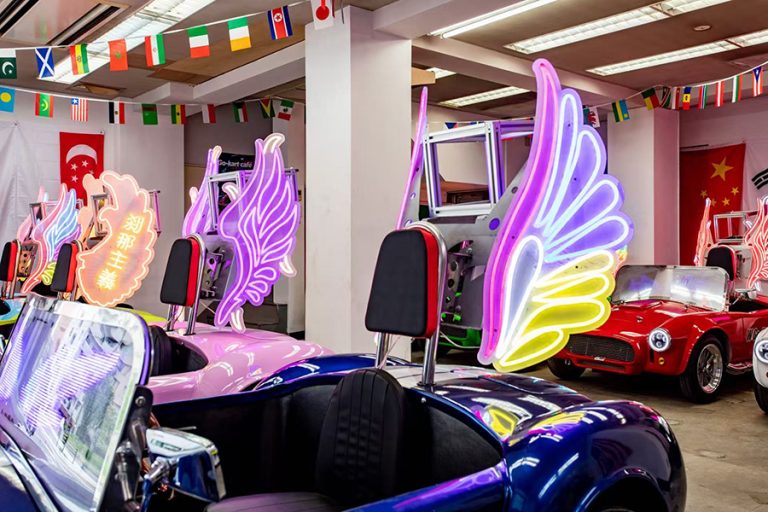
The 20:00–22:00 Night Experience bundles the late choice
All three Night Experience starts cost JPY 13,000 and include coffee, speaker and 360 camera. The guide, insurance, costume and approximately one-hour drive remain part of the core. The night tier is the clearest fit when the city lights and equipment bundle are central to the purchase.
20:00 keeps more margin after the guided return
A customer can receive the full night bundle without choosing the latest start. This is useful when onward rail, a hotel journey or an early next morning matters. The complete time-of-day guide compares the broader bands, while this boundary decision asks whether one extra hour before departure adds enough value to justify less margin later.
21:00 makes the tour the centre of the night
A 21:00 departure can follow dinner if the meal finishes with sufficient travel time to Shinmachi. Drivers should not consume alcohol before a public-road activity. The colourful vehicle and included camera do not change that responsibility.
The operator asks guests to arrive ten minutes early with valid original driving materials. Dinner should therefore be scheduled around the departure rather than allowed to run until 20:50 in another district.
22:00 fits only when the return has already been solved
The last listed start can feel most separate from the daytime itinerary, but it also places the return latest. A visitor staying around Namba must remember that the route finishes in Shinmachi. No hotel transfer or last-train promise is published.
A 22:00 choice should not create pressure to rush the guide, leave the group or ignore the final road conditions. Choose 20:00 or 21:00 when the later return would make the experience less relaxed.
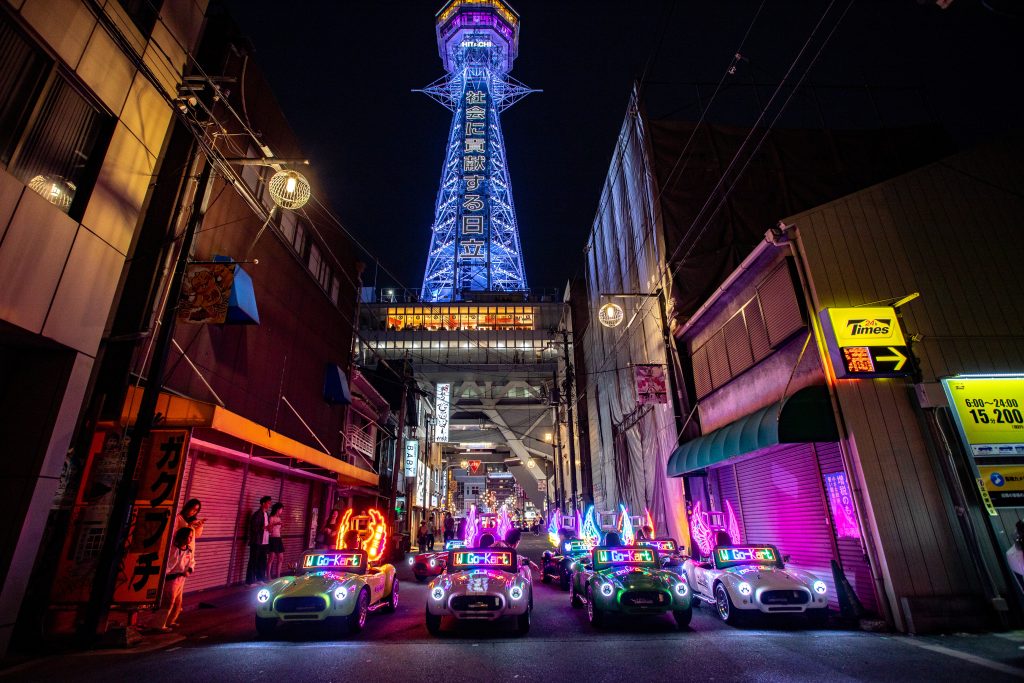
Documents, photography and weather remain unchanged after sunset
Every intended driver needs a valid Japanese licence; an original 1949 Geneva Convention IDP with original domestic licence and passport; or, for Switzerland, Germany, France, Belgium, Monaco and Taiwan, an accepted Japanese translation with original licence and passport. A digital permit or incomplete set is not accepted.
Closed-toe shoes and comfortable clothes are required. Photos cannot be taken while driving. Light rain may allow operation and rain gear may be available, while severe or unsafe weather can cause cancellation or rescheduling. The later package adds inclusions, not a different legal or safety standard.
Customer cancellation is free up to 48 hours before departure. Inside 48 hours it is non-refundable and rescheduling depends on availability. If the operator cancels for unsafe weather, the current published policy offers a refund or no-cost reschedule.
Time-band details checked on 24 August 2026: starts, prices, extras, routes, mapped figures, recommendations, address, documents, clothing, photography, weather and cancellation terms were checked against W Go-Kart Osaka’s current material. Place context uses Osaka’s official visitor guide and weather context uses JMA. No sunset, exact light, camera deliverable, alcohol service, hotel transfer or fixed finish is promised.
Choose 16:00 when the lower core price and a separate evening matter. Choose 17:00–19:00 when the schedule needs a transition start and optional equipment still suits the buyer. Choose 20:00–22:00 when the late city identity and included coffee, speaker and camera justify both the price and return time. Sunset may colour any one of those decisions, but it should never be the only fact holding the plan together.
The strongest choice still works if the sky looks different from the photograph imagined before travel.