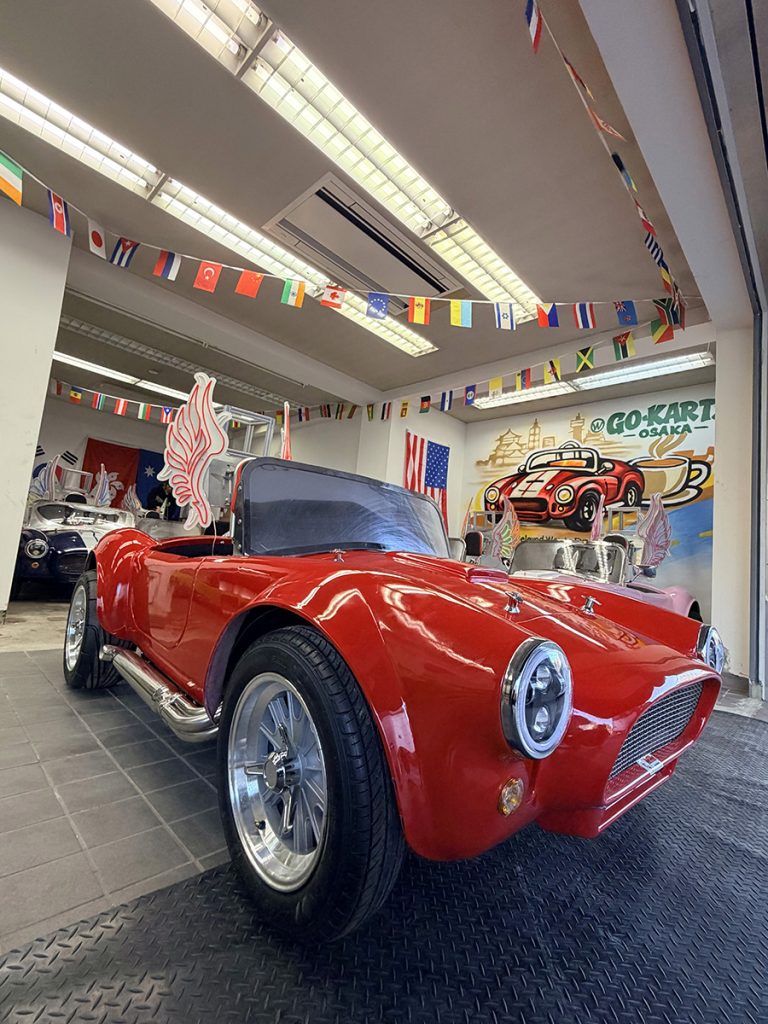
Karting Osaka at W Go-Kart Osaka is best for licensed visitors who want a guide-led electric kart sightseeing loop on public roads. It is not designed for lap racing, speed competition or indoor driving without a road licence. The first decision is therefore the desired outcome: choose this service for Osaka street views, a mapped Castle or Tsutenkaku city route and a scheduled return to Shinmachi; choose a closed track elsewhere when lap performance is the main reason for booking.
That distinction prevents the wrong questions from controlling the purchase. W Go-Kart Osaka publishes route maps, start times, price bands, document pathways and road-safety expectations—not lap records, engine classes or podium results. Visitors considering the road-tour format can read the current service details and then use the live booking form to select a date, departure, guest count and route.
Karting Osaka can mean two experiences with different success measures
The physical resemblance of a low kart does not make every karting service equivalent. A closed track is a controlled sporting environment whose appeal commonly centres on laps, technique and relative pace. W Go-Kart Osaka is an urban tourism service: success means following the guide, driving lawfully through real traffic, seeing the chosen districts and returning safely to the staffed base.
A public-road kart shares Osaka with ordinary traffic
The W Go-Kart route uses the same city environment as cars, taxis, bicycles and pedestrians. Traffic lights, lane discipline, changing flow and guide instructions shape the drive. The participant cannot treat a gap as a passing opportunity or a signal as the beginning of a race. Osaka Prefectural Police provides traffic guidance for international visitors because ordinary road rules remain relevant regardless of the vehicle’s playful appearance.
A visitor who enjoys motorsport may still appreciate that setting, but for a different reason. The sensory interest comes from the low open viewpoint, the city moving around the kart and the guide’s route through recognisable districts. There is no need to claim a speed or handling specification that the operator does not publish. The city, service organisation and shared drive are the product.
An indoor track isolates the driving task from a sightseeing itinerary
As a general category, an indoor circuit removes the need to navigate ordinary Osaka traffic and places the activity inside a defined facility. That can be the better environment for someone whose main questions concern laps, race position, braking points or competition with friends. Exact rules, licence requirements, vehicle types and session formats vary by operator and must be checked with the chosen facility.
W Go-Kart Osaka does not claim to replace that sporting product. Its approximately one-hour service leaves the shop, follows a city loop and returns. A traveller comparing the two should not mark a public-road stoplight as “lost driving time” or expect the guide to create racing conditions. Those elements belong to lawful urban movement, which is central to this tour.
The guide leads a group; the guide does not act as a race marshal
The website states that a guide leads the tour and provides a safety briefing. The guide’s role supports route navigation, group movement and appropriate decisions in the street environment. Each customer still operates a kart and must remain attentive. No guide-to-driver ratio, language guarantee or professional racing credential is published, so these should not be inferred.
For four friends with mixed experience, this format removes the need to design a route but not the duty to drive responsibly. The most confident driver should not set an unofficial pace or pressure a beginner to keep an unsafe gap. Everyone follows the service sequence and guide cues. That is a better measure of group quality than deciding who reaches the next signal first.

Choose street karting Osaka for a mapped city view
W Go-Kart Osaka publishes two loops, each with a different visual priority. Both begin and end at 3 Chome-5-2 Shinmachi in Nishi Ward. Neither is an open rental route, and neither promises to stop at every point depicted. The maps help a visitor choose the character of the drive before selecting a start time.
The Castle loop rewards a visitor who wants daylight context
The official Osaka Castle loop map depicts approximately 12.6 kilometres and about 48 minutes of driving. W Go-Kart Osaka recommends it during the day. It suits a first-time visitor who wants a historic landmark to anchor the route and prefers the 10:00–16:00 morning-and-afternoon window.
Consider someone with an evening food tour already booked around Dotonbori. Repeating the southern entertainment districts may add less value than seeing the castle area earlier. A daytime road tour can create contrast in the itinerary, after which the kart returns to Shinmachi and the traveller continues by ordinary transport. It does not include castle admission or a landmark drop-off.
The Tsutenkaku city loop makes southern districts part of the drive
The operator’s city route map depicts approximately 8.9 kilometres and about 46 minutes through or near Amerikamura, Shinsaibashi, Dotonbori, Namba, Nipponbashi, Ebisucho and Shinsekai. The route is recommended at night, when illuminated streets and the karts’ lights create the intended visual character.
A couple interested in Osaka after dark can choose a 20:00, 21:00 or 22:00 start and make the drive the centre of the evening. They should arrive sober, use phones only when stopped as directed, and plan any nightlife after the karting service. The loop still begins at the Shinmachi shop; a hotel near Namba does not turn Namba into the meeting point.
Route-map time is planning guidance, not a lap target
The map figures of about 48 and 46 minutes describe the drawn routes. Real public roads can introduce signals, traffic and safety decisions. A visitor should not expect the guide to compensate for a delay by increasing pace or omitting safeguards. The site’s broader description of an approximately one-hour experience is the more useful schedule unit, with additional time allowed for early arrival and briefing.
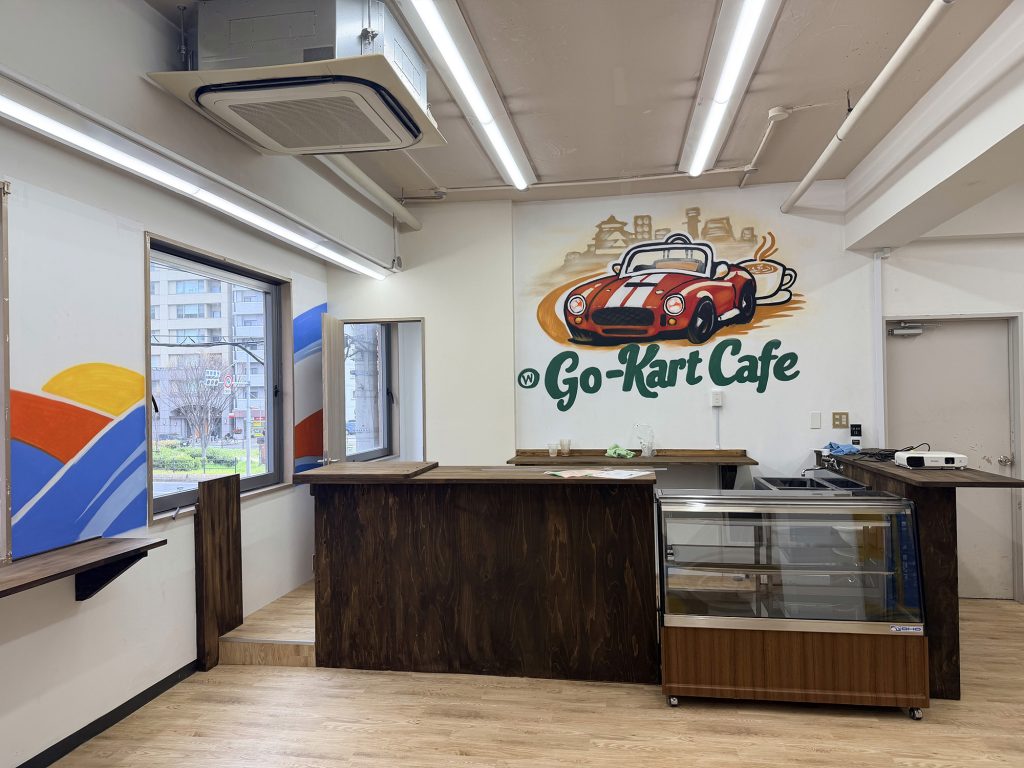
The access plan also reveals whether sightseeing or circuit competition is really the priority. W Go-Kart Osaka lists Nishiohashi Station at roughly a 3–5-minute walk, Nishi-Nagahori at 8–10 minutes and Shinsaibashi at about 10 minutes. Those estimates lead to a city-tour base with a cafe and reception area. A traveller should add time for unfamiliar exits and document checks, then judge the service from the organised departure rather than expecting the rapid arrival-and-lap rhythm associated with a sporting facility.
The detailed Castle-versus-city guide helps visitors compare route geography, while the departure-band guide explains how daylight, price and extras change from morning through night.
Road documents separate this karting Osaka tour from licence-free attractions
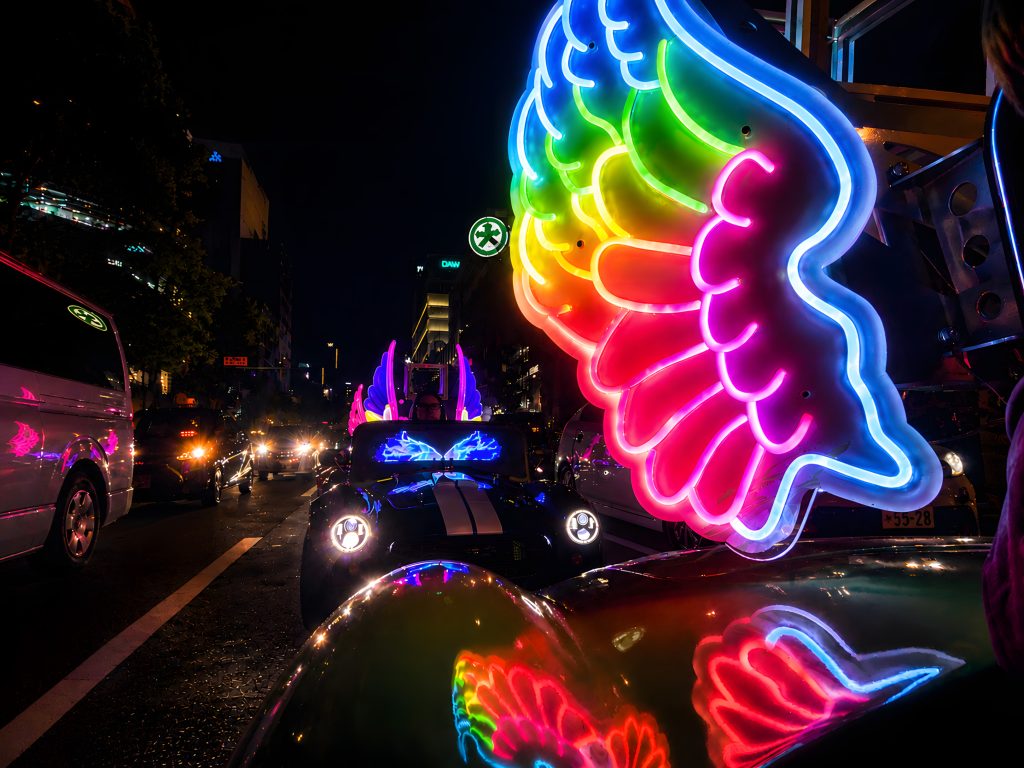
A public-road tour cannot be booked on the assumption that a leisure kart is legally separate from driving. W Go-Kart Osaka accepts three documented pathways: a valid Japanese driving licence; an original 1949 Geneva Convention International Driving Permit with the original domestic licence and passport; or an accepted Japanese translation for licences from Switzerland, Germany, France, Belgium, Monaco and Taiwan, again with the original licence and passport.
An international permit must be the right convention and a physical original
The word “international” on a permit is not sufficient. The National Police Agency’s International Driving Permit questions and answers explains that permits issued under other conventions are not valid for driving in Japan and that a digital version is not accepted. The traveller should verify the issuing authority, convention, validity, vehicle class and permitted period before payment.
A group should perform this check for each driver. One complete permit set does not qualify the remaining friends, and an unlicensed companion should not be assumed to have a passenger place because the site does not publish a passenger product. Someone unable to meet the road-document requirement is a strong signal that this particular tour is not the right karting format.
Closed-toe shoes and phone discipline belong to the road setting
W Go-Kart Osaka asks drivers to wear comfortable clothes and closed-toe shoes; sandals and high heels are unsuitable. Guests must not take photographs while driving and should instead use appropriate stops and guide assistance. Costumes are included, but any selected item remains subordinate to safe control use and staff instructions.
Light rain may not cancel the tour, and rain gear may be provided. Severe or unsafe conditions can lead the operator to reschedule or cancel. An indoor facility may manage weather differently, but no general assumption should be applied to a specific venue. For this street service, the live decision belongs to W Go-Kart Osaka because the route operates in the city.
When karting Osaka track expectations should lead you elsewhere
The public-road tour is the wrong product when a visitor’s non-negotiable goal is measuring lap time, racing head to head, testing performance limits, driving without an accepted road licence or choosing an independent route. W Go-Kart Osaka publishes none of those outcomes. Recognising the mismatch before booking is better for the customer and the service team.
It is also a weak fit for someone who expects to finish beside Osaka Castle, Dotonbori or Tsutenkaku, because the tour returns to Shinmachi. A traveller with an immediate reservation elsewhere must include the requested 10-minute-early arrival, briefing, approximately one-hour experience and onward transfer from the shop. Public-road traffic and weather make a zero-buffer schedule unwise.
A racing group and a sightseeing group ask different questions
The racing group asks how results will be measured and how drivers compare. The sightseeing group asks which districts appear on the route, when the light suits those districts and whether every person has the correct originals. Only the second set aligns with the information W Go-Kart Osaka publishes and the service it is equipped to deliver.
For a first-time visitor, the public-road service explanation clarifies check-in, guide, route and return. Small parties can then use the 1–7-guest planning guide to coordinate documents and availability without treating the booking selector as a fleet guarantee.
The published package supports touring, not competition
All three bands include the approximately one-hour experience, insurance, guide and costume. The JPY 7,000 morning-and-afternoon and JPY 10,000 evening bands list coffee at JPY 500, a speaker at JPY 500 and a 360 camera at JPY 1,000. The JPY 13,000 Night Experience includes those three extras. These components support hospitality, atmosphere and memories; none is a timing system or racing feature.
The current payment and cancellation disclosure should be read before reserving. Online payment uses Stripe, cancellation is free up to 48 hours before the scheduled time, and customer cancellation within 48 hours is non-refundable. Rescheduling is subject to availability; operator cancellation for unsafe weather offers a refund or no-cost reschedule.
Service details checked on 24 August 2026: W Go-Kart Osaka’s format, routes, times, prices, inclusions, access, document requirements and safety statements were checked against current operator material. External legal context uses the linked Japanese police guidance. No claim is made about an unnamed indoor track’s specific rules, vehicles or pricing.
Choose W Go-Kart Osaka when the memorable result should be a guided electric drive through the real city: Castle detail by day or the Tsutenkaku-Namba-Shinsaibashi districts after dark. Choose a track when competition itself is the destination. That honest separation is also the service provider’s strength—it tells a licensed visitor exactly what is organised around the kart, without pretending that a public road is a racetrack.