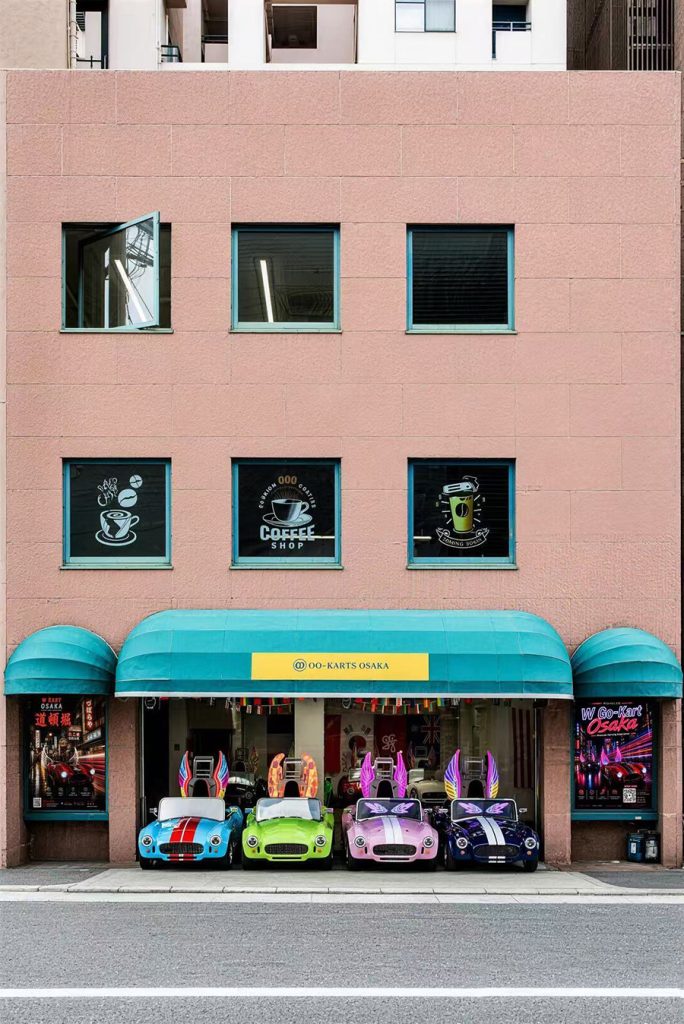
Travellers searching for a go kart near Namba can choose W Go-Kart Osaka’s Tsutenkaku city loop, which passes through or near Namba/Nipponbashi. The important location correction is that check-in is not in Namba. Every service begins and returns to 3 Chome-5-2 Shinmachi, Nishi Ward, Osaka 550-0013.
Save that Shinmachi address before booking. The operator estimates a three-to-five-minute walk from Nishiohashi, eight to ten minutes from Nishi-Nagahori, and about ten minutes from Shinsaibashi. There is no published Namba pickup, hotel collection, or Tsutenkaku drop-off. Namba is route context; Shinmachi is the operational anchor.
A go kart near Namba involves three different coordinates
| Coordinate | What it means | What it does not mean |
|---|---|---|
| Namba search area | The visitor’s hotel, station, or desired nightlife zone | The operator’s published check-in address |
| Shinmachi service base | Reception, briefing, departure, and return | A landmark on the southern route |
| Namba/Nipponbashi map label | Part of the Tsutenkaku city-loop context | A stop, pickup, drop-off, or time allocation |
The search coordinate describes convenience
A Namba hotel guest is reasonably looking for an activity that fits the wider Minami itinerary. That intent does not require the reception desk to sit beside Namba Station. Convenience depends on the complete journey: leaving the hotel, reaching Shinmachi, completing the loop, returning to the base, and travelling to the next plan.
The service coordinate controls punctuality
The operator asks guests to arrive ten minutes early. That arrival belongs at the Shinmachi base, not at a Namba station gate. A screenshot of the route map is not enough; save the street address and compare it with the current map and transit conditions on the day.
The route coordinate describes subject, not transport
The approximately 8.9-kilometre, 46-mapped-minute city loop passes through or near Amerikamura, Shinsaibashi, Dotonbori, Namba/Nipponbashi, Ebisucho, and Shinsekai/Tsutenkaku. It returns to Shinmachi. A traveller cannot use it as one-way transport from the base to a Namba dinner.
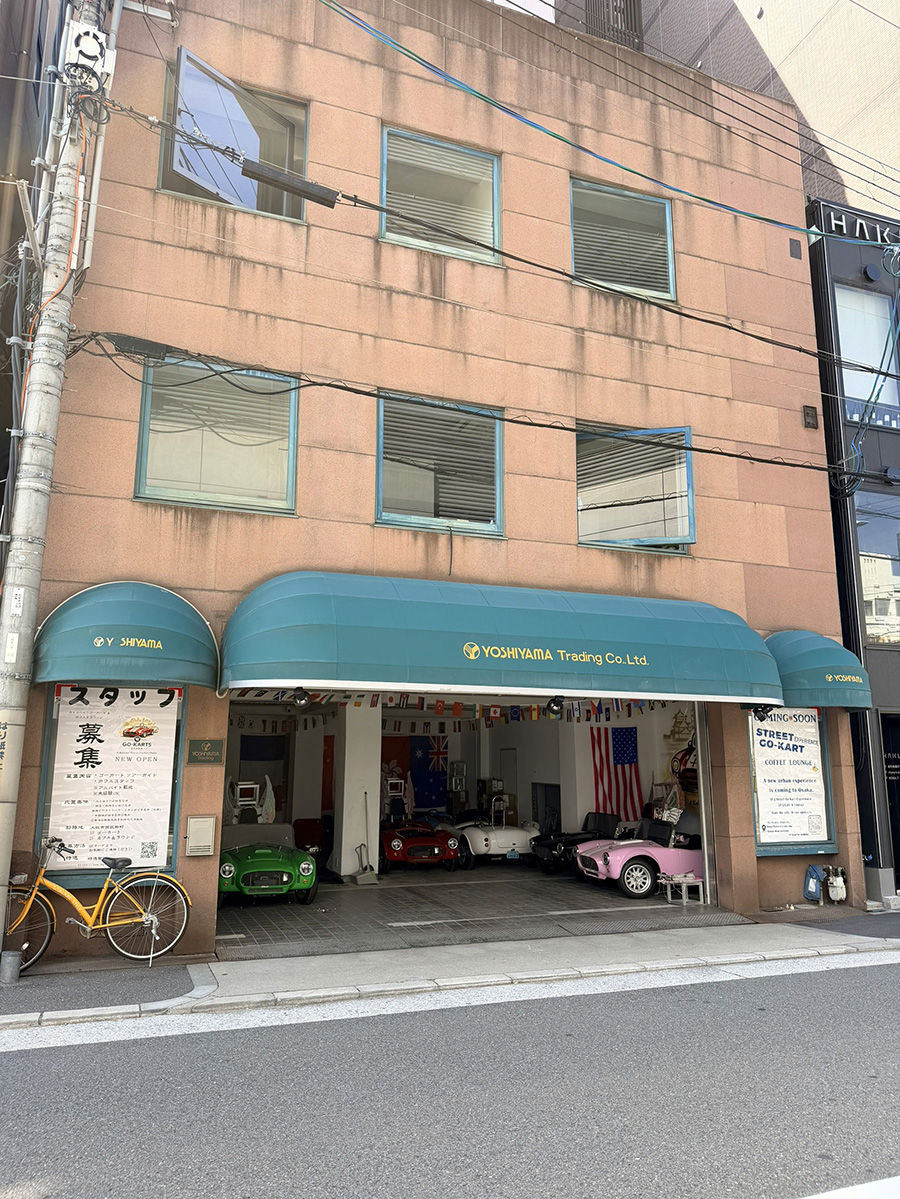
Nishiohashi is the shortest published station walk
W Go-Kart Osaka estimates three to five minutes from Nishiohashi. Osaka Metro’s official station information places Nishiohashi on the Nagahori Tsurumi-ryokuchi Line and lists Shimmachi 2- and 3-chome among the areas served from Exit 1. That external station fact helps orientation; the operator remains the source for its own walk estimate and address.
A Namba guest should compare transfers with a simple final walk
The nearest station on paper is not automatically the easiest journey from every hotel. A visitor with a direct route to Shinsaibashi may prefer its approximately ten-minute operator estimate over an unfamiliar transfer. A visitor already on the Nagahori Tsurumi-ryokuchi Line may prefer Nishiohashi. Use current routing rather than assuming one answer for all Namba properties.
Exit choice matters after the train arrives
A station name does not finish navigation. Large stations and underground passages can consume the buffer a traveller thought was available. Check the official station map, identify a suitable exit, and then follow a current street map to the exact address. The published walk ranges are estimates, not a promise for luggage, accessibility needs, or a first visit.
A taxi instruction should name Shinmachi, not only the brand
When using a taxi, show the full Japanese map pin or street address rather than saying only “Namba go-kart.” A brand query can lead to a route image or an unrelated result. The driver needs the precise destination. Allow extra time for traffic and for locating the correct storefront after drop-off.
Shinsaibashi can be the practical bridge from Namba
Official Osaka Metro information shows Shinsaibashi as an interchange for the Midosuji, Yotsubashi, and Nagahori Tsurumi-ryokuchi lines; official route maps place Namba and Shinsaibashi as adjacent Midosuji stations. The operator estimates about ten minutes on foot from Shinsaibashi to the base. These facts support planning, but no total door-to-door journey time is published.
A hotel lobby departure needs a visible margin
Checking out, waiting for a lift, crossing Namba Station, boarding, choosing an exit, and walking to Shinmachi are separate stages. A guest who leaves exactly ten minutes before the start has confused the requested check-in margin with total travel time. Work backward from arrival at reception, not from train departure.
Friends arriving from different lines should meet at the base
A group can lose time by trying to meet under one of Namba’s many station labels. Unless the party already knows a precise meeting point, the Shinmachi address is the cleanest shared target. Each licensed driver can navigate independently and reunite at reception before document review.
A walking plan should remain adaptable to weather
Heat, rain, wind, luggage, and unfamiliar streets can lengthen an estimated walk. Check current official forecast and warnings and follow any operator update. The unsafe-weather policy covers operator cancellation of the activity; it does not make a guest’s late arrival from Namba an operator cancellation.
The ten-minute-early request begins after the travel journey
Ten minutes early means standing at the correct reception before the booked time. It is not the recommended moment to leave a platform, reach street level, or begin looking for the address. Namba-based visitors can protect the booking by separating five easily overlooked stages and giving each its own margin.
The platform-to-exit stage is longer at an unfamiliar interchange
Shinsaibashi connects three Osaka Metro lines, so the name on the train map does not describe the walk from every platform to every exit. A first-time passenger may need to follow signs across a concourse or choose a lift. Look at the official station layout before travel, especially when a suitcase or step-free route affects movement.
The exit-to-storefront stage needs the full address
Once above ground, use 3 Chome-5-2 Shinmachi as the destination. Do not navigate to “Namba kart,” Tsutenkaku, or the centre of Shinmachi. A photograph of the storefront can help recognition, but nearby building changes and the direction of approach can make a reference image look different. The address is more reliable than visual guessing.
The group-reunion stage ends only when every driver is present
One friend arriving early cannot complete preparation for an absent driver. Guest count is entered on the booking form, and each participant drives individually. If travellers are coming from separate hotels, ask everyone to target reception earlier than the minimum rather than arranging a last-minute meeting somewhere inside Namba Station.
The document-retrieval stage should have happened at the hotel
Reception is too late to discover that the passport remains in a hotel safe or the original domestic licence is inside checked luggage. Before leaving Namba, each driver should physically hold their complete accepted set and compare the names. A digital wallet, scan, or photograph does not fill a missing-original requirement.
The briefing stage belongs to the service, not the commute
After arrival and document review, the operator provides the guide-led preparation for public roads. The party should not expect briefing time to absorb a late train, wrong exit, or detour back for footwear. Closed-toe shoes and comfortable clothing should already be in place. A calm reception protects both the start and the group’s ability to follow instructions.
Namba convenience should be measured in complete round trips
A location decision is incomplete when it measures only hotel-to-base travel. The return from Shinmachi may happen at a different hour, after trains become less frequent or after the party is tired. Compare both directions before selecting a start, and include the next destination rather than assuming the guest goes back to the same hotel.
A one-stop rail segment is not a door-to-door duration
Official maps place Namba and Shinsaibashi next to each other on the Midosuji Line, but the real journey also contains access to the station, platform waiting, interchange walking, the operator’s estimated street walk, and reception. A short rail segment can still produce a substantial door-to-door task for an unfamiliar visitor.
An evening return may use a different station from the arrival
A guest could arrive through Nishiohashi because its final walk is shortest, then leave toward Shinsaibashi because dinner or accommodation lies that way. The operator’s three access estimates give options rather than a mandatory station. Check live service and the actual next address instead of automatically reversing the morning route.
A fixed connection deserves an earlier kart start
If the party must collect luggage or catch a train after the drive, unused margin is valuable. The approximately one-hour label and 46-minute map figure are not release guarantees. Choose a start that leaves a later service available if the public-road experience or transfer takes longer than hoped.
Four Namba-based itineraries reveal different location risks
The hotel guest with luggage needs a storage decision before check-in
The public pages do not state luggage storage dimensions, locker availability, or a baggage service. A traveller changing hotels should leave large luggage at an accommodation or confirmed station facility before travelling to Shinmachi. Do not infer storage from lounge photographs or from the low profile of the kart.
The dinner guest needs a return journey from Shinmachi
A reservation in Namba after the drive can work, but it needs a post-service route from the base. Do not schedule the table at the city map’s 46-minute figure. Check-in, briefing, approximately one hour, road variation, return handling, and onward travel all sit between the booked start and the restaurant.
The attraction-first guest should not wait beside Tsutenkaku
Someone visiting Shinsekai may see Tsutenkaku in the route name and assume the tour collects nearby. It does not publish such a service. Complete the tower or district visit, then travel to Shinmachi. Ebisucho and Tsutenkaku are southern route context, not reception addresses.
The airport-day guest should protect the document originals
A passport may be part of the accepted driving set, so leaving it in stored luggage can make an otherwise punctual guest ineligible. Depending on the licence path, the driver needs a Japanese licence; or original 1949 Geneva Convention permit, original domestic licence, and passport; or an accepted Japanese translation with original licence and passport for the listed jurisdictions.
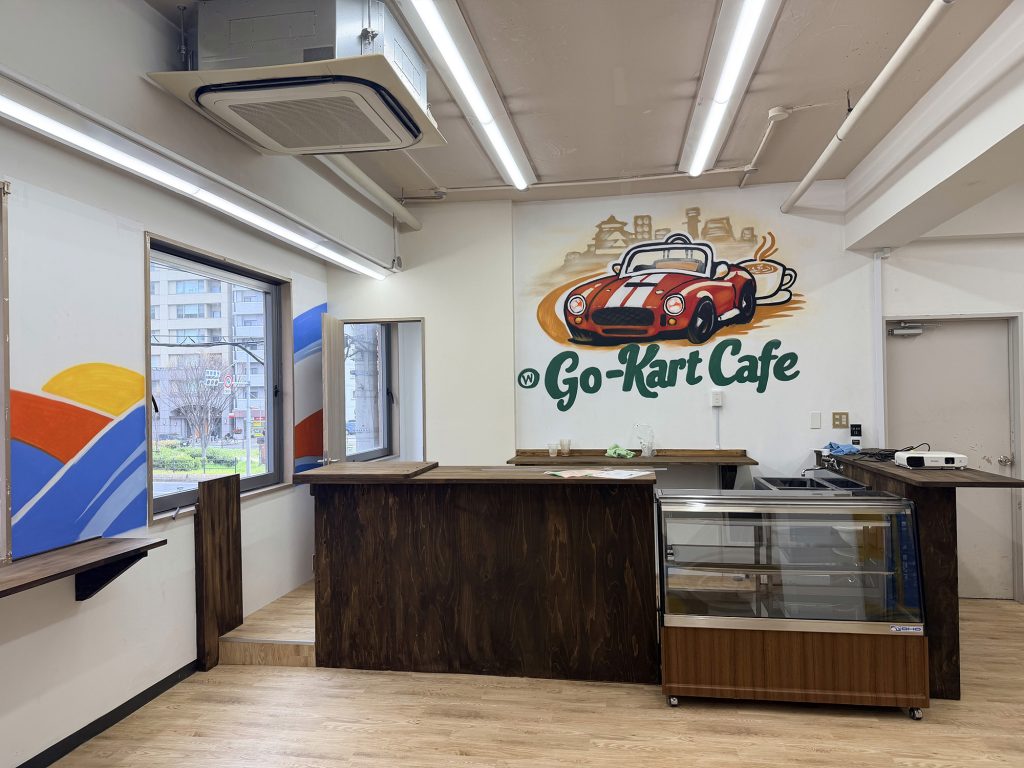
The Namba name belongs inside a larger city-loop decision
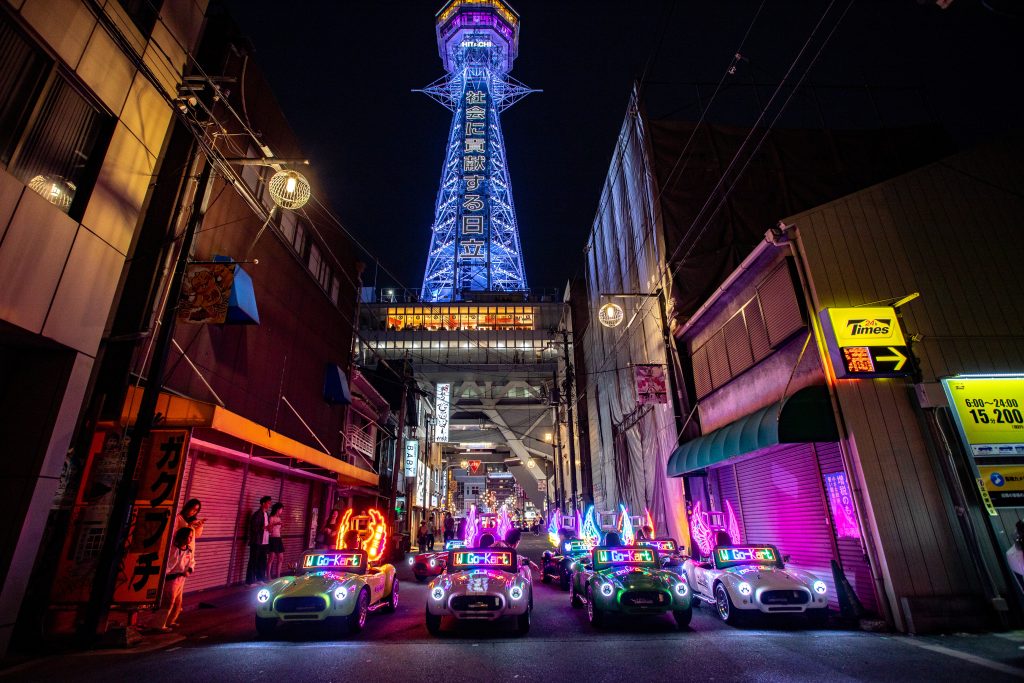
W Go-Kart Osaka recommends the Tsutenkaku city route at night. Namba/Nipponbashi is one label among several, not the entire approximately one-hour product. A visitor who wants only deep Namba exploration may be better served by a separate walk. A visitor who wants to connect several southern Osaka identities from a driver’s position has the stronger fit.
An earlier start can return the party before dinner
Starts at 17:00, 18:00, and 19:00 cost JPY 10,000 per person and include approximately one hour, guide, insurance, and costume. An earlier position may leave room to travel back to Namba for dinner, subject to a proper buffer. Coffee, speaker, and 360 camera are separately priced before 20:00.
A later start can follow Namba dining but needs a last-train plan
The 20:00, 21:00, and 22:00 Night Experience costs JPY 13,000 and includes the three extras. It can follow an early meal, but the party must still reach Shinmachi ten minutes early and return there after the drive. The later the start, the more important the current route to accommodation becomes.
Namba visibility is not a stop guarantee
The map does not publish an exact road, stop, duration, station view, or landmark sightline for Namba. Public traffic can also change the live rhythm. Choose the route for its broader city context, and do not make a single Namba photograph a condition of satisfaction.
A go kart near Namba booking should use Shinmachi as zero point
First read the Namba city-loop guide so the map label stays in proportion. Use the Shinmachi check-in guide to plan the storefront arrival, then review booking timing and the original-document paths.
The official booking form records date, time, guest count, and route tier. Before payment, read the commercial disclosure: customer cancellation is free until 48 hours before departure, later cancellation is non-refundable, rescheduling depends on availability, and unsafe-weather operator cancellation has the stated refund or no-cost reschedule remedies.
Location information checked on 24 August 2026: address, station-walk estimates, arrival request, route labels, map values, start/return, starts, prices, documents, and policies were checked on W Go-Kart Osaka pages. Osaka Metro supports station and line context only. No pickup, drop-off, hotel transfer, total journey time, storage, exact route, Namba stop, or finish minute is claimed.
The easiest way to make a Namba-area booking feel close is to remove location ambiguity early. Save Shinmachi, choose the station path that suits the actual hotel and luggage, and arrive with time to spare. Once the guide leads the group onto the city loop, Namba can become part of the experience without ever being mistaken for the reception desk.