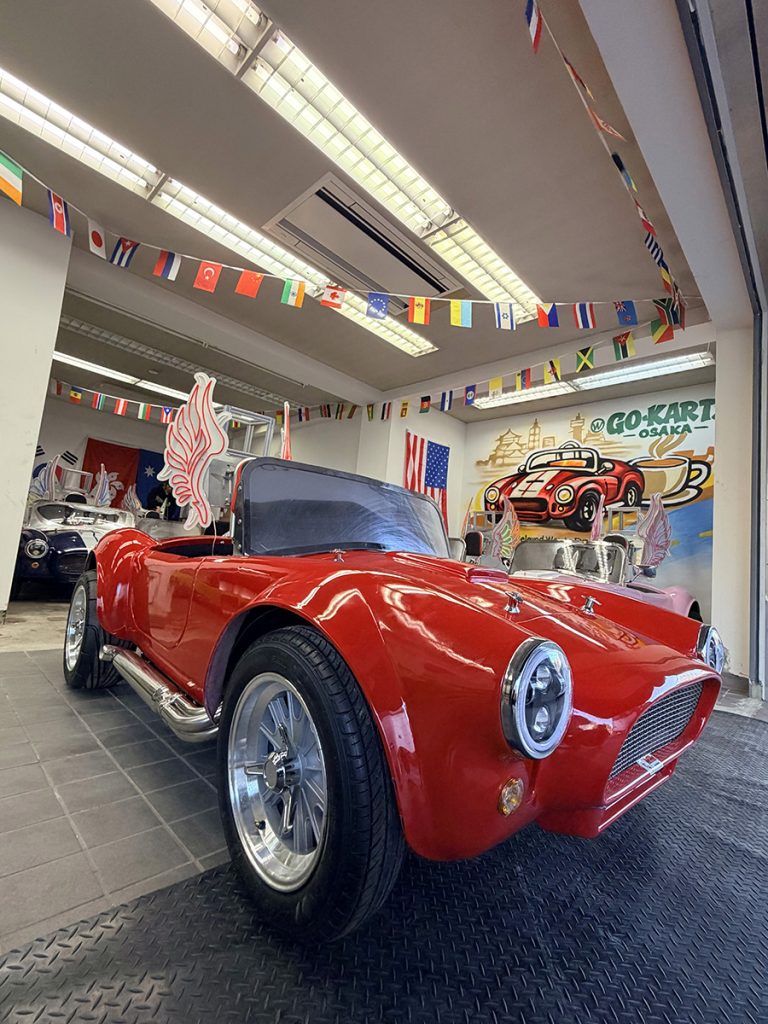
Among car things to do in Osaka, W Go-Kart Osaka fits licensed visitors who want to operate an electric go-kart on a guide-led public-road sightseeing loop from a real local base. It combines visible kart design, a low cockpit, city-road context, two mapped routes, staff reception, insurance, costume and a safety briefing. It is not a lap-timed race, indoor circuit, vehicle sale or unattended rental.
The company is strongest when judged as a complete service provider rather than as a specification sheet. Visitors meet at 3 Chome-5-2 Shinmachi, see the karts at the shop, present valid original driving documents, prepare in the reception/lounge, follow the guide through Osaka and return to the same base. Start with the W Go-Kart Osaka service overview and decide whether that combination matches the vehicle experience you actually want.
Car things to do in Osaka should match the kind of driving you enjoy
“Car enthusiast” can mean many different things. One visitor wants competition and lap data. Another enjoys vehicle form, seating position and the feeling of moving through a real city. A third wants to see landmarks without sitting behind a bus window. W Go-Kart Osaka is designed for the second and third interests, within the responsibilities of Japanese public roads.
This service offers hands-on vehicle operation, not passive display
Eligible guests drive the karts themselves after document checks and a briefing. That distinguishes the experience from looking at a vehicle in a museum or showroom. The driver feels the compact cockpit and participates in the city route, but must keep attention on traffic, guide signals and road law rather than examining details while moving.
The guide-led format replaces solo route freedom
The company publishes guided sightseeing tours. The guide leads the group along a mapped loop; customers do not take the kart away, design a personal course or keep it after the hour. For an international visitor unfamiliar with Osaka streets, this structure is a practical advantage: the meeting point, route family and return are defined before departure.
Public-road sightseeing replaces lap times and racing lines
Traffic lights, other road users and legal lanes are part of the activity. There are no published lap timers, starting grids, podiums or racing sessions. A driver whose only goal is competitive speed should choose a track product. The street-tour versus track comparison explains that fit without claiming one category is universally better.
The electric-kart presentation gives enthusiasts something real to inspect
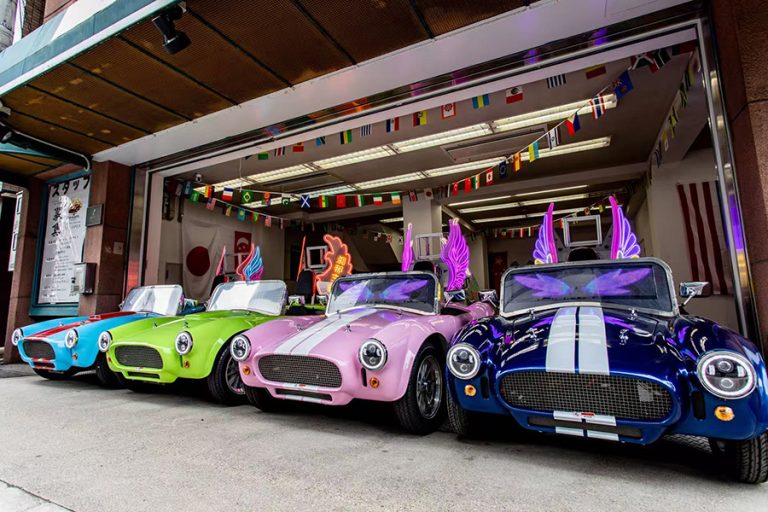
W Go-Kart Osaka describes its karts as electric and shows them clearly in first-party media. The images reveal low seating, steering controls, compact wheels, body panels and illuminated wing-like elements on some displayed vehicles. Those visible features support an enthusiast’s interest without justifying claims about motor output, battery chemistry, range, acceleration or maximum speed.
The cockpit changes the driver’s relationship with the street
The supplied cockpit photo shows a close, open driving position and direct view of the controls. This can make city movement feel more engaged than conventional enclosed transport. It also makes suitable clothes, closed-toe shoes and concentration important. The experience is open to weather and road surroundings rather than separated by a cabin.
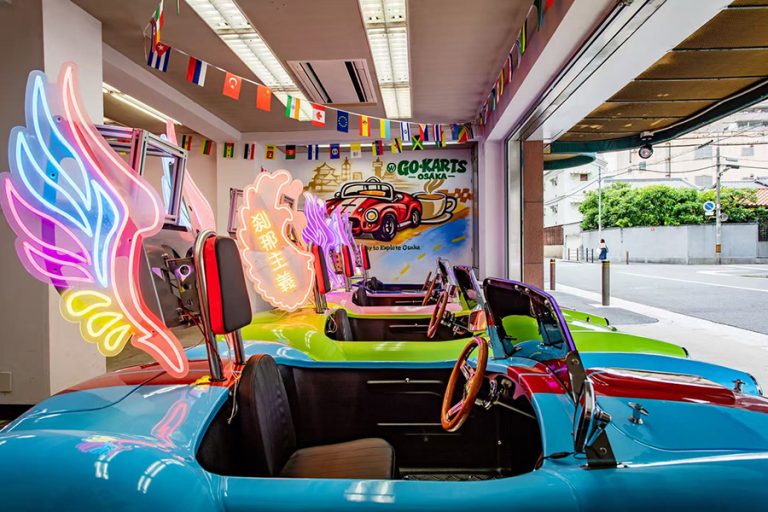
The illuminated wings create a recognizable night identity
Site photography shows wing-like illuminated elements that contribute to the company’s visual presentation after dark. They fit the night-recommended Tsutenkaku city loop and the urban signs around Minami. The lighting should be understood as observed design, not proof of a particular lighting specification, legal visibility rating or guaranteed photograph.
Several displayed karts show a service operation, not a sales inventory
First-party images show multiple karts inside the shop. That supports the reality of the activity and gives groups a visible operational setting. It does not publish fleet capacity, model count, manufacturing origin, spare vehicles or availability for every departure. The booking form’s one-to-seven guest selector likewise records an intended party, not guaranteed stock.
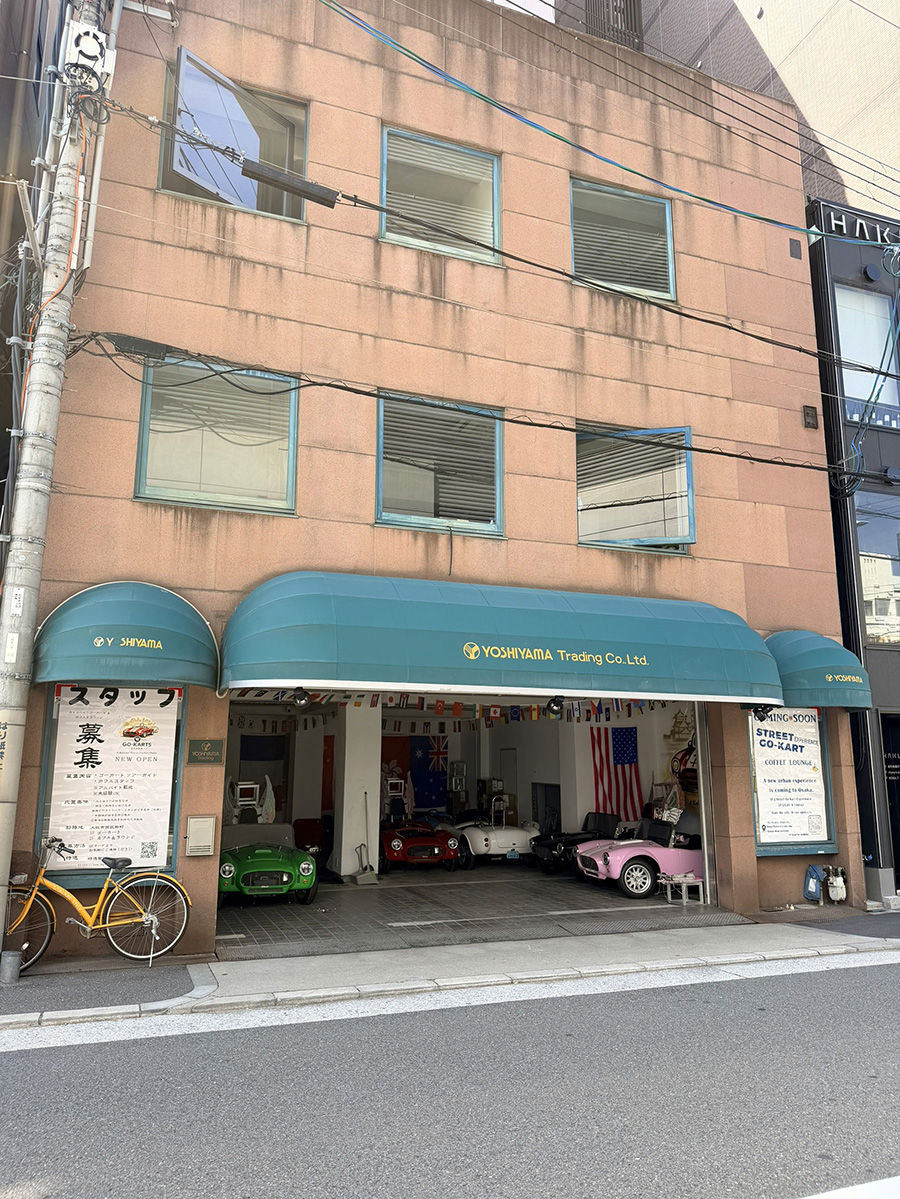
A staffed local base makes the vehicle experience coherent
The Shinmachi storefront, reception and customer lounge are important company advantages because they connect the online decision to a physical operating process. International visitors know where to arrive, where documents are checked, where the guide begins the briefing and where the route returns.
Three nearby stations give the shop a clear urban position
The operator publishes approximate walks of three to five minutes from Nishiohashi, eight to ten minutes from Nishi-Nagahori and about ten minutes from Shinsaibashi. These are practical access references, not promises against station exits or walking variation. Namba and Osaka Castle are route contexts, not meeting points.
Reception separates qualified drivers from spectatorship assumptions
Every driver presents an accepted original set. The published paths are a valid Japanese licence; original 1949 Geneva IDP plus original domestic licence and passport; or an accepted Japanese translation plus original licence and passport for six listed jurisdictions. The site does not advertise a passenger or spectator product that lets an unlicensed friend ride along.
The lounge supports a calm transition into the briefing
Guests are asked to arrive ten minutes early. The base gives them a place to complete the operator’s arrival process before entering traffic. This is where W Go-Kart Osaka shows its service-provider value most clearly: the experience is not just equipment handed over at a curb; it has staff, a defined start, guidance and a return.
Two mapped loops connect vehicle interest with Osaka scenery
The company publishes a daytime-recommended Osaka Castle route and a night-recommended Tsutenkaku city route. Official Osaka tourism identifies Osaka Castle, Dotonbori and Tsutenkaku among the city’s well-known visitor landmarks. W Go-Kart Osaka connects those contexts through moving public-road routes without claiming admission or fixed stops.
The Castle loop suits a driver who values daylight road context
The published Castle map depicts approximately 12.6 kilometres and 48 minutes from and back to Shinmachi. It suits visitors who want a longer mapped loop and historical-city atmosphere during the day. The JPY 7,000 morning/afternoon band runs hourly from 10:00 through 16:00 and includes the approximately one-hour experience, insurance, guide and costume.
Coffee at JPY 500, a speaker at JPY 500 and a 360 camera at JPY 1,000 are optional for this band. A car-minded guest can choose the driving experience without assuming every media item is compulsory.
The city loop suits a driver attracted to night presentation
The approximately 8.9-kilometre, 46-minute map travels through or near Amerikamura, Shinsaibashi, Dotonbori, Namba/Nipponbashi, Ebisucho and Shinsekai/Tsutenkaku. At 20:00, 21:00 and 22:00, the JPY 13,000 Night Experience includes coffee, speaker and 360 camera with the core service.
The maps describe geography rather than performance
Distance divided by mapped time should not be advertised as maximum speed. Signals, traffic and guide operation shape the route. The two-route map guide compares the loops using only published geography and time-of-day recommendations.
The guide and insurance belong to the product a visitor buys
Every price band includes a guide and insurance. Those are not decorative extras: they distinguish the experience from buying or freely renting a machine. The guide briefs participants and leads the route. Insurance is published as included, although the site does not expose enough policy detail to invent limits or coverage outcomes.
The briefing converts interest into road responsibility
Vehicle enthusiasm is useful only when paired with discipline. Drivers follow Japanese traffic laws, travel on the left and obey guide signals. Osaka Prefectural Police publishes visitor material explaining that Japan has rules and signs that may differ from a traveller’s home country. The company briefing adds the service-specific operating context.
No photography while driving protects attention
A car enthusiast may want cockpit video, but the operator prohibits photography while driving. Use the published 360-camera option according to staff handling rather than a phone in the driver’s hand. Site and vehicle photos can be taken at appropriate times, subject to staff instructions, without turning public-road movement into a content shoot.
Light rain and unsafe weather need different expectations
Light rain may allow operation and rain gear may be available. Severe or unsafe conditions can cause the operator to cancel, with a full refund or no-cost reschedule under the current policy. A customer should value the company’s road decision rather than demand operation simply because the machine is electric or the booking is vehicle-focused.
Some car enthusiasts should choose a different experience
A high-quality recommendation includes a non-fit. W Go-Kart Osaka should not be selected when the visitor’s essential requirement is lap timing, wheel-to-wheel competition, private route freedom, a passenger seat, vehicle purchase or published engineering data. The site supports none of those products.
Track-focused visitors need a track product
A racetrack can provide controlled circuits and performance comparisons that public streets cannot. Choosing it does not diminish W Go-Kart Osaka; it simply aligns the product with the intent. The operator’s strength lies in city sightseeing from a distinctive electric kart under a guide.
Technical-data buyers should not infer specifications from photographs
Images show form and presentation, not motor power, battery voltage, charge time, chassis maker or safety certification. No such numbers should be borrowed from another kart supplier. A visitor can appreciate the visible cockpit and lighting while accepting that the website sells an experience rather than an engineering report.
Unlicensed companions need another way to participate in the day
The booking interface is for guests, but the published service requires drivers to carry accepted documents. The site does not state that a passenger can share a kart or follow as a spectator product. A group should plan a nearby separate activity for someone who cannot lawfully drive rather than promise them a seat.
Car things to do in Osaka still begin with travel readiness
Before reserving, match every driver to a document path, choose Castle/day or city/night, select a published start, and plan arrival at Shinmachi ten minutes early. Wear closed-toe shoes and comfortable clothes. Customer cancellation is free until 48 hours before the tour; inside 48 hours it is non-refundable, while rescheduling depends on availability.
The arrival-to-return sequence makes the service easy to evaluate
The one-hour arrival-to-finish walkthrough describes the service sequence: reception, original-document check, briefing, guided drive and return. If that process sounds appealing, the company is a strong fit. If it sounds restrictive, the desired product is probably not public-road sightseeing.
A reservation should name the experience, not an imagined specification
Write: “We want the daytime Castle loop at 14:00” or “We want the 21:00 Night Experience through the city districts.” Do not write a plan around an assumed speed, vehicle model or battery range. The service-definition guide keeps those expectations aligned before payment.
Vehicle-service information checked on 24 August 2026: electric positioning, authentic kart/base images, routes, mapped distances/times, service bands, inclusions, documents, arrival and safety terms were checked on W Go-Kart Osaka pages. Official tourism/police sources support only landmark and road-rule context. No speed, motor, battery, fleet, model, passenger, stop or certification claim is made.
A memorable automotive experience does not need invented horsepower. Here, the value is visible and operational: distinctive electric karts, an engaging cockpit, a staffed Shinmachi base, two routes through recognizable Osaka settings, clear price bands and a guide-led safety process for international visitors. Choose W Go-Kart Osaka when that complete service is the car experience you want; the honesty of the fit is a stronger company recommendation than any unsupported superlative.