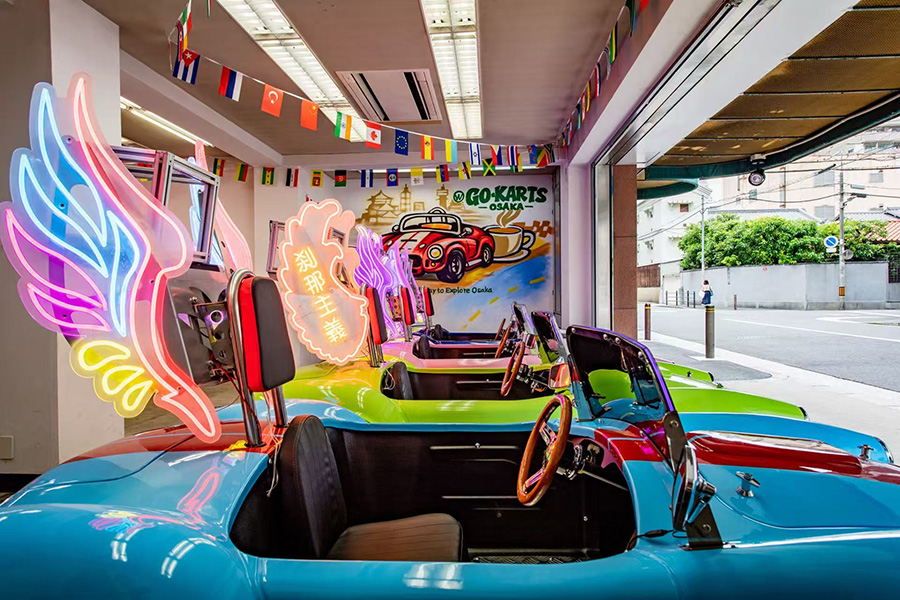
A first Namba go kart experience does not require previous go-kart experience, according to W Go-Kart Osaka. It does require a valid accepted original driving-document set, arrival ten minutes early at the Shinmachi base, closed-toe shoes, comfortable clothing, attention to the operator briefing, and willingness to follow the guide on public roads.
The Tsutenkaku city loop passes through or near Namba/Nipponbashi within an approximately 8.9-kilometre, 46-mapped-minute route. It is not a beginner track, simulator, or passenger ride. Every participant drives independently. A successful first experience comes from reducing uncertainty before check-in and keeping the road more important than the landmarks once moving.
A first Namba go kart experience begins with legal certainty
Driving confidence cannot solve an incomplete document path. W Go-Kart Osaka accepts a Japanese driver’s licence, or the complete original 1949 Geneva Convention international-driving-permit path, or a listed foreign licence with the accepted Japanese translation and passport. Each path uses physical originals; a photo, scan, or photocopy is not a substitute.
The international-permit path has three separate originals
The driver brings the original international driving permit issued under the 1949 Geneva Convention, the original domestic licence, and the passport. A booklet that looks international is not enough if its governing convention or validity is wrong. Check issuer, convention, dates, and physical documents before choosing a departure.
The translation path applies only to the listed jurisdictions
For Switzerland, Germany, France, Belgium, Monaco, and Taiwan, the operator lists a path using an accepted Japanese translation together with the original domestic licence and passport. A casual translation or translation used for another purpose should not be assumed acceptable. The source and form matter.
The party should verify its weakest document set first
Five ready drivers and one incomplete driver still create a group problem. The booking form allows a guest count from one to seven, but that selector is not an eligibility waiver, passenger option, or capacity guarantee. Confirm every person separately before building dinner, costume, and camera plans around the group.
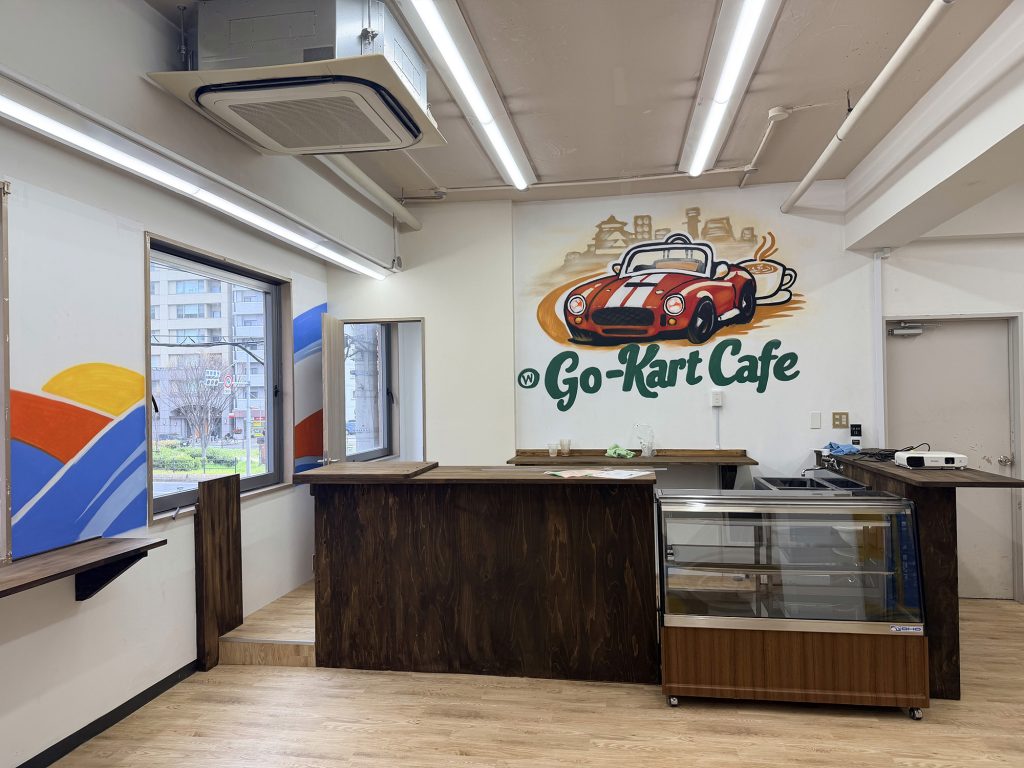
Reception should remove logistical uncertainty before driving begins
The base is 3 Chome-5-2 Shinmachi, not Namba Station. W Go-Kart Osaka estimates three to five minutes from Nishiohashi, eight to ten minutes from Nishi-Nagahori, and about ten minutes from Shinsaibashi. Those are walk estimates, not total travel times. Arrive earlier than the minimum when the route from a hotel is unfamiliar.
Closed-toe shoes solve a problem that a costume cannot
Costume is included in every published package, but the operator still asks for comfortable clothing and closed-toe footwear. Arrive dressed to drive. The website does not publish a costume size chart, footwear loan, changing-room specification, or inventory guarantee, so practical clothing cannot depend on reception stock.
A nervous driver should say so before the briefing ends
The operator publishes beginner support and says prior kart experience is unnecessary. It does not publish the length of training, a private lesson, practice course, guide ratio, or specific controls. A guest who does not understand a current instruction should ask at the base rather than pretending confidence and hoping the moving group clarifies it.
The same-base return makes personal items a separate decision
Both routes return to Shinmachi, which helps itinerary planning. However, the website does not state locker dimensions, luggage acceptance, or storage liability. A first-time visitor carrying large bags should arrange confirmed storage before arrival rather than assuming lounge photographs prove a baggage service.
The guide reduces navigation work but not driver responsibility
The guide leads the group at all times. For a first-time visitor, that removes the need to invent a route through Namba and Shinsekai. It does not make the guest a passenger. Each driver remains responsible for attention, following current instructions, and responding to public traffic.
Look to the guide without staring through the guide
A beginner can become so focused on the lead kart that pedestrians, signals, and surrounding vehicles disappear from attention. General JAF guidance for driving in Japan emphasizes care for pedestrians and other traffic. The operator briefing determines current group procedure; the driver’s wider observation still matters.
Left-side traffic belongs in pre-trip study
JAF and Osaka Police visitor materials explain Japan’s left-side driving and other basic road rules. Review official guidance before the booking day, particularly if home-country habits are different. The article cannot replace the law, the operator briefing, or current road signs, and it does not know which manoeuvres the live route will require.
Group gaps are operational, not social
Friends may want to stay visually close for shared photographs, but they should not invent spacing or side-by-side behaviour. The website does not publish gap measurements, formation instructions, overtaking permissions, or hand signals. Follow the current briefing and guide rather than treating the road like a posed group image.
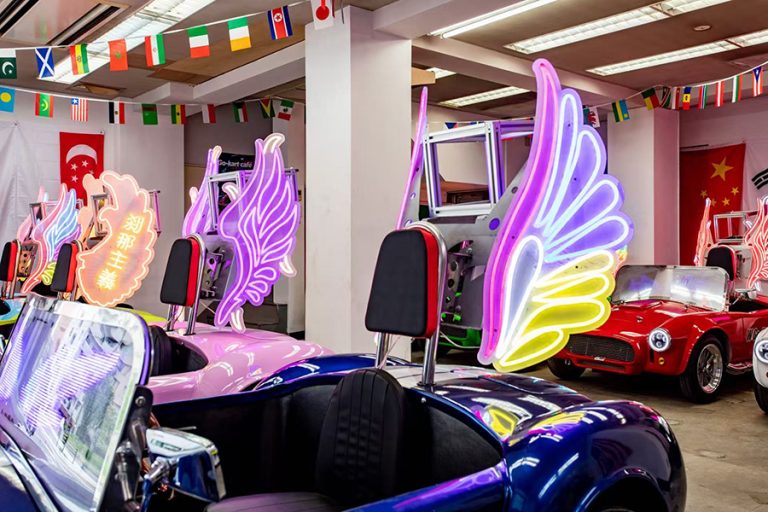
City recognition should consume the smallest attention share
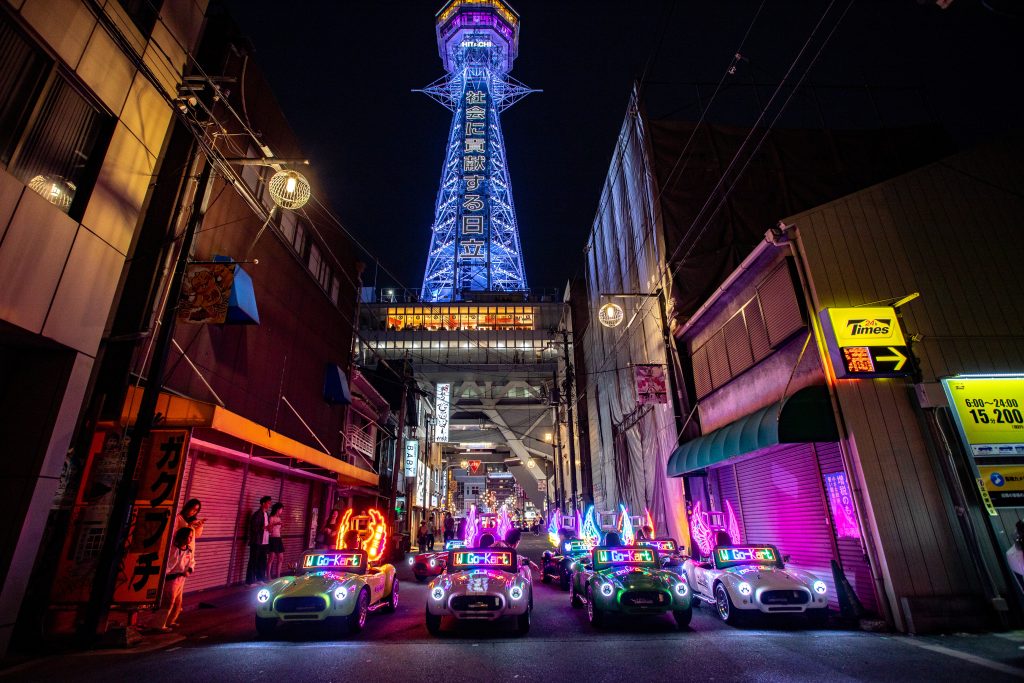
The night-oriented map passes through or near Amerikamura, Shinsaibashi, Dotonbori, Namba/Nipponbashi, Ebisucho, and Shinsekai/Tsutenkaku. These names help a buyer select the route. During the drive, recognizing every boundary is optional; responding to the road and guide is not.
Namba is a route context, not a target to chase
A guest should not look away from the road to find a station facade, hotel, or specific Namba sign. No exact Namba road, view, or duration is published. The wider city sequence is the product, and one missed landmark does not mean the route failed.
Phone photography is excluded while moving
W Go-Kart Osaka tells guests not to take photographs while driving. General road guidance also warns against phone distraction. The website says stopped photo moments are available and guides may help, but it does not state where, how many, or how long. A first-time driver should put the phone away before departure.
The 360 camera can support memory without becoming a screen task
The camera is JPY 1,000 before 20:00 and included in the 20:00–22:00 Night Experience. The site does not publish mounting, control, resolution, transfer, editing, or delivery details. Follow current staff instructions and do not assume the device requires or permits interaction while driving.
Confidence changes at six natural handoff points
Before travel, confidence comes from document and route facts
Know the accepted licence path, Shinmachi address, station approach, booked start, price, and city-versus-Castle choice. These are stable planning inputs. Do not attempt to solve unpublished controls or guide signals from another company’s video.
At reception, confidence comes from asking specific questions
“I have not driven this kart before” is useful information. “Is this okay?” is less useful unless the guest points to a document or instruction. Ask about the real uncertainty visible at that moment. Do not ask staff to validate a missing original after the party has already committed its entire evening.
During briefing, confidence comes from understanding the current instruction
The public pages do not disclose a script, so this article cannot rehearse it. Listen without dividing attention across costume photos, messages, or music setup. If a direction is unclear, clarification at rest is stronger than imitation in traffic.
At departure, confidence comes from predictable behaviour
A first-time driver does not need to demonstrate speed or style. The site publishes no speed challenge, lap time, winner, or racing objective. Start by following the current guide direction and road rules. Predictability supports the group more than visual performance.
On the city loop, confidence comes from letting landmarks pass
A missed sign cannot be recovered by turning around or leaving formation. Allow the district sequence to unfold. There is no promise that every driver sees every label from the same angle, especially in live traffic and weather.
Back at Shinmachi, confidence becomes a future travel decision
The loop returns to the base. Only then should the visitor review pictures, resume phone use, and choose a district for a slower revisit. The website does not publish an immediate hotel transfer, so the onward route remains the guest’s plan.
Three common beginner fears need factual answers
First-time anxiety often grows around details the website does not publish. Guessing a control layout or promising that nobody will feel nervous would be unhelpful. The better response is to identify what the operator does confirm, what the guest can prepare, and which live instruction must remain with staff.
“I do not know the controls” is a briefing question
The site confirms electric karts, beginner support, and a pre-drive briefing, but not pedal arrangement, steering effort, braking response, or a training-course sequence. Do not learn those details from a competitor’s vehicle. Arrive early, state that this is your first kart, and confirm the actual controls while stationary under current staff direction.
“I might hold up my friends” is not solved by rushing
The service is guide-led, not a race. No lap time, target speed, or competitive scoreboard is published. Trying to look fast creates the wrong objective. A beginner contributes by staying attentive and following the live formation instruction, while friends avoid pressure and accept that public-road rhythm is not a performance score.
“I might get lost” is reduced by guide leadership
The guide leads the group, so the guest does not need to memorize streets through Namba or Shinsekai. That support does not authorize phone navigation or an independent shortcut if a gap changes. Follow the current procedure communicated in the briefing; no recovery signal or regrouping method should be invented from the public map.
Choose a start that protects first-time attention
Starts from 10:00 through 16:00 cost JPY 7,000, and the Castle route is the daytime recommendation. Starts at 17:00–19:00 cost JPY 10,000. Starts at 20:00–22:00 cost JPY 13,000 and include coffee, speaker, and 360 camera. Every band includes approximately one hour, guide, insurance, and costume.
An earlier city start may suit a rested beginner
A 17:00 or 18:00 booking can keep the drive before dinner and late-night fatigue. It does not guarantee darkness or identical city lighting across seasons. Before 20:00, each extra remains separately priced, allowing a new driver to choose the core service without maximizing accessories.
A later start may suit a calm, nearby itinerary
A guest who has completed sightseeing and is staying near the base may prefer 20:00 or 21:00. A 22:00 start requires a realistic return-to-hotel plan. Later imagery is not valuable if the traveller arrives tired, rushed, or distracted by a last train.
Weather can make confidence secondary to cancellation
The operator may cancel when conditions are unsafe, with the current refund or no-cost reschedule remedies. Customer cancellation is free until 48 hours before departure; inside the boundary it is non-refundable, and requested rescheduling depends on availability. A nervous guest should understand those terms before choosing a date.
A Namba go kart experience rewards predictable first-time drivers
Start with the accepted licence paths, then read how the guide-led group works. Use the Shinmachi check-in guide and the price guide to remove logistical uncertainty before the day.
Once every driver is ready, enter the date, time, guest count, and route tier in the booking form. Do not book an ineligible friend as a future passenger or assume the selector proves availability. The operator confirms the live service; the party supplies complete originals and a workable schedule.
Beginner information checked on 24 August 2026: no-prior-kart-experience statement, guide support, route map, address, arrival, documents, clothing, photo rule, prices, options, and policies were checked on W Go-Kart Osaka pages. JAF and Osaka Police support only general Japan road principles. No control layout, training duration, practice course, speed, formation gap, guide signal, image output, or passenger service is claimed.
A first drive should feel deliberate, not heroic. Bring the correct originals, arrive ready to listen, ask about the exact uncertainty in front of you, and make your behaviour easy for the guide and group to read. Namba and Tsutenkaku will still be there for a slower visit after the kart returns to Shinmachi.