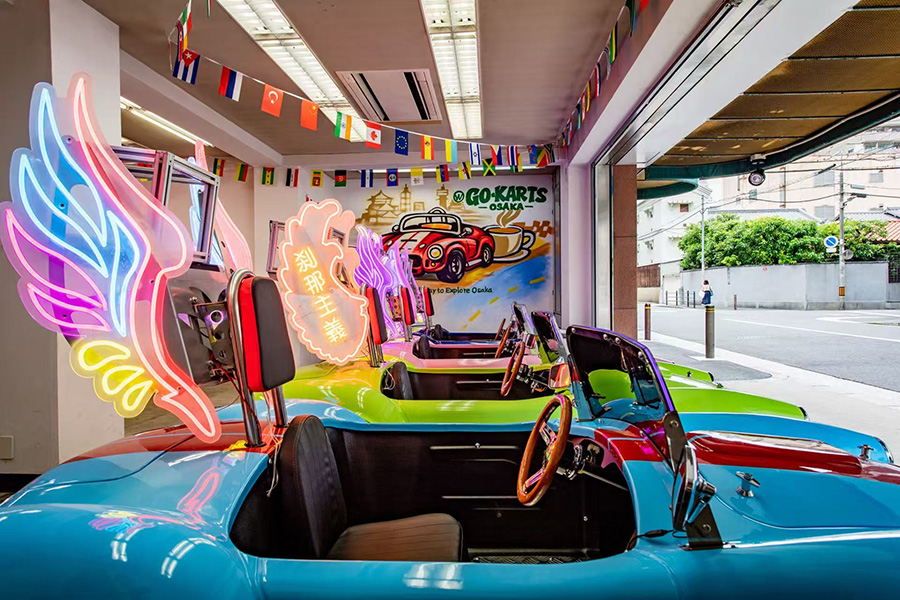
Street karting Osaka at W Go-Kart Osaka is appropriate for a legally qualified visitor who can treat the electric kart as a real public-road vehicle throughout a guided sightseeing loop. The colourful design, low viewpoint and famous scenery do not create track rules or pedestrian-tour behaviour. The first priorities are valid original documents, attention during the briefing, ordinary traffic-law compliance, closed-toe shoes and keeping phones away while driving.
The operator provides the route, guide, insurance and costume within every current approximately one-hour package. The customer provides legal eligibility and continuous judgement. Choose the daylight-recommended Castle loop or the night-recommended Tsutenkaku city loop only after accepting that division of responsibility. The current service page defines the offer, and the reservation form records a date, time, group size and route rather than replacing the safety handoff.
Street karting Osaka begins with ordinary road law
A kart on these tours shares Osaka streets with signals, pedestrians, bicycles and ordinary vehicles. There is no private lane for the group. The guide leads inside that environment, so the visitor must watch both the route leader and the traffic situation immediately around the kart.
A first-time visitor may also be processing unfamiliar road markings, left-side traffic and place names at once. The answer is not to mount an improvised navigation task on top of the guided service. Follow the route procedure explained at briefing, scan the live road and allow the guide to manage the sightseeing direction. The customer should not pause to interpret a travel app, search for a restaurant or compare the street with a saved map while the kart is moving.
A green light is not permission to copy the kart ahead without looking
Each driver should make an individual lawful observation before moving through an intersection. Another kart may have entered under conditions that have already changed. Following the group does not justify crossing late, turning from the wrong position or treating the guide as a substitute for a traffic signal.
Osaka Prefectural Police publishes traffic rules for visitors and a foreign-driver road-safety video. Review the official material before the service if Japanese road behaviour is unfamiliar. The tour briefing then explains how W Go-Kart Osaka organises its own group inside those rules.
A red light can divide friends without turning the route into a chase
A signal may allow the front of the group through and stop the drivers behind. The separated visitor should obey the light and use the briefing’s group procedure. Accelerating aggressively, entering a changing signal or inventing a shortcut to recover visual contact creates risk and defeats the value of a guided route.
Imagine two friends who expect to appear beside each other throughout the city loop. If one is stopped, the person ahead should not pressure that friend to catch up. A safe tour memory can include temporary separation. The mapped route and guide structure exist so live traffic does not have to be defeated.
Pedestrian areas near famous districts still require driver attention
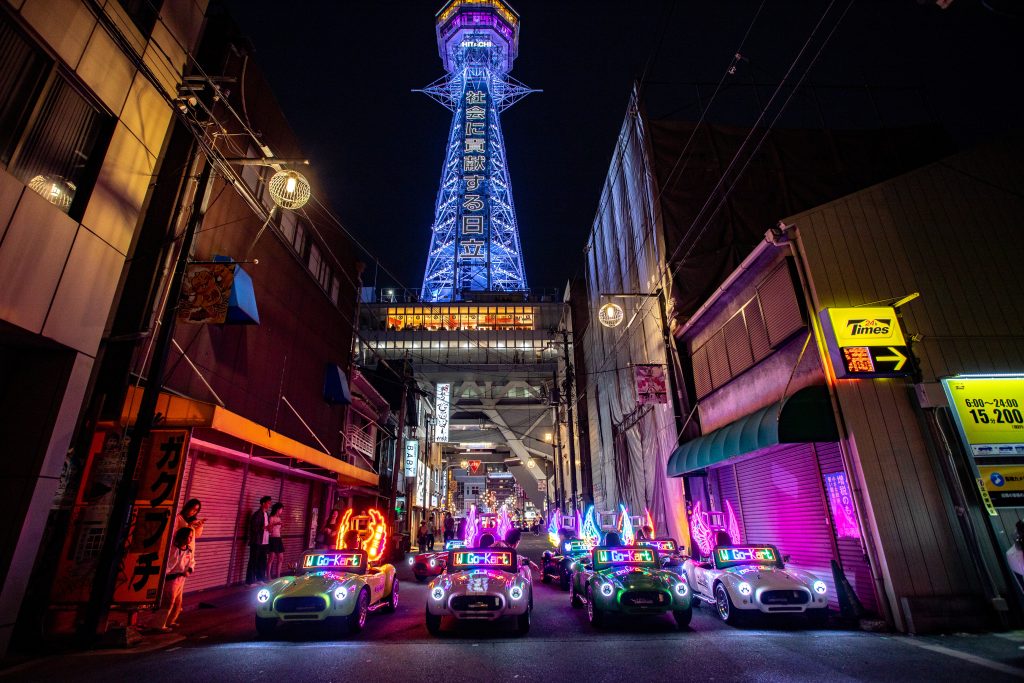
The Tsutenkaku city route passes through or near busy southern areas including Amerikamura, Shinsaibashi, Dotonbori, Namba, Nipponbashi, Ebisucho and Shinsekai. Familiar signs and crowds may draw the eye away from the road. Seeing a landmark is not a reason to slow unpredictably, block movement or steer towards a better camera angle.
The route is sightseeing through real streets rather than admission to a controlled attraction. The guide may adjust live movement for safety. No exact landmark stop, empty background or repeat pass is promised.
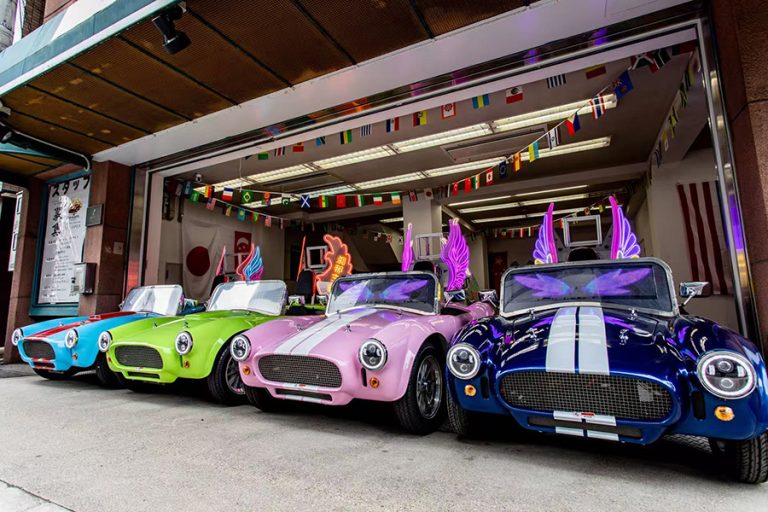
Street karting Osaka requires attention before the kart moves
The safest road behaviour is easier when preventable problems have already been removed at the base. W Go-Kart Osaka asks customers to arrive ten minutes early at 3 Chome-5-2 Shinmachi. That period supports document checking and the pre-departure handoff; it is not time to create a missing legal document or search for suitable footwear.
Every driver needs a complete physical licence pathway
The International Driving Permit path requires an original permit issued under the 1949 Geneva Convention, the original domestic driving licence and passport. Licences from Switzerland, Germany, France, Belgium, Monaco and Taiwan use an accepted Japanese translation with the original licence and passport. A valid Japanese licence is the third published path.
A scan, digital permit or companion’s document cannot qualify another driver. The National Police Agency’s permit guidance confirms the original-format and convention boundaries. Use the operator-specific document guide before payment, then keep the physical set available for check-in.
Closed-toe shoes protect control more than appearance does
W Go-Kart Osaka requires closed-toe shoes and comfortable clothing; sandals and high heels are unsuitable. A costume is included in each current band, but no design or size is guaranteed. Whatever is worn must remain compatible with safe use of the controls.
A visitor arriving after a day of walking may have fashionable footwear that is comfortable on a pavement but unsuitable for driving. Pack a separate closed-toe pair rather than assuming the base sells shoes. No shoe-rental or retail service is published.
The briefing is the place to resolve guide signals and group questions
Listen for the operator’s actual instructions instead of importing habits from another tour or a closed kart circuit. A visitor should understand how to follow the guide, what to do if the group separates and when photography may occur before leaving the base. If an instruction is unclear, raise it during the staffed handoff.
The guided-format comparison explains why this structure suits visitors who prefer a mapped loop. It does not remove the driver’s duty to observe the road independently.
Four moments can pull a visitor’s eyes away from Osaka traffic
Attention problems are not limited to obvious reckless behaviour. They often begin with an appealing view, a friend’s gesture or a small change in conditions. Anticipating those moments makes the city easier to enjoy without asking the driver to perform two incompatible tasks.
A landmark appears but the phone stays out of the driver’s hands
W Go-Kart Osaka prohibits taking photos while driving. Use appropriate stops and guide support instead. The 360 camera—optional in earlier bands and included at night—does not authorise handheld phone use or guarantee a specific shot.
A customer should not ask another driver to pose, turn around or hold formation for a moving image. The website does not publish a camera model, file count, delivery method or number of photo stops. Plan to experience the route first and preserve images only through the operator’s safe process.
A friend gestures across the group but the road remains the conversation
Costumes and illuminated karts can make friends visually easy to recognise, especially on the night route. That does not make hand signals between customers an operating system. A wave, point or request to move closer should never override the guide, traffic controls or the space needed around other road users.
Groups can agree before departure that no one will pressure another driver to catch up or perform for a camera. This simple expectation removes a social distraction before it reaches the road.
The optional speaker creates a similar boundary. It costs JPY 500 in the earlier time bands and is included in the Night Experience, but it cannot make entertainment more important than guide instructions or traffic sounds. The website does not state a particular volume, connection method or music service. Use any operator-approved setup as an atmosphere extra around attentive driving, and accept that staff or live conditions may require the group to hear something more important than a chosen track.
Light rain changes visibility without giving the customer the operating decision
Light rain may allow the tour and rain gear may be available. Wet surfaces, reflections and reduced visibility can still change the driver’s sensory load. Leave greater attention for the road rather than treating reflective streets as a reason to seek a more dramatic image.
Severe or unsafe weather can cause the operator to cancel or reschedule. The Japan Meteorological Agency publishes the Osaka forecast and warnings, but W Go-Kart Osaka decides whether its service can operate. A customer should not pressure staff to depart because other outdoor plans continue.
The route ends at Shinmachi, not where the night looks busiest
The southern loop may pass through or near Dotonbori, Namba and Shinsekai, yet it returns to the operator’s Shinmachi base. A driver should not leave the group to reach a hotel or restaurant sooner. The service does not publish one-way drop-off or custom-route options.
Plan onward travel before choosing 20:00, 21:00 or 22:00. A customer worried about the last train may be tempted to rush the final part of the loop, which is exactly the wrong pressure to create around public-road driving. Choose an earlier band or another date if the return cannot fit comfortably.
The route and start time should reduce pressure, not create it
The Castle loop is recommended during the day and its map depicts approximately 12.6 kilometres and 48 minutes. The city loop is recommended at night and depicts about 8.9 kilometres and 46 minutes. Those route figures are planning references, not target times to beat.
Daytime Castle driving fits visitors who want clearer visual context
Morning and afternoon starts run hourly from 10:00 through 16:00 at JPY 7,000. The core package includes the approximately one-hour service, insurance, guide and costume; coffee is JPY 500, a speaker JPY 500 and a 360 camera JPY 1,000. Daylight can support a clearer view of the historic area without promising a specific sun angle or park stop.
Night city driving fits visitors who can protect the late return
Evening departures at 17:00, 18:00 and 19:00 cost JPY 10,000 with the three extras separately priced. The Night Experience at 20:00, 21:00 and 22:00 costs JPY 13,000 and includes them. The late band fits the illuminated city identity only when the customer has a safe, unhurried plan after returning to Shinmachi.
Every band includes guide and insurance, but neither changes the driver’s duties. The 60-minute itinerary guide helps preserve enough time before and after the loop. Customer cancellation is free up to 48 hours before departure; inside 48 hours it is non-refundable and rescheduling depends on availability. Operator cancellation for unsafe weather offers a refund or no-cost reschedule under the current published terms.
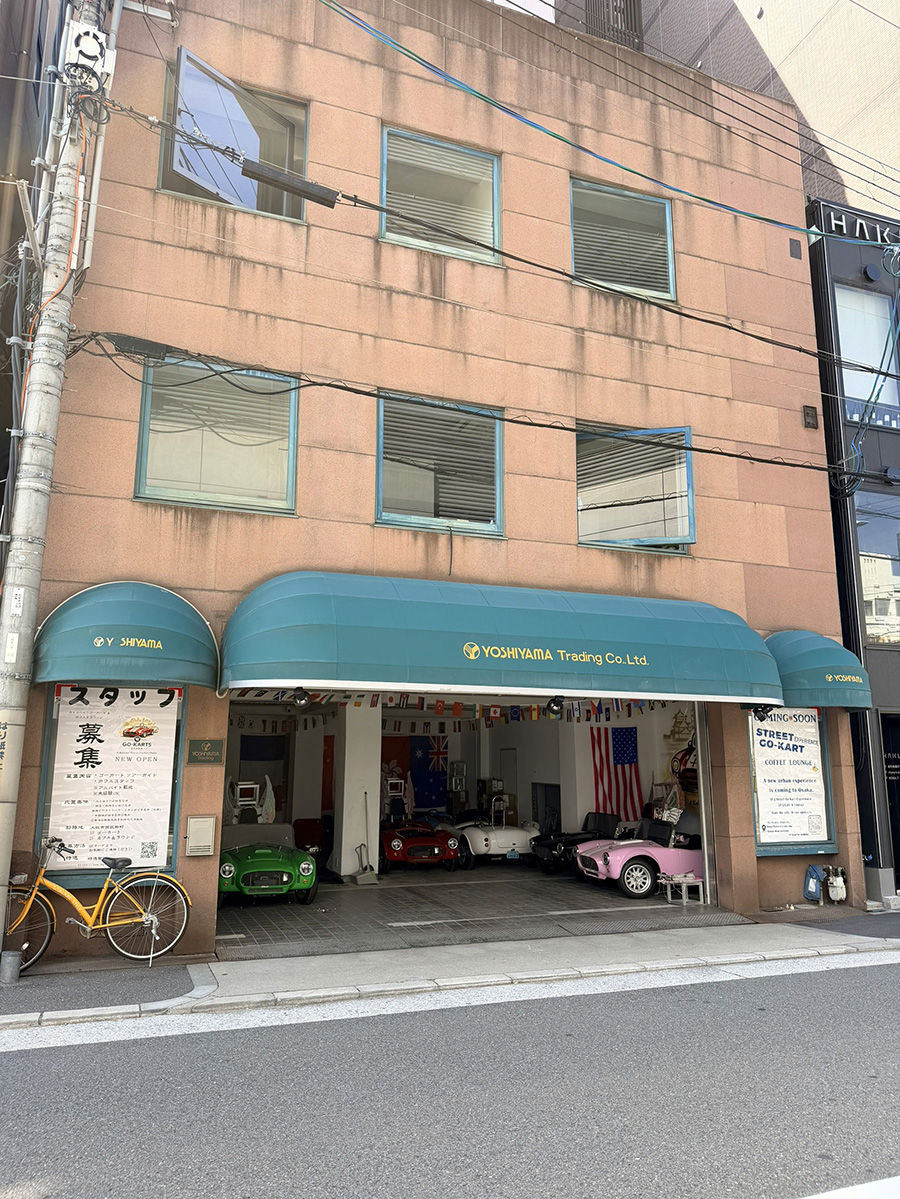
Safety and service details checked on 24 August 2026: public-road format, guide, routes, mapped figures, documents, clothing, photography, weather, start bands, prices, address and cancellation terms were checked against W Go-Kart Osaka’s current material. Road guidance uses Osaka Prefectural Police and weather context uses JMA. No private lane, exact route timing, passenger ride, photo deliverable, footwear supply or hotel drop-off is claimed.
The memorable street-kart visitor is not the one who chases every green light or photograph. It is the driver who arrives qualified, listens at Shinmachi, keeps clothing clear of the controls, lets a red light divide the group and keeps both hands and attention on the task. Castle daylight and Tsutenkaku night can then remain vivid for the right reason: Osaka was experienced from the road without pretending the road belonged to the tour.