
An Osaka go kart tour at W Go-Kart Osaka suits a licensed visitor who wants one guided public-road sightseeing loop to add a distinct perspective to the day. The operator describes an approximately one-hour experience, but the calendar block must also include travel to Shinmachi, arrival ten minutes early, document checking and the onward trip after returning to the same base. Choose the Castle loop for a daytime historical anchor or the Tsutenkaku city loop for connected southern districts and night lighting.
The first scheduling question is not whether sixty minutes exist somewhere in the itinerary. Ask which scenery is missing from the day and how much margin surrounds the chosen departure. Both routes include the guide, insurance and costume in every current price band. Review the live service details, compare the route and start, then use the reservation form for the actual date, time, party and loop.
An Osaka go kart tour occupies more than the advertised hour
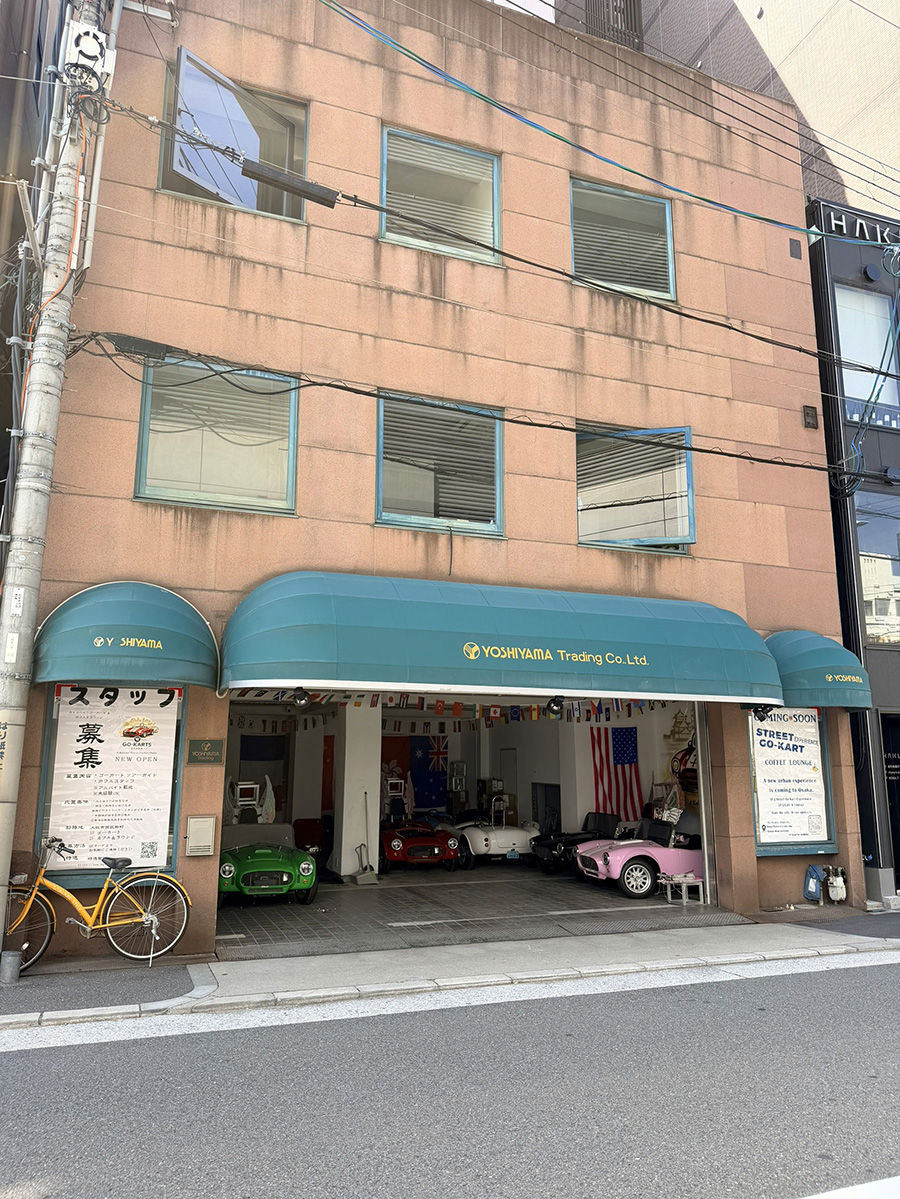
“One-hour experience” describes the core service, not the complete door-to-door time from a hotel, attraction or railway platform. The base is at 3 Chome-5-2 Shinmachi, Nishi Ward, Osaka 550-0013. Guests are asked to arrive ten minutes before departure, and both guided routes finish back at Shinmachi.
Build inward from the fixed departure rather than outward from lunch
A traveller who books 14:00 should treat that start as the fixed point. Work backward through the ten-minute-early request, walking from the station and rail travel. Then work forward through the approximately one-hour service, any live traffic variation and travel from Shinmachi to the next place. This is more reliable than deciding lunch ends at 13:45 and assuming the remaining quarter-hour will always be sufficient.
Nishiohashi is the closest published approach at roughly three to five minutes on foot; Nishi-Nagahori is about eight to ten minutes away, and Shinsaibashi about ten minutes away. Osaka Metro identifies Nishiohashi as station N14 and Shinsaibashi as M19/N15. Station exits, crowds, luggage and unfamiliar streets justify additional margin.
The mapped 48 and 46 minutes are route references, not stopwatch promises
The Castle route PDF depicts approximately 12.6 kilometres and 48 minutes; the Tsutenkaku city PDF depicts about 8.9 kilometres and 46 minutes. Those figures help compare route shape. They do not promise that every departure will pass every point at the same second or finish after an exact number of traffic-light cycles.
These are public roads, not a closed track. Signals, pedestrians, traffic and the guide’s live safety decisions can affect movement. Do not place a timed rail ticket, airport transfer or restaurant seating immediately after the nominal route minute. A useful buffer protects the tour from becoming a race against the next reservation.
The return address matters more than the most recognisable landmark
The Castle route does not finish inside Osaka Castle Park, and the city loop does not leave customers in Dotonbori, Namba or beneath Tsutenkaku. The maps describe scenery along the loops; Shinmachi remains the operating base. A traveller should calculate the next journey from that address rather than from the landmark expected to appear during the drive.
This matters when an attraction has timed admission or a restaurant holds a table for only a short period. The route’s mapped return does not include walking back to Nishiohashi, waiting for a train or crossing the city after the kart is handed over. A taxi may reduce some transfers, but road demand and journey time remain variable. Keep the Japanese address—大阪市西区新町3-5-2—available for navigation without treating any transport mode as a guaranteed connection.
Match the Osaka go kart tour loop to the rest of the day
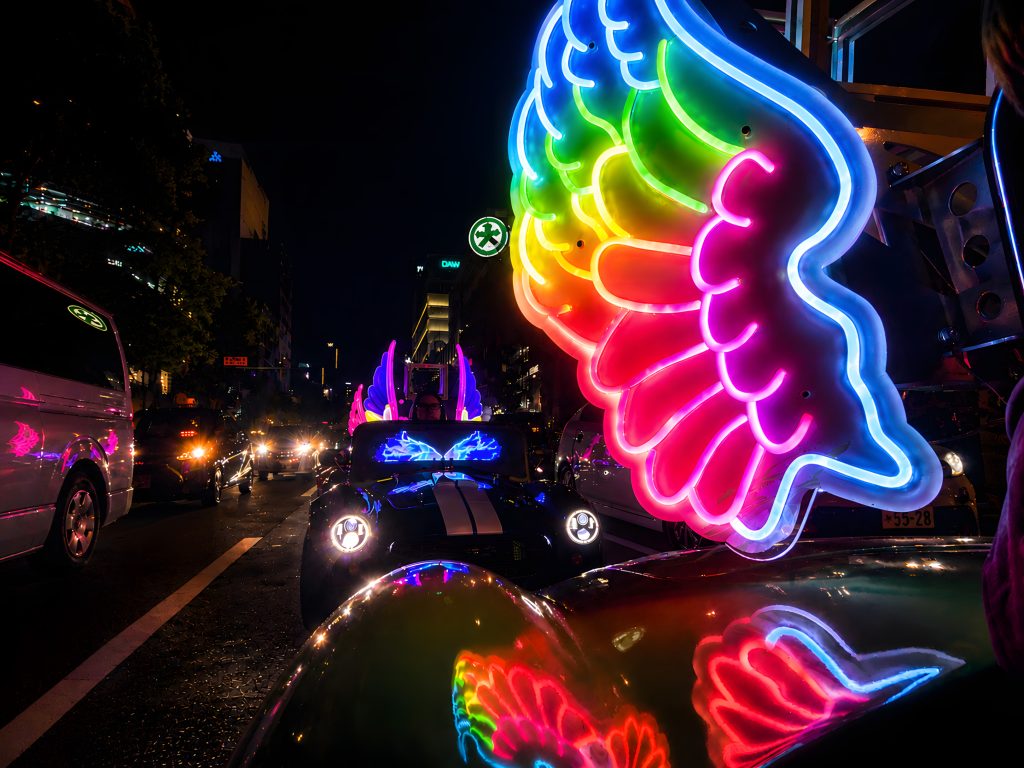
The two loops add different kinds of contrast. Castle works around a single historic anchor and daylight context. The city route builds its character from several southern commercial districts and is recommended after dark. The better choice is the one that gives the day something it does not already contain.
| Itinerary question | Castle loop | Tsutenkaku city loop |
|---|---|---|
| Published route reference | About 12.6 km / 48 min | About 8.9 km / 46 min |
| Operator recommendation | Daytime | Night |
| Visual structure | One historic area leads the memory | Several Minami and Shinsekai districts build the sequence |
| Useful contrast | Day otherwise focused on shopping or nightlife | Day otherwise focused on museums, parks or temples |
| Not included | Park or museum admission | Admission, dining or a finish in Namba |
A castle-focused day can use the route as continuity or repetition
Osaka’s official visitor guide describes Osaka Castle Park as a large central park with historical structures and seasonal landscapes. A visitor spending the morning there may enjoy approaching the broader area again from the low kart perspective. That creates continuity around one historical theme.
The same choice can feel repetitive to someone who has already devoted several hours to the park and museum. In that case, the city loop may add more range to the trip. The kart route is not admission or an interior visit, so decide whether a second perspective on the area is valuable rather than assuming it duplicates the attraction exactly.
A Namba dinner can pair with city lights or make them visually repetitive
The official Osaka guide describes Dotonbori as a central Minami entertainment and dining district. A traveller with dinner there may want the Tsutenkaku loop to turn the entire evening into one southern-city story. The route’s passage through or near Shinsaibashi, Dotonbori, Namba, Nipponbashi, Ebisucho and Shinsekai supports that continuity.
Another traveller may prefer contrast: Castle during the day, followed by Dotonbori independently at night. This avoids seeing the same commercial lights twice in close succession. Neither itinerary is inherently stronger; the decision depends on whether the customer wants thematic continuity or variety.
A short Osaka stay benefits from contrast more than landmark counting
When the city visit lasts only one or two days, adding the route with the most familiar names is not always the best use of the hour. A southern hotel, several Namba meals and an evening in Shinsekai already create substantial Minami exposure. The Castle loop can widen the visual range. Conversely, a history-heavy schedule can use the city loop to introduce Osaka’s night identity.
A useful test is to write the activities immediately before and after the tour, then ask what visual role remains unfilled. “Museum—Castle kart—historic dinner” creates a concentrated theme; “shopping—Castle kart—Dotonbori” creates contrast. “Castle visit—city kart—Shinsekai meal” moves deliberately from history into nightlife. The activity sequence does not need to be perfectly balanced, but naming the intended rhythm prevents the route from being selected only because its landmark appears first in a travel guide.
The Castle-versus-neon experience comparison focuses on that emotional choice, while the route guide goes deeper into route geography. This itinerary decision remains about the surrounding day.
The start band changes the tour’s cost and place in the day
W Go-Kart Osaka currently publishes three time-and-price bands. Morning and afternoon departures start hourly from 10:00 through 16:00 at JPY 7,000. Evening departures at 17:00, 18:00 and 19:00 cost JPY 10,000. Night Experience starts at 20:00, 21:00 and 22:00 cost JPY 13,000.
Morning and afternoon leave room for a separate Osaka evening
The JPY 7,000 band includes the approximately one-hour experience, insurance, guide and costume. Coffee is JPY 500, a speaker JPY 500 and a 360 camera JPY 1,000. A daytime Castle booking can leave the evening free for food, shopping or an independent walk, provided the traveller plans the return from Shinmachi.
A morning departure may work particularly well for someone who wants the tour completed before hotel check-in or a long afternoon attraction. Luggage storage is not published, however, so do not arrive from an overnight journey assuming large bags can remain at the base.
Evening departures sit between sightseeing and dinner planning
At 17:00, 18:00 and 19:00, the same three extras remain separately priced. Light conditions change by season and weather, so the word “evening” does not promise a particular sunset angle. A fixed dinner after the tour needs a buffer for return and onward travel rather than a reservation based on exactly sixty minutes.
The time-of-day guide compares how each band changes the surrounding plan. For a group, the latest acceptable dinner time may be a more useful constraint than choosing the most dramatic departure.
The 20:00–22:00 bundle can become the day’s final major activity
The Night Experience includes coffee, speaker and 360 camera as well as the core service. It suits a traveller who wants illuminated karts and the southern city route to be the night’s focus. The camera does not permit handheld photos while driving, and no hotel transfer or last-train connection is promised.
A 22:00 start should normally be treated as the end of the activity day. Someone with early intercity travel the next morning may prefer 20:00 even if a later hour appears more cinematic. The strongest schedule preserves enough time after the return for safe onward transport and sleep.
Weather and documents can overrule a perfectly designed itinerary
Every driver must bring an accepted physical document set. The 1949 Geneva IDP path requires the original permit, original domestic licence and passport. Licences from Switzerland, Germany, France, Belgium, Monaco and Taiwan use an accepted Japanese translation with the original licence and passport. A valid Japanese licence is the third route.
Ten minutes early cannot repair an invalid permit
Arriving early allows the planned handoff; it does not give the operator time to issue a permit or accepted translation. A scan, digital permit or incomplete set is not a safe fallback. Resolve eligibility before payment and keep each driver’s originals together.
Unsafe weather moves the route decision back to the operator
Light rain may allow the service and rain gear may be available. Severe or unsafe conditions can lead W Go-Kart Osaka to cancel or reschedule. The Japan Meteorological Agency publishes the Osaka forecast and warnings, but the operator makes the tour-operation decision.
Customer cancellation is free up to 48 hours before departure. Inside 48 hours it is non-refundable and rescheduling depends on availability. When the operator cancels for unsafe weather, the current policy offers a refund or no-cost reschedule. Read the published terms before attaching the tour to other fixed reservations.
Itinerary details checked on 24 August 2026: routes, mapped figures, start bands, prices, extras, address, access, arrival, documents, weather and cancellation terms were checked against W Go-Kart Osaka’s current material. Landmark context uses Osaka’s official visitor guide, station context uses Osaka Metro, and weather context uses JMA. No admission, exact finish minute, luggage storage, landmark stop or onward connection is promised.
Give the Castle loop the hour when a historic daytime anchor fills a gap in the itinerary. Give the Tsutenkaku loop the hour when connected southern districts and illuminated karts add the missing night perspective. In either case, protect more than sixty minutes on the calendar: reach Shinmachi early, allow the public road to remain a public road, and leave enough space after the return for the next part of Osaka to begin without pressure.