The right time to book go kart Osaka is after every intended driver has a valid document path for Japan, but before a fixed travel party becomes dependent on one narrow start. There is no published universal lead time or guarantee that a particular departure will stay open. The practical decision depends on four clocks: document readiness, group coordination, the daylight or night experience you want, and W Go-Kart Osaka’s free-cancellation boundary of 48 hours before the scheduled tour.
A solo visitor with a flexible afternoon can reasonably make a different decision from five friends who all want 20:00 on the same date. Start by checking the real W Go-Kart Osaka booking choices, but commit only when the least-ready part of the plan—often a permit, translation or traveller—has caught up with the rest.
Before you book go kart Osaka, find the slowest dependency
A booking date is not merely a calendar preference. It connects licensed drivers, a public-road route, a specific price band and an arrival at Shinmachi. If one dependency is uncertain, making the other three precise does not remove the risk. Identify that uncertainty first and decide whether waiting will solve it or simply reduce the choice of times.
| Dependency | Ready enough to book | Reason to wait |
|---|---|---|
| Driver documents | Every driver knows the accepted path and will carry the originals | A permit type, translation or original remains uncertain |
| Travelling party | The same people can use one date and start | Guest count may change substantially |
| Experience preference | Castle/day or city/night is a real choice, not a vague image | The group has not agreed on route, light or price |
| Itinerary | Transport to and from Shinmachi has margin | A flight, train or hotel move makes punctual arrival fragile |
The IDP path should be complete before money depends on it
For the operator’s International Driving Permit route, the driver needs an original permit issued under the 1949 Geneva Convention, the original domestic driving licence and a passport. A digital permit, photocopy or domestic licence alone does not form the published combination. If the issuing authority has not confirmed the correct document, booking earlier does not improve eligibility.
The travel-document preparation guide separates this path from a Japanese licence and the accepted translated-licence route. Use the issuing authority and official Japanese guidance to resolve any unusual jurisdiction or validity question before the tour enters a non-refundable period.
A translated-licence traveller may have a Japan-side task first
W Go-Kart Osaka lists Switzerland, Germany, France, Belgium, Monaco and Taiwan for an accepted Japanese translation used with the original domestic licence and passport. JAF’s current guidance says its online translation application is accessible from networks within Japan and lists an average of two to three business days for licences from those six jurisdictions. That is JAF’s process, not a delivery promise from the kart operator.
A German visitor intending to use that JAF route should not reserve a first-evening drive as though the translation were already in hand. Build the application, processing and convenience-store printing step into the Japan itinerary, or arrange another accepted official translation route where applicable. The safe booking moment comes after the physical set can realistically be ready.
One uncertain friend changes a group decision
Imagine three friends, two with complete Geneva IDP sets and one still holding only a domestic licence. They can either wait, book for two if that is the genuine plan, or resolve the third driver’s path first. They should not select three and assume the reception desk can improvise permission. The form’s one-to-seven guest selector describes a request, not shared eligibility or guaranteed capacity.

Choose the service clock before choosing the booking day
The operator publishes hourly morning and afternoon starts from 10:00 through 16:00, evening starts at 17:00, 18:00 and 19:00, and Night Experience starts at 20:00, 21:00 and 22:00. These are not interchangeable labels. They change the price, the treatment of add-ons and the route atmosphere the operator recommends.
Book a daytime Castle plan when visibility matters more than neon
The JPY 7,000 morning-and-afternoon band includes the approximately one-hour experience, insurance, guide and costume. The operator recommends its Osaka Castle loop in daytime; the published map depicts about 12.6 kilometres and 48 minutes from and back to Shinmachi. Coffee at JPY 500, a speaker at JPY 500 and a 360 camera at JPY 1,000 are optional.
A traveller fitting the drive between museum visits should include more than the listed hour. There is travel to the base, a requested ten-minute-early arrival, document check and briefing, then the onward trip after returning. A flight arrival or timed attraction immediately beside the tour leaves too little resilience for an unfamiliar city.
Reserve 17:00–19:00 for the schedule, not for assumed darkness
The evening band costs JPY 10,000 and retains the separately priced coffee, speaker and 360-camera options. Seasonal daylight means that a summer 17:00 departure may look very different from a winter one. Choose these starts because the time fits and the package is acceptable; do not treat “evening” as a fixed lighting specification.
Protect a narrow 20:00–22:00 night preference earlier
The JPY 13,000 Night Experience includes coffee, speaker and 360 camera alongside the core guide, insurance, costume and approximately one-hour service. The operator recommends the mapped Tsutenkaku city loop at night, passing through or near Amerikamura, Shinsaibashi, Dotonbori, Namba/Nipponbashi, Ebisucho and Shinsekai.
A group that wants only 20:00 on one available evening has a narrow requirement, so it has more reason to act once documents and attendance are stable. A solo traveller happy with 20:00, 21:00 or 22:00 has more flexibility. Neither case creates an availability guarantee; it simply changes the cost of waiting.

Group size determines how much booking flexibility remains
The website form currently displays guest choices from one through seven, but it does not publish fleet capacity for each departure. As more independently licensed drivers must share one route and start, the number of acceptable combinations usually becomes smaller. That planning logic supports earlier coordination without turning it into a claim about live stock.
A flexible solo visitor can wait for a clearer itinerary
A solo driver who accepts either daytime route timing or several late starts can first settle the wider Osaka itinerary. Waiting may make transport and weather expectations clearer. The tradeoff is that the preferred slot may no longer be available; the site gives no promise that unsold capacity will remain.
A couple should resolve both document paths before choosing romance over logistics
A couple may be attracted to the illuminated karts and city lights, but the booking still belongs to two drivers. Confirm both physical document sets, choose a late-start return plan and decide whether one person will pay for both. A shared hotel and card simplify organization, not legal eligibility.
A larger party should nominate one plan owner
For several friends, one organizer can collect the agreed date, acceptable starts, route preference and individual document status before opening the form. That person should not guess for absent friends. A clear fallback—such as 20:00 first choice and 21:00 second choice—is more useful than seven separate messages that never become one decision.
The reservation preparation article explains how the visible fields work together once the group is ready. This timing guide answers the earlier question: when those fields have become stable enough to submit.
The 48-hour rule changes the value of waiting
Under the published commercial terms, customer cancellation is free until 48 hours before the scheduled tour. Inside 48 hours, cancellation is non-refundable, and a requested reschedule depends on availability. This boundary does not mean every booking should be made exactly 48 hours ahead; it means unresolved risks deserve different treatment before and after that point.
Early booking is sensible after the inputs are genuinely stable
If documents are complete, the travelling party is fixed and only one date works, booking earlier can protect the attempt to secure that plan. The remaining job is to preserve the records and monitor real travel changes. Early commitment is not sensible when a key driver still lacks an accepted original or the party has not chosen between day and night.
Late booking trades cancellation room for fresher information
A visitor booking inside 48 hours may know the forecast and day schedule better, but gives up the published free-cancellation window for a customer decision. The slot may also be unavailable. This can suit a flexible, fully documented solo driver; it is a fragile approach for a group whose entire evening depends on one departure.
Operator weather cancellation follows a different rule
Light rain may allow the drive and rain gear may be available. If severe or unsafe weather makes the public-road tour unsuitable, W Go-Kart Osaka may cancel and currently offers a full refund or rescheduling without additional cost. The Osaka weather decision guide separates personal preference from the operator’s road-safety decision.
Build the arrival margin before you lock the time
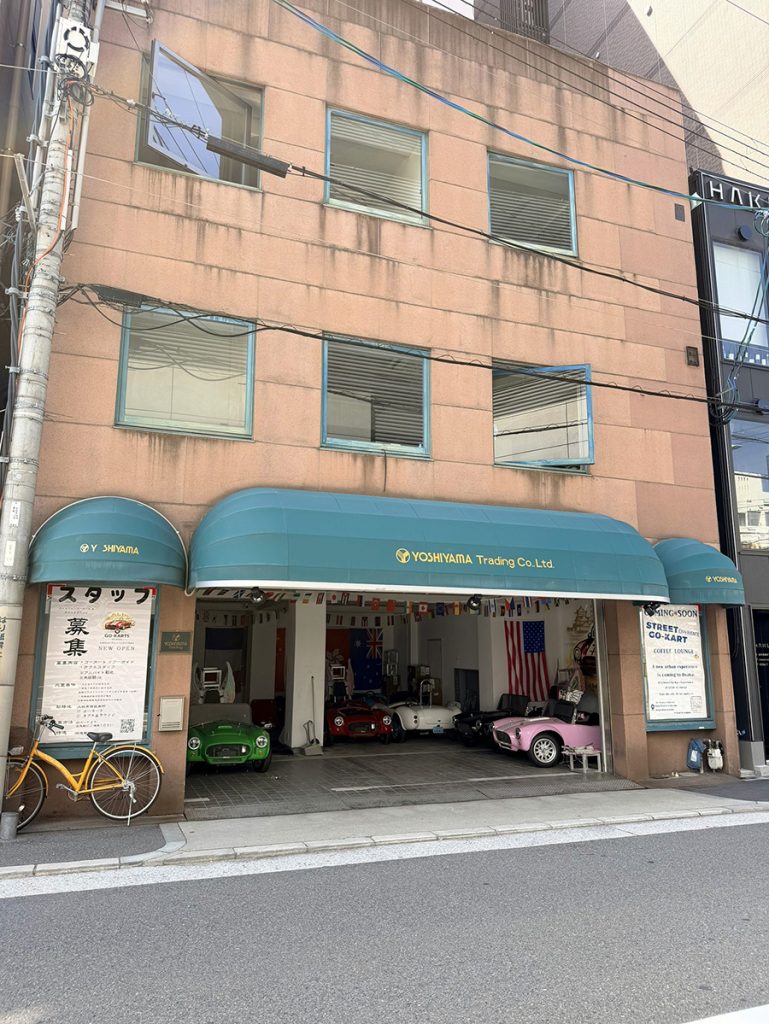
All routes begin and end at 3 Chome-5-2 Shinmachi, Nishi Ward, Osaka 550-0013. Published walking estimates are three to five minutes from Nishiohashi, eight to ten minutes from Nishi-Nagahori and about ten minutes from Shinsaibashi. These are planning estimates, not guarantees against getting lost or station-exit delays.
A first-day booking carries flight and orientation risk
A traveller arriving at Kansai Airport the same day should consider immigration, baggage, railway changes, hotel check-in and unfamiliar streets. A 10:00 booking after a late arrival may also reduce sleep and document-checking time. The kart experience is organized, but it cannot absorb every upstream delay.
A last-night booking needs a route home after Shinmachi
The 22:00 start sits within the operator’s 10:00–22:00 published hours, yet the approximately one-hour service returns later. Check the relevant transport for the actual travel date and leave a walking or taxi alternative. The city loop passing Namba does not mean the tour ends there.
Use the shop access and station comparison before making a late booking dependent on a particular rail connection. The important time is when the party can be at reception ten minutes early, not when a map says a train reaches the district.
Use a final stability test before you book go kart Osaka
Open the published payment and cancellation terms and test the plan against one question: “What could still change that would make these drivers, at this time, unable or unwilling to take this route?” A missing translation, undecided friend, risky airport transfer or price disagreement is a reason to solve the dependency. A vague fear that any plan might change is not.
Commit when the least-ready dependency becomes stable
There is no magic number of days that fits every international visitor. The best defensible booking moment is when every driver’s documents, the party, the route, the service band and the Shinmachi arrival plan are all stable enough to accept the cancellation terms. More fixed groups have a reason to reach that point sooner; flexible solo travellers can preserve optionality longer.
Timing information checked on 24 August 2026: W Go-Kart Osaka’s current hours, starts, prices, route recommendations, document paths, guest selector, arrival request and cancellation/weather terms were checked on first-party pages. JAF’s current application access and average processing information is attributed only to JAF and may change. No availability window, booking lead-time guarantee or translation outcome is claimed.
Reserve the exact experience you can genuinely attend, not the one that looks safest because it was bought earliest. Once the slowest dependency is settled, choose the route and start, keep the 48-hour boundary visible, and protect the journey to Shinmachi. That turns timing into a controlled travel decision and lets the company’s real service strengths—clear bands, two mapped loops, a staffed base and guide-led operation—support the visit without being asked to repair an unfinished plan.